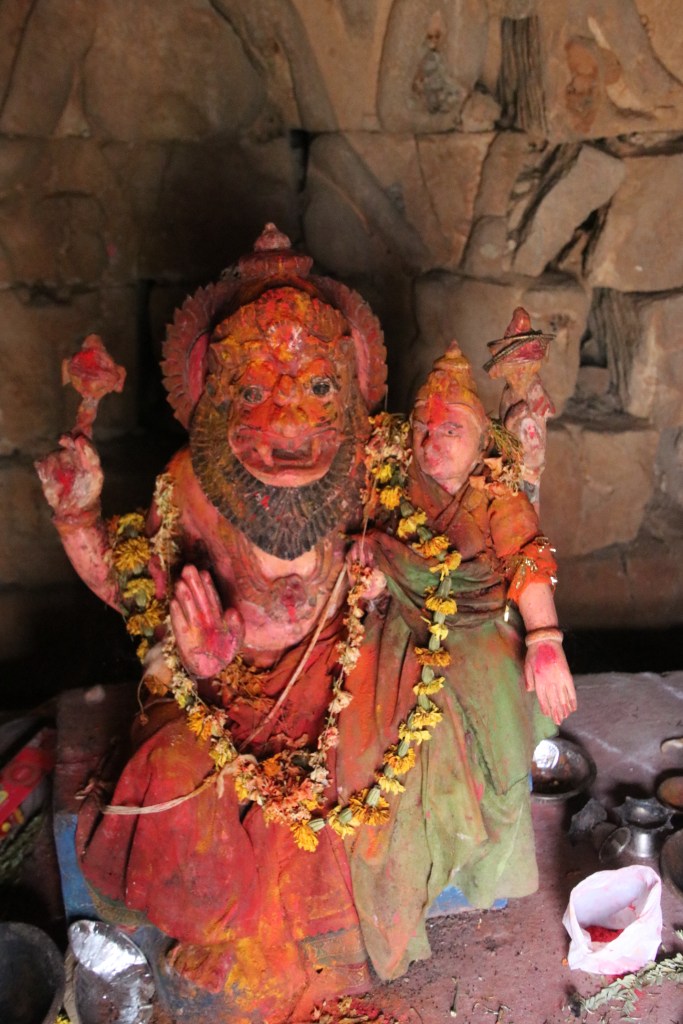
At the conference of the European Association for South Asian Archaeology and Art (EASAA) held in Naples last summer, Dr Corinna Wessels-Mevissen introduced delegates to a fascinating early temple recently discovered deep in a forest in the Warangal District, Telangana. Interest piqued, I found myself here a short few months later. Accompanying me to the site were Hidola Gudiboina, an expert in local history, and explorer Aravind Pakide who works with heritage and tourism in Warangal. Aravind chanced upon the temple in 2012 while searching for unrecorded historic sites and reported the find to local newspapers and the Archaeological Survey of India (ASI). Since then the temple has again become a place of worship and a modern icon of Narasiṃha (Viṣṇu in lion form) with his consort Lakṣmī has been installed.

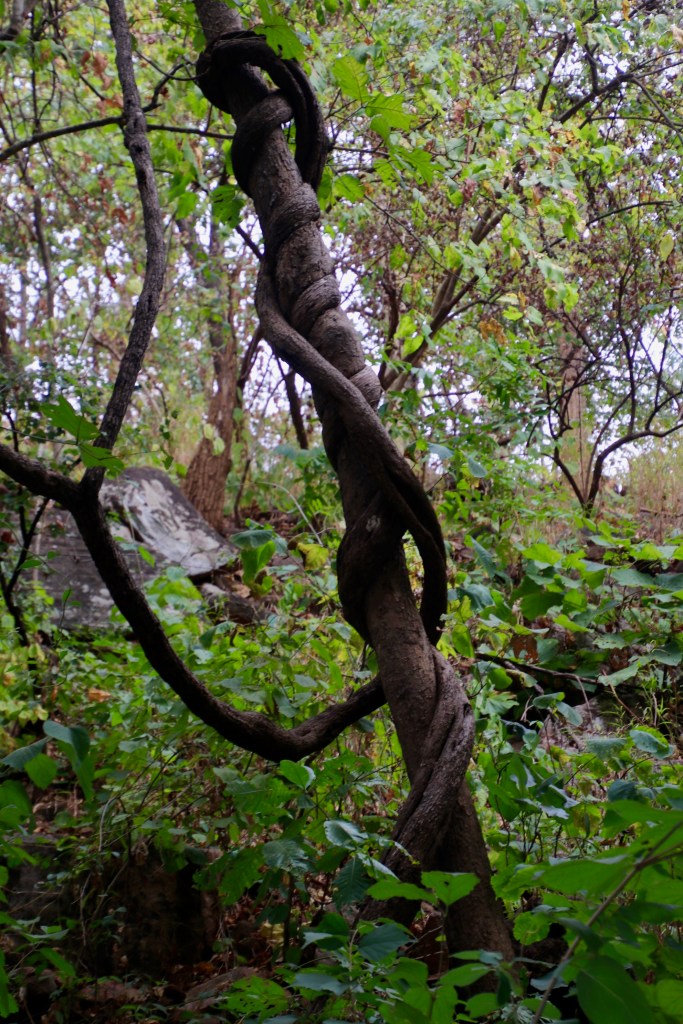
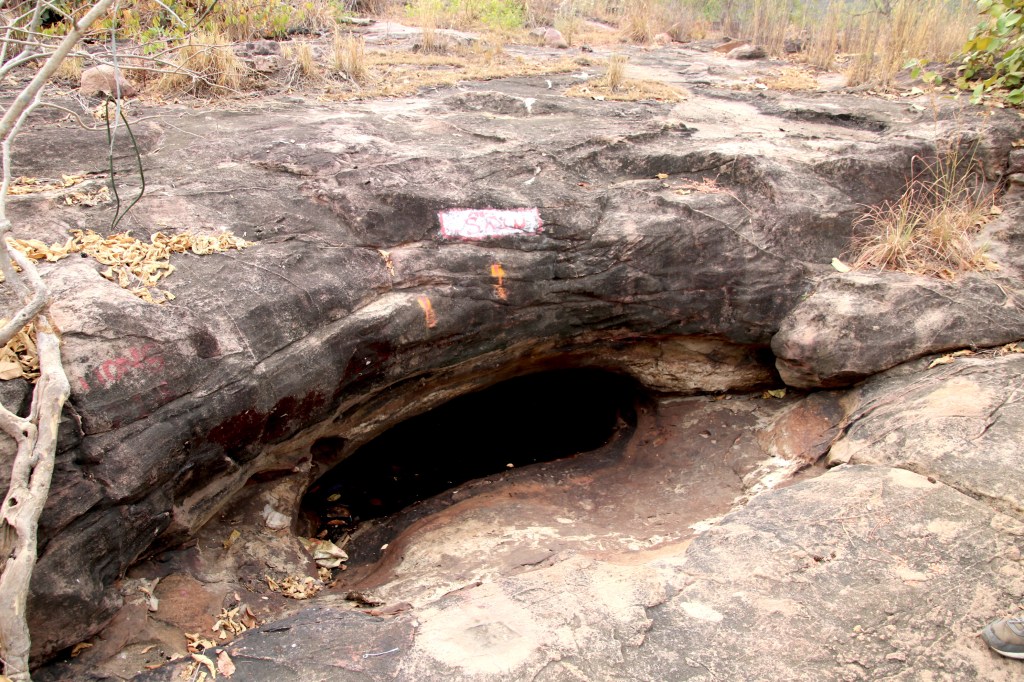
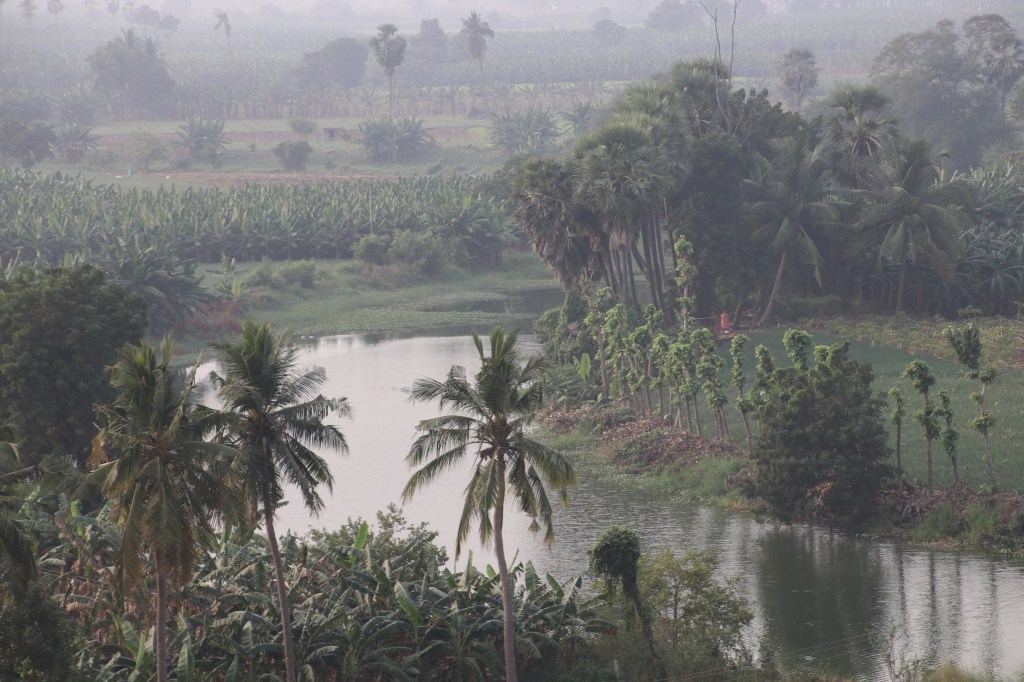
To reach the temple we drove sixty kilometres east of Warangal through a scenic agricultural and cotton growing region. After arriving at the village of Kothur we left the road behind and clambered up a steep, dry river bed through dense deciduous forest, strewn with boulders – a characteristic feature of the Deccan plateau. Reaching the top of the hill we passed a small but deep natural pool in a crevice which probably served the temple in ancient times. A short walk later we arrived at the temple itself.
We were greeted with a monument every bit as enthralling in terms of its iconography and exuberant sculptural style as I had hoped for. It is the oldest surviving temple in the region, probably constructed circa the 6th century CE, perhaps during the reign of the Vishnukundin kings or thereabouts. The monument is currently home to numerous termite families and is in imminent danger of collapse.
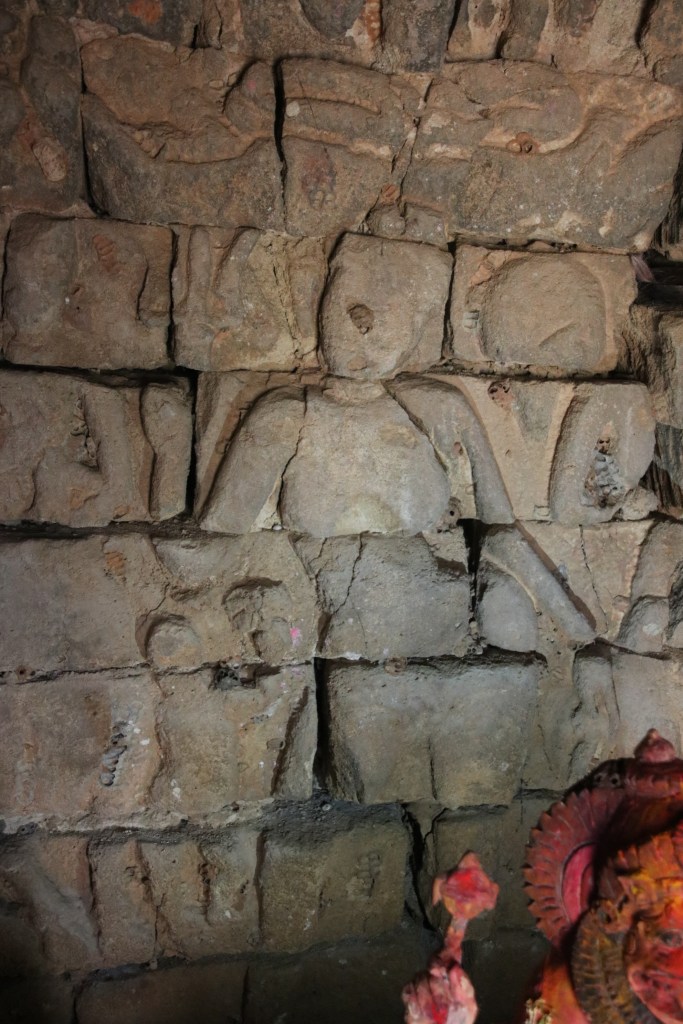
It has been proposed (according to my guides) that the temple has a syncretic tantric Buddhist/ Śaiva affiliation. However, although far from expert on the former, the imagery I could identify appears to be wholly Śaiva, albeit of a remarkably singular nature. The sanctum was found empty but images of Śiva, Pārvatī and Durga abound on the walls of the temple. The base of the temple is currently buried.
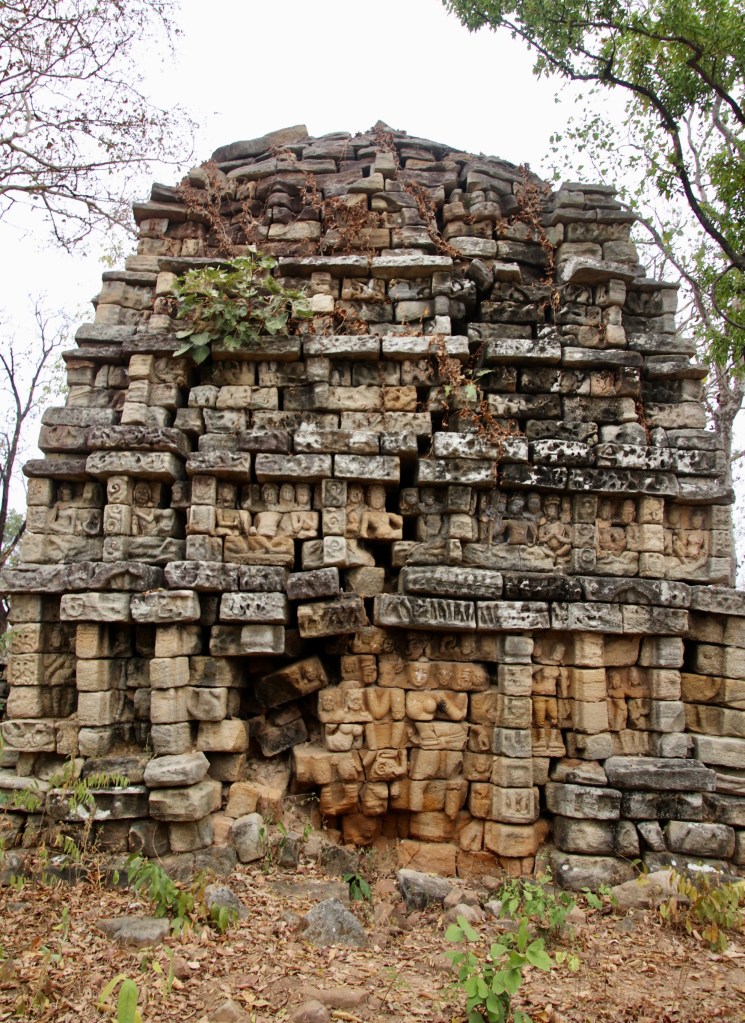
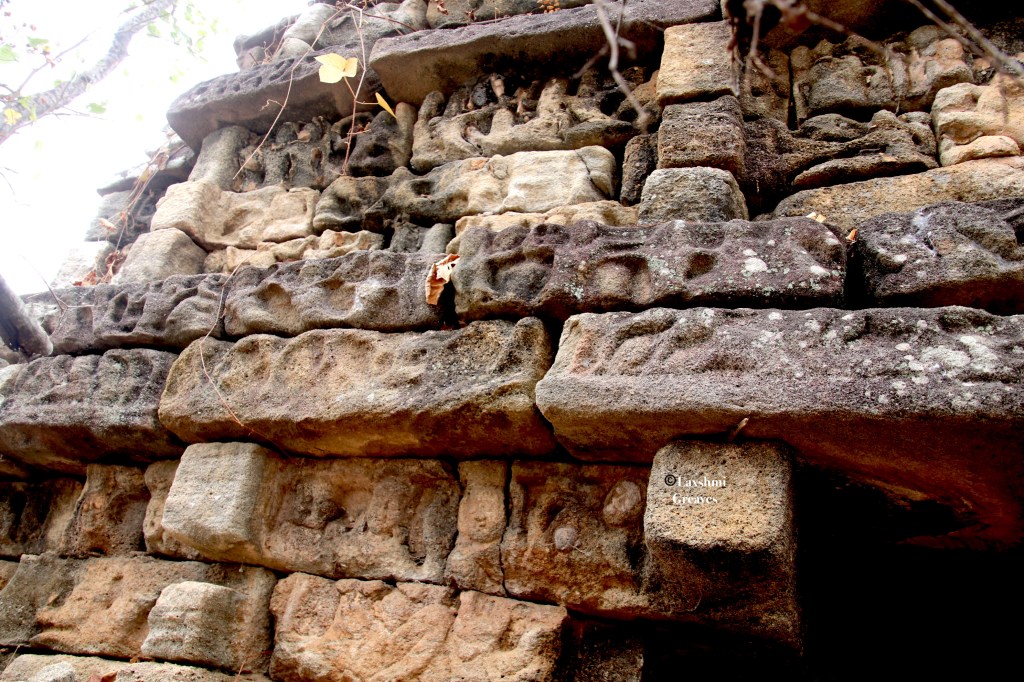
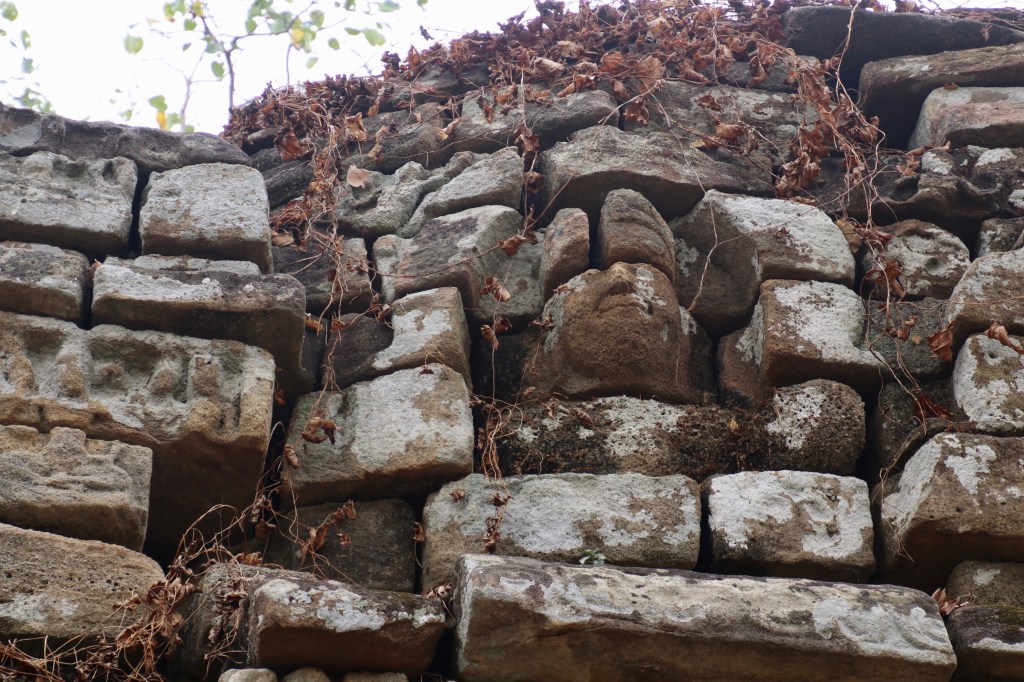
The temple is constructed from large, heavily eroded sandstone blocks, mostly rectangular in form. In its current state it bears a striking resemblance to the later temples of South East Asia, or rather, they are reminiscent of this temple situated in the heartlands of Telangana – a connection that needs to be investigated.
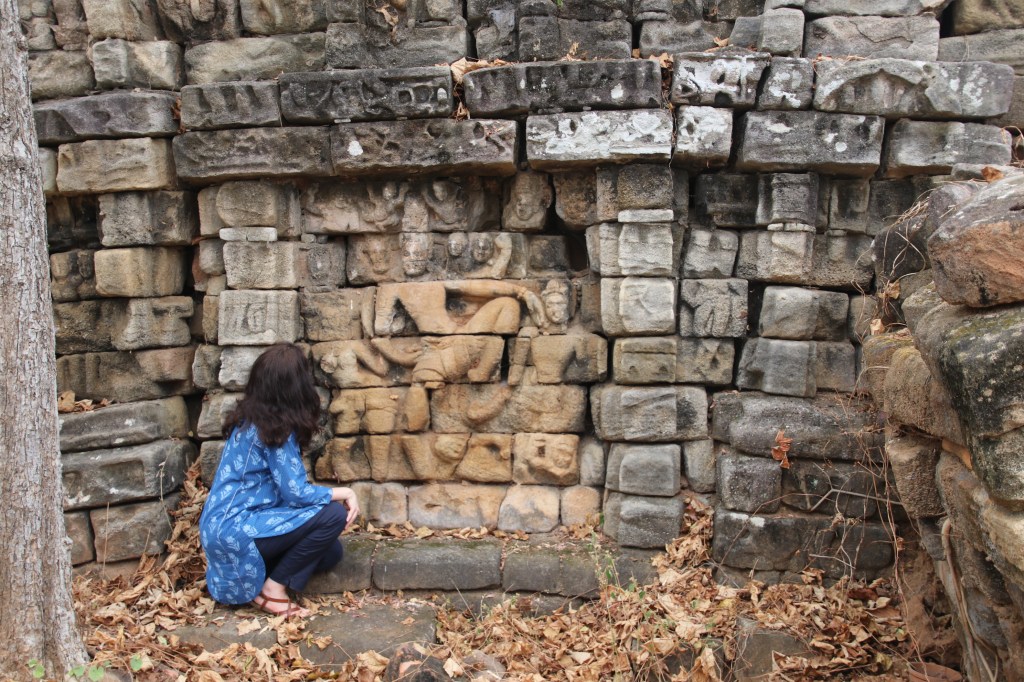
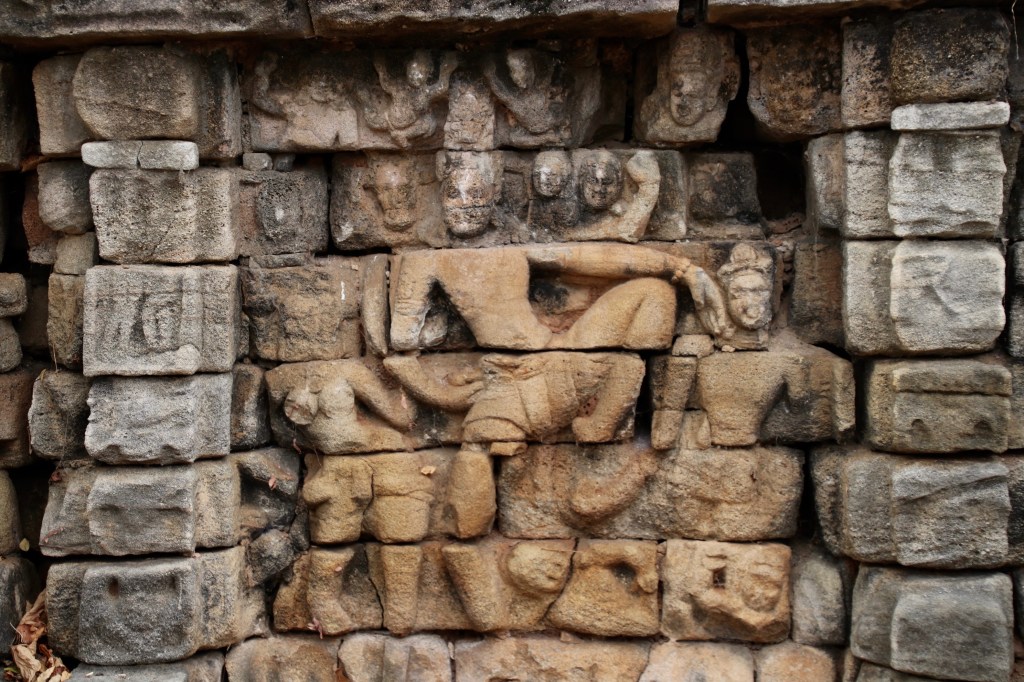
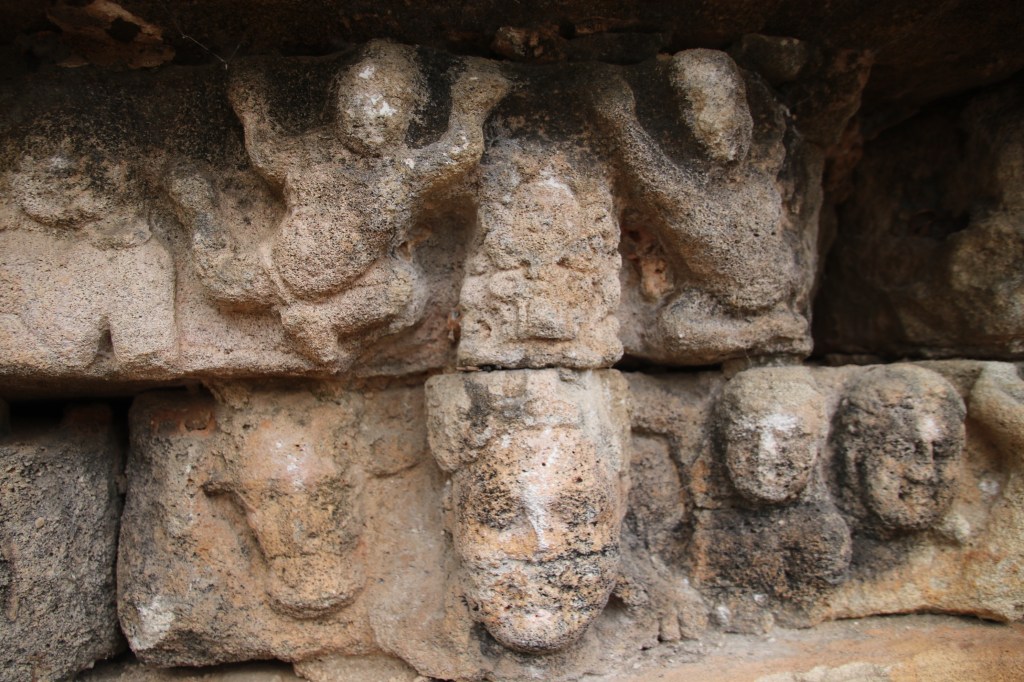
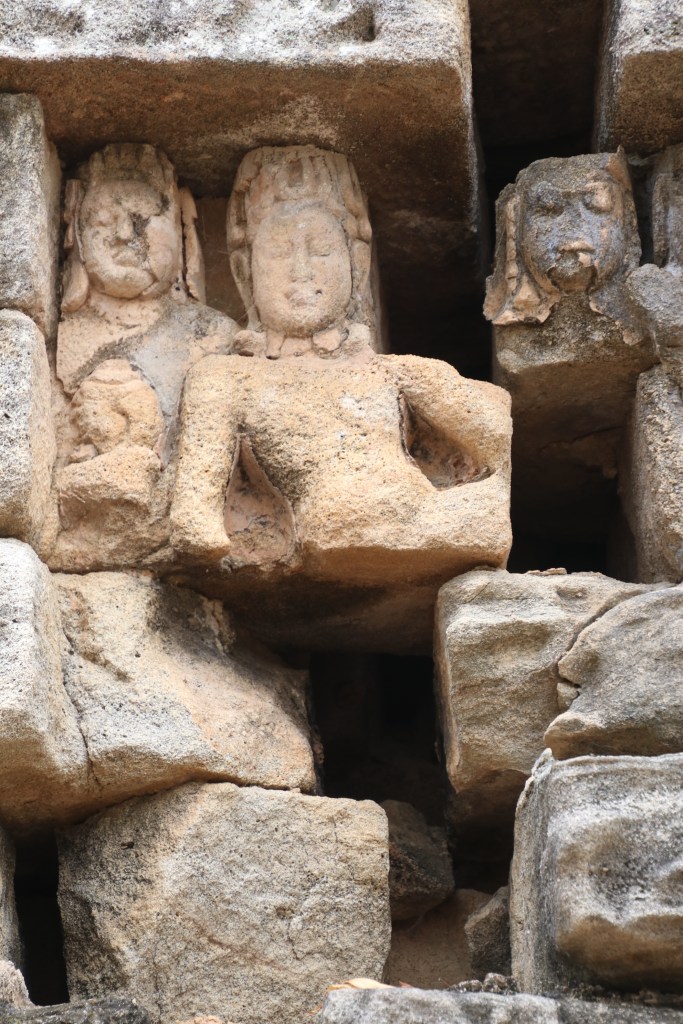
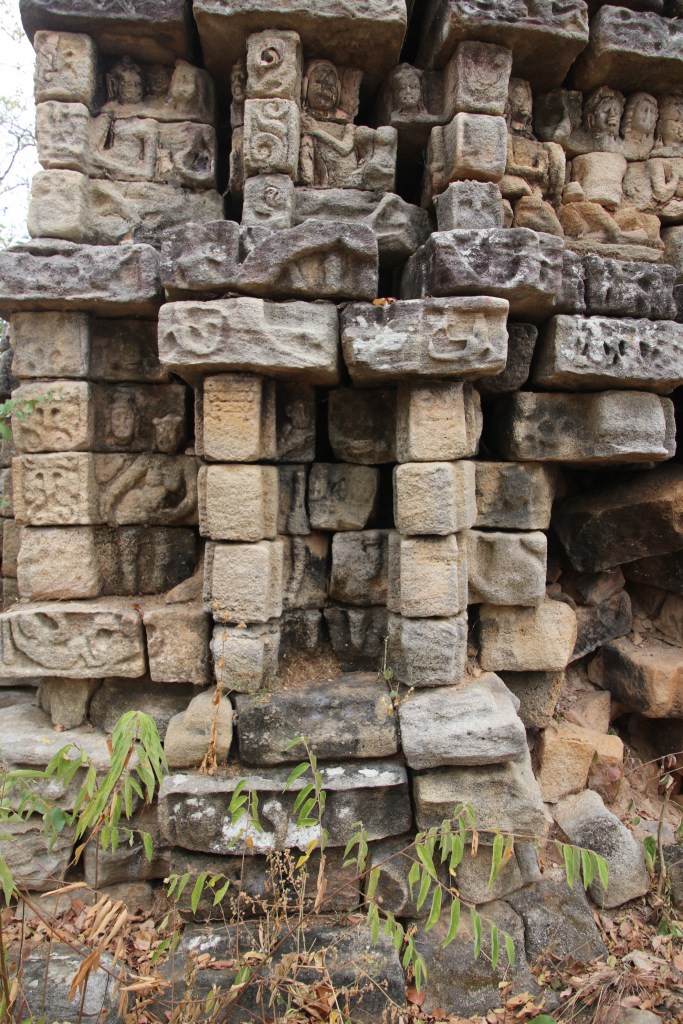
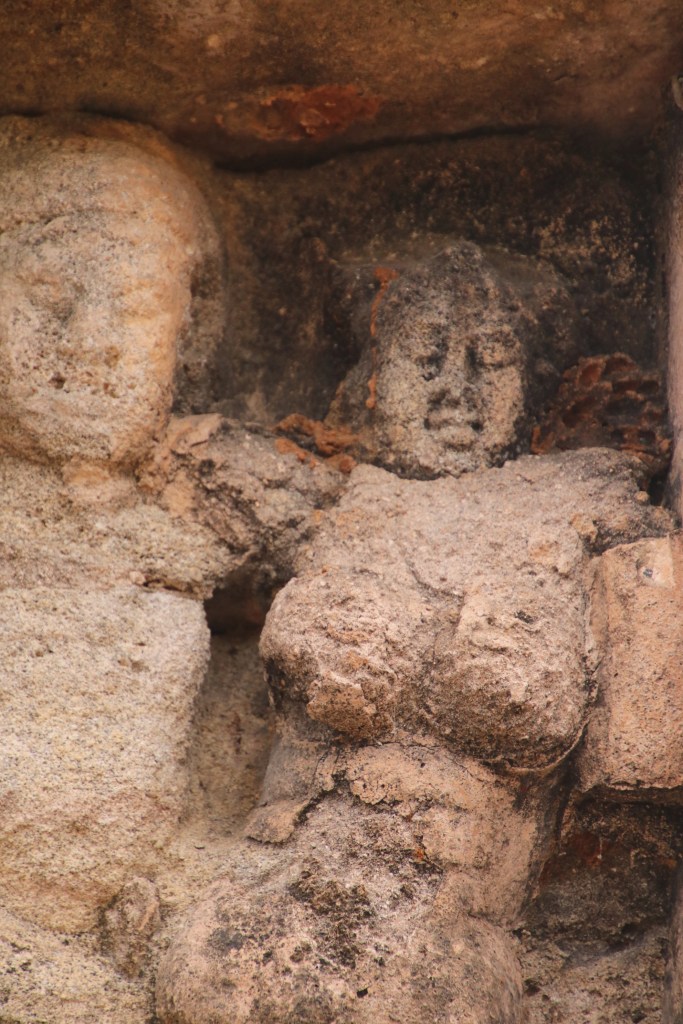
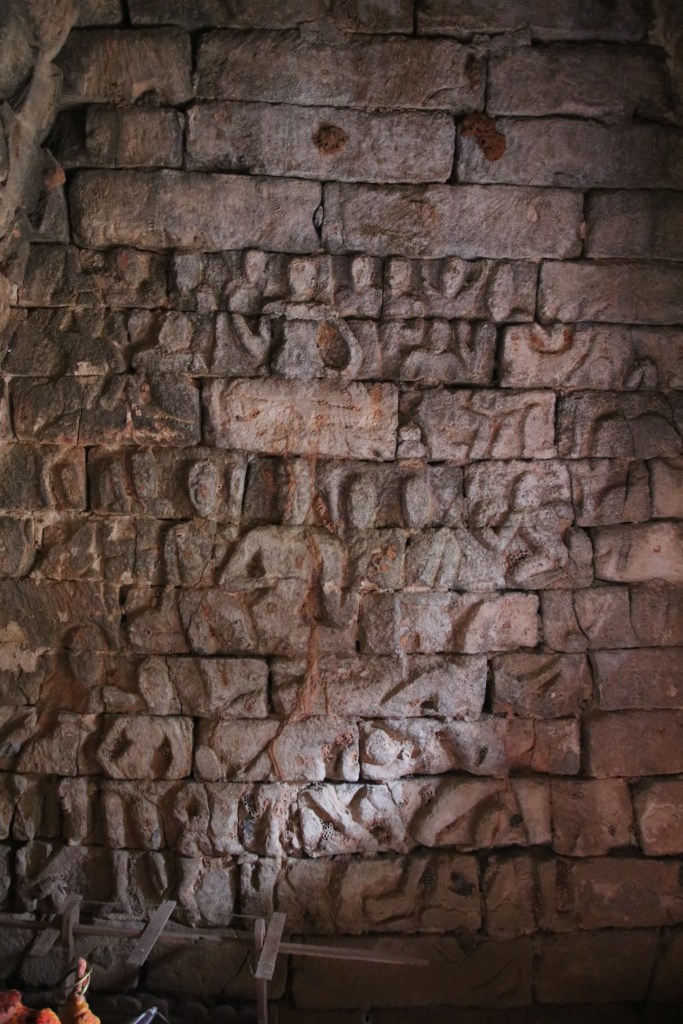
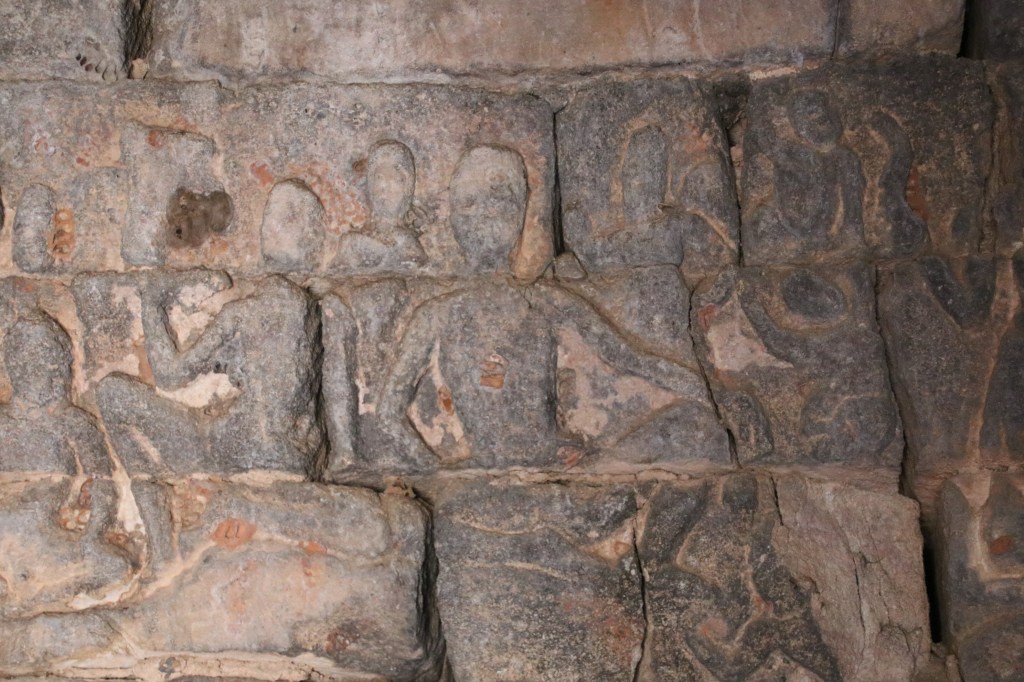
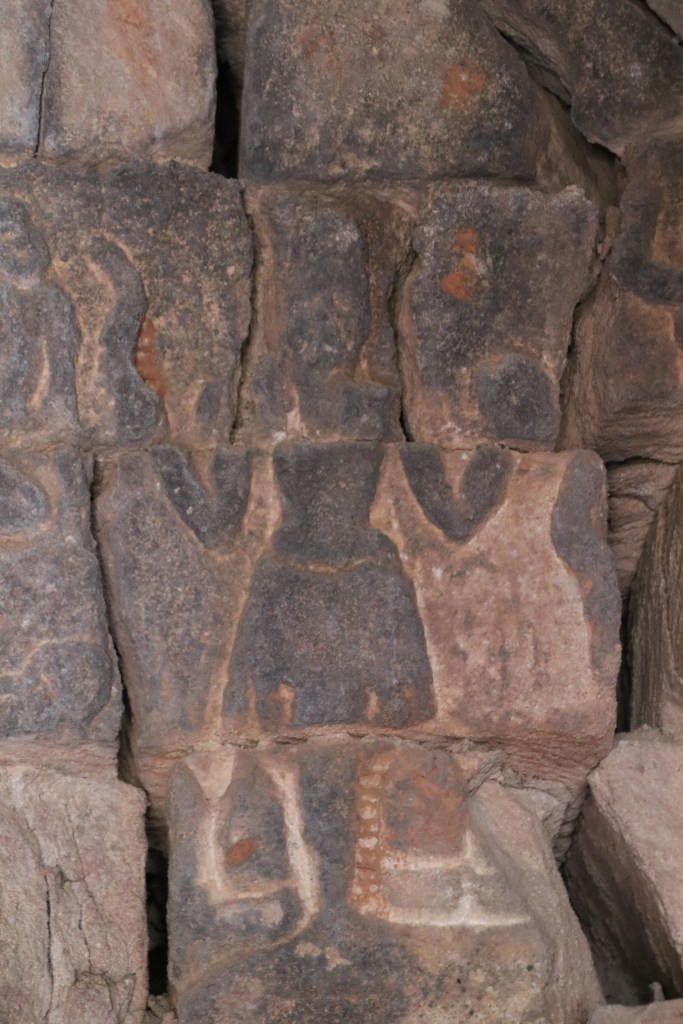
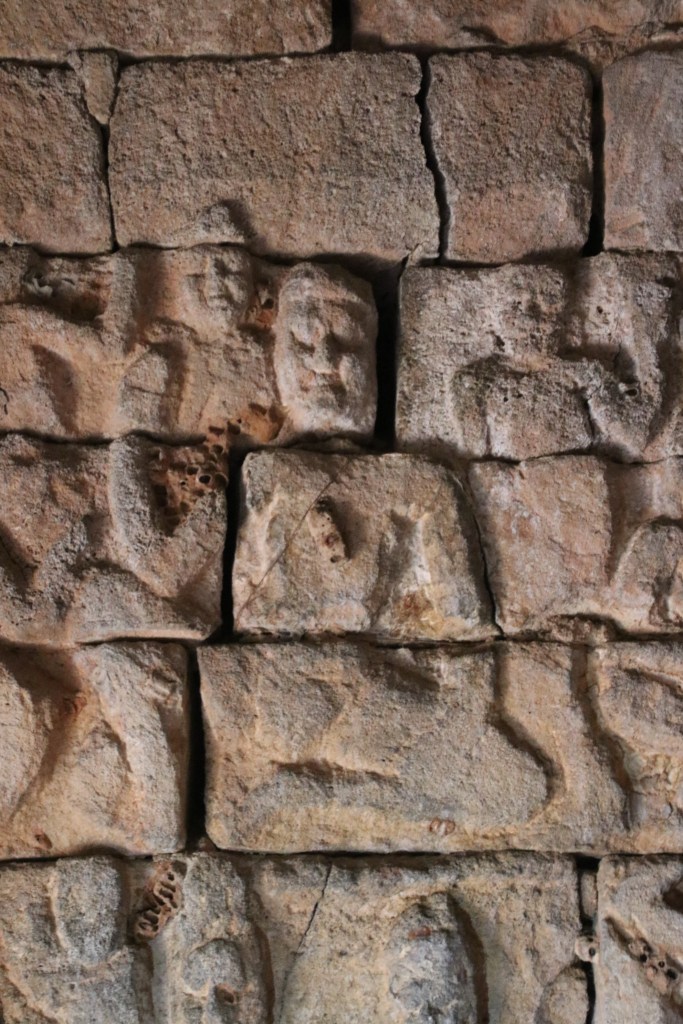
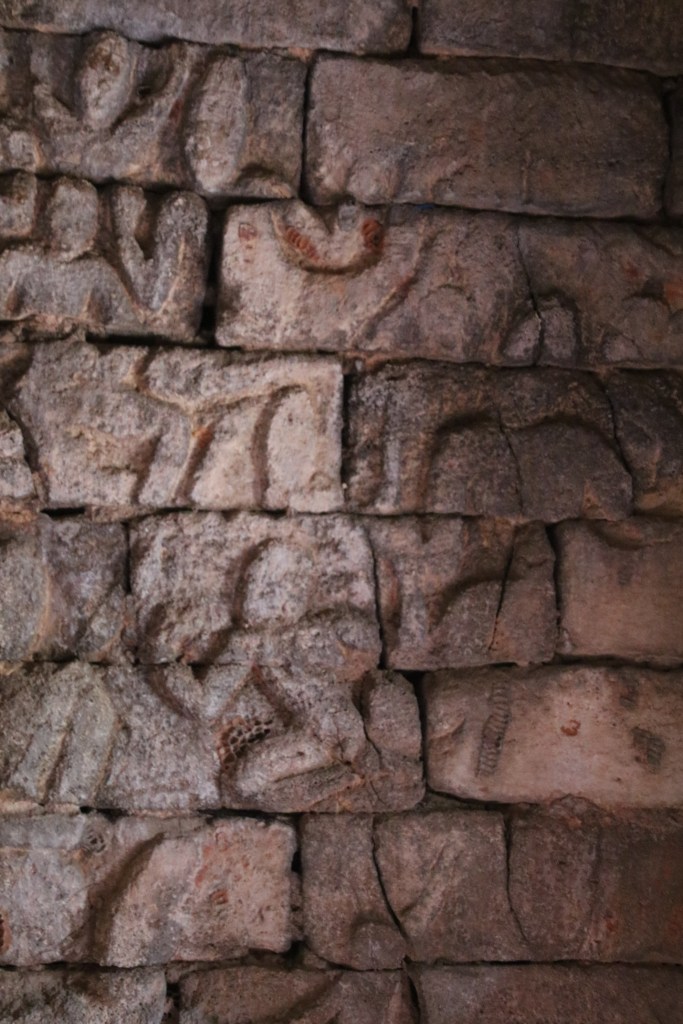
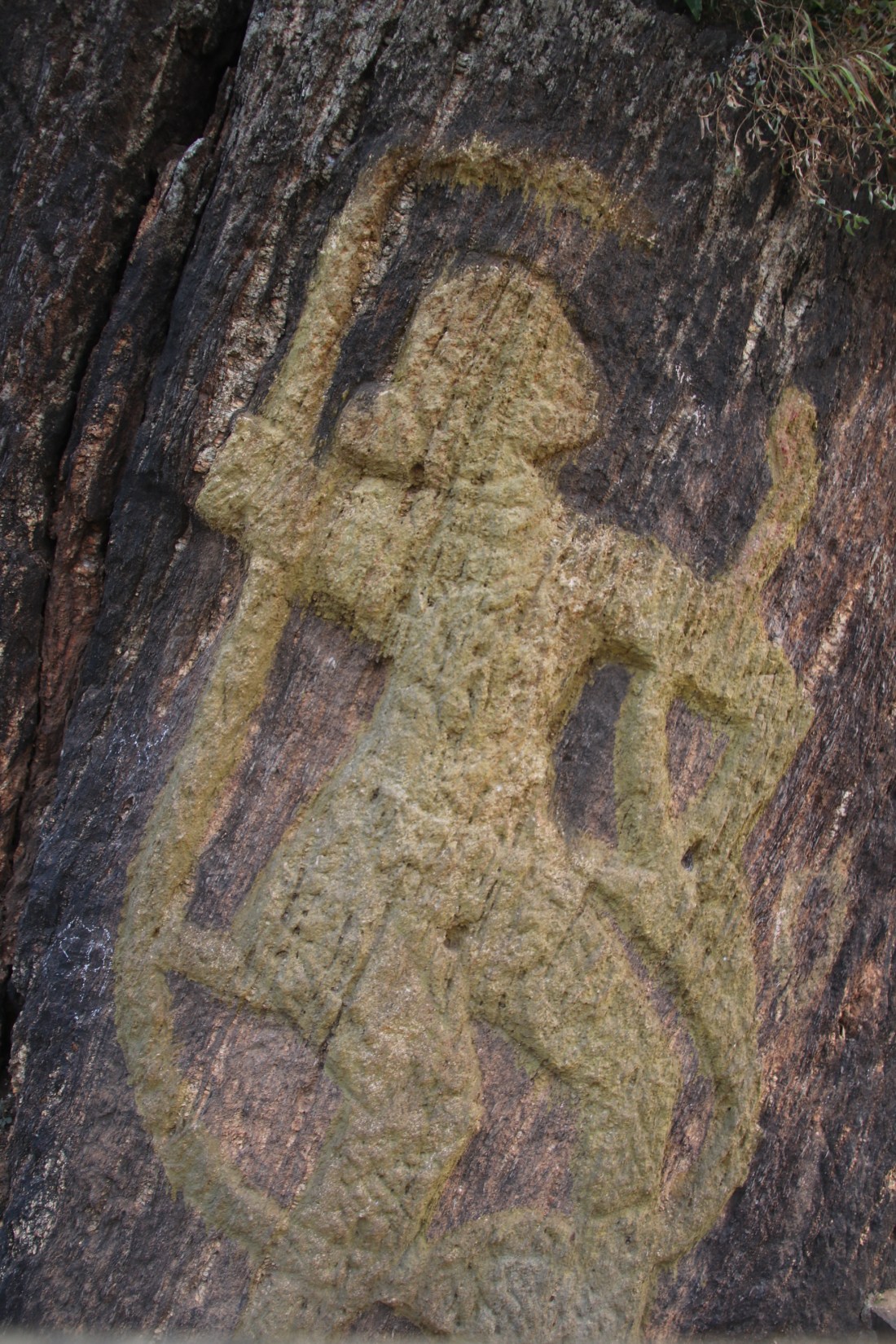
The relief carvings which liberally cover the outer walls of the temple – and unusually, the inner walls of the sanctum – have been carved across the stone blocks, presumably while they were in situ. The monument was once coated in stucco as traces indicate. This would have lent the exterior a unified appearance, smoothing over the joints between the blocks, while bringing further dimensionality, refinement and intricacy to the reliefs. In addition, the stucco might have been painted with natural pigments.
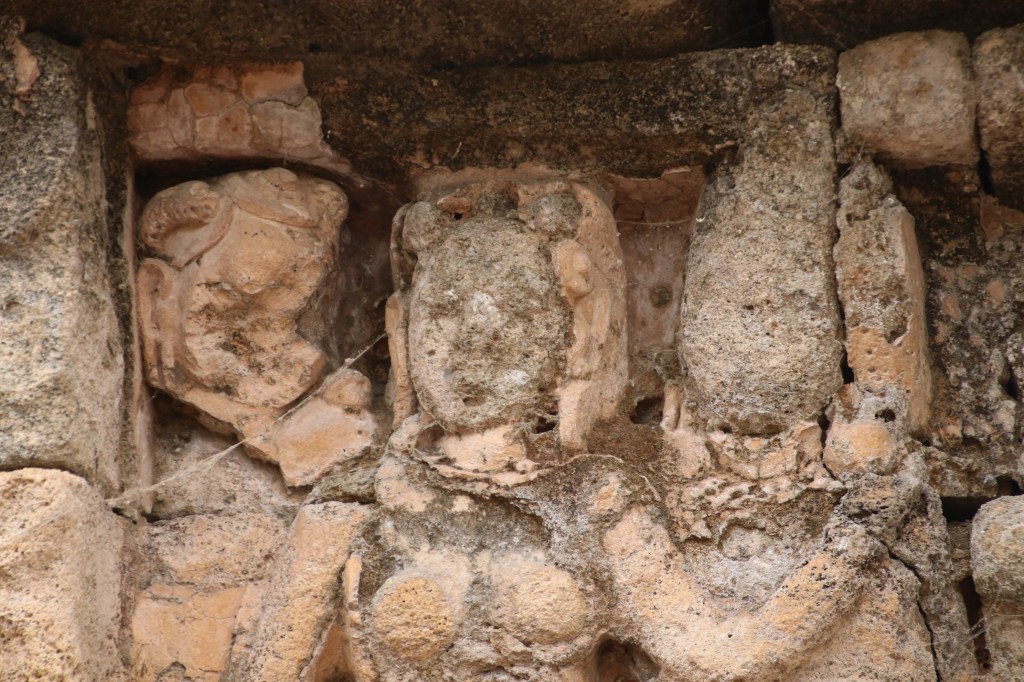
The busyness of the compositions recall the magnificent sixth-century rock-cut reliefs at Elephanta and the fifth-century Buddhist Vākāṭaka murals at Ajanta. Incidentally, the bearded devotee below has much in common with figurative Vākāṭaka iconography (250-500 CE).
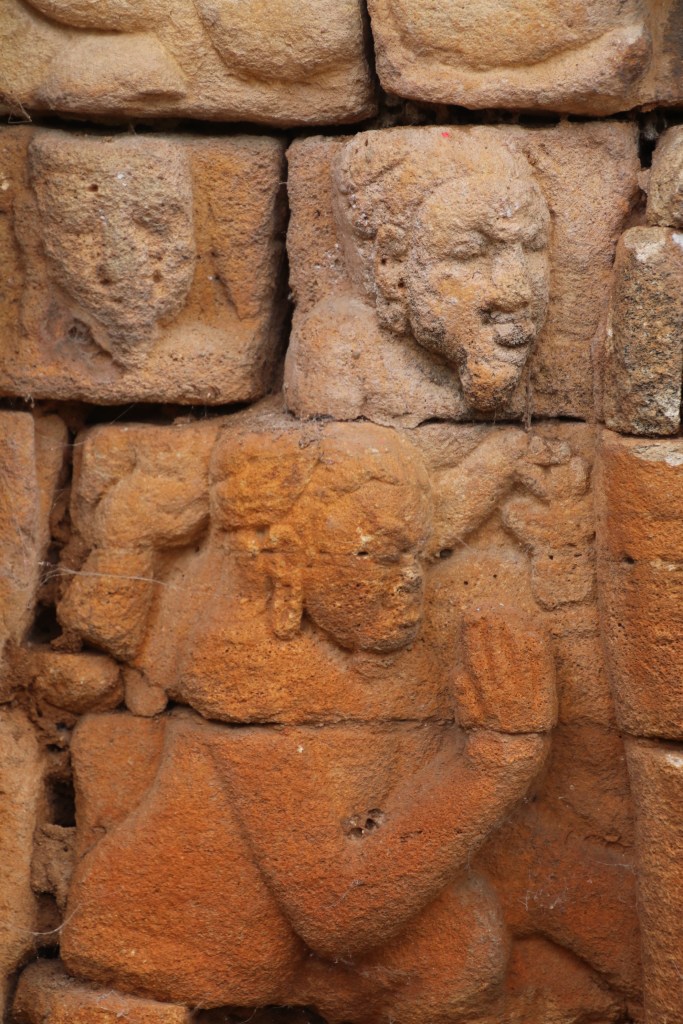
Of the four faces of the temple, three are adorned with a large central niche and several subsidiary niches of different sizes. The Śikhara (tower) begins above the large niches and is separated into four or five registers by horizontal friezes dividing the niches and depicting narrative scenes. Much work needs to be done to identify the imagery. Here I will draw attention to only a handful of the reliefs.
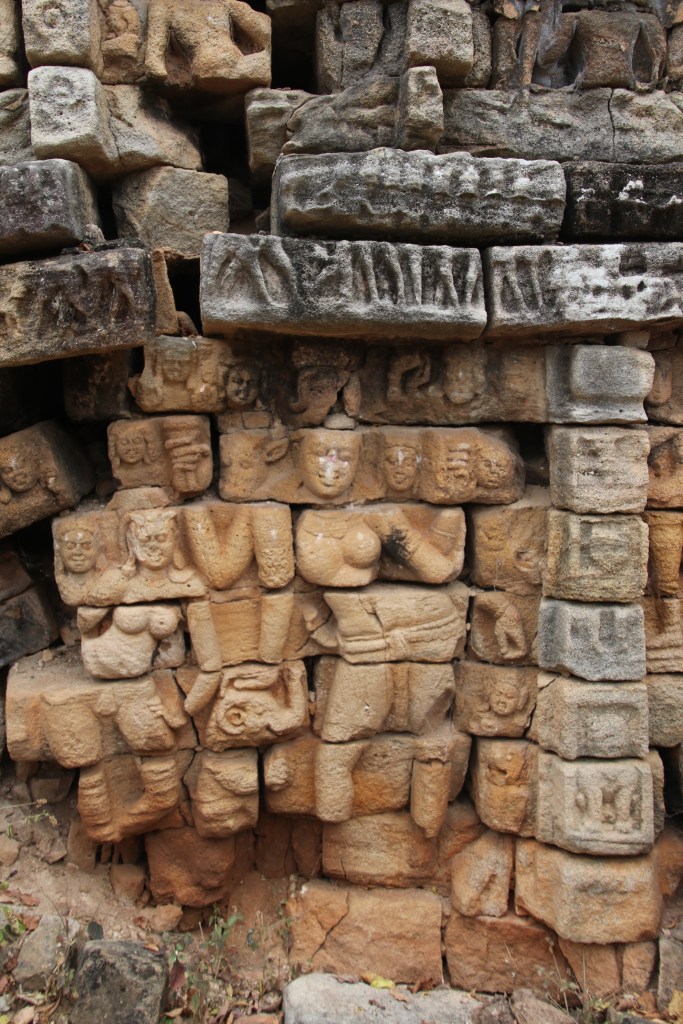
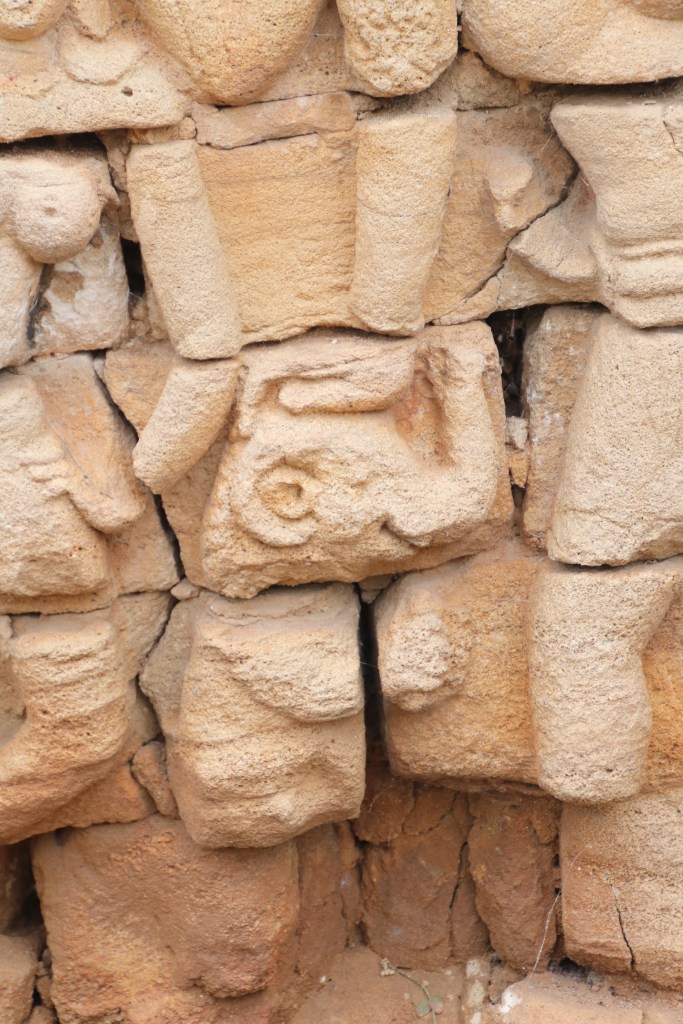

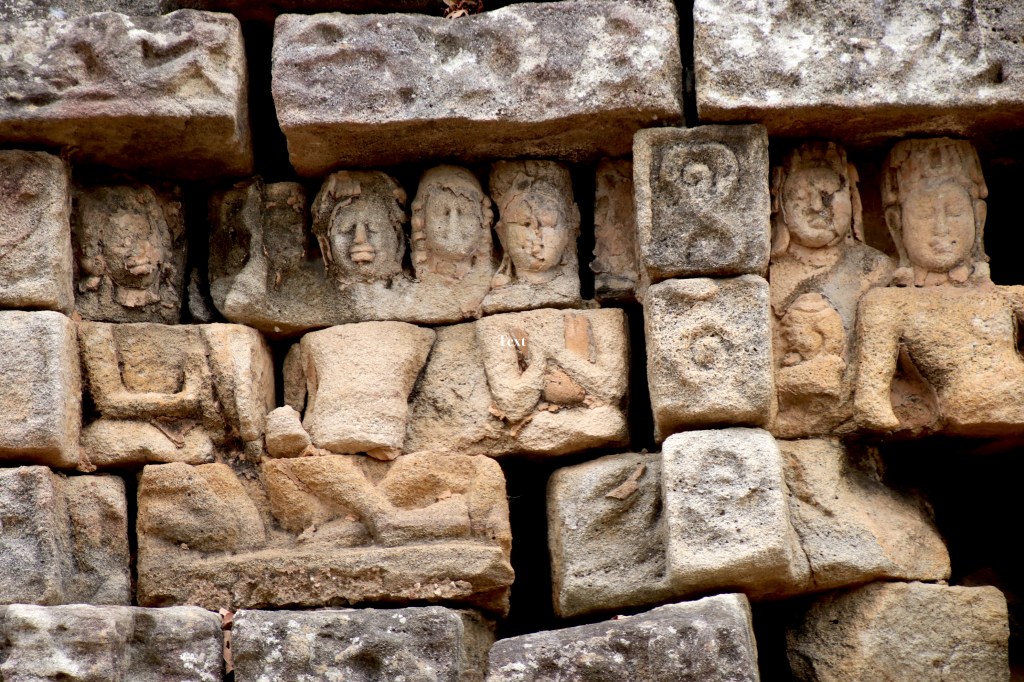

©Laxshmi Greaves.

The Archaeological Survey of India are shortly going to be taking this temple under its wing and a much-needed programme of repair and conservation will be carried out. This is excellent news, but, owing to my appreciation of crumbling ruins, I am grateful to have seen this extraordinarily important monument prior to restoration.
Update: Corinna Wessels-Mevissen and Adam Hardy have published a paper on this temple: ‘Note on a Recently Reported Early Śiva Temple near Kothur (Telangana State),’ Berlin Indological Studies, 24 (2019): 265-278. The paper includes photos taken by drone from above the temple.

 Art of South Asia