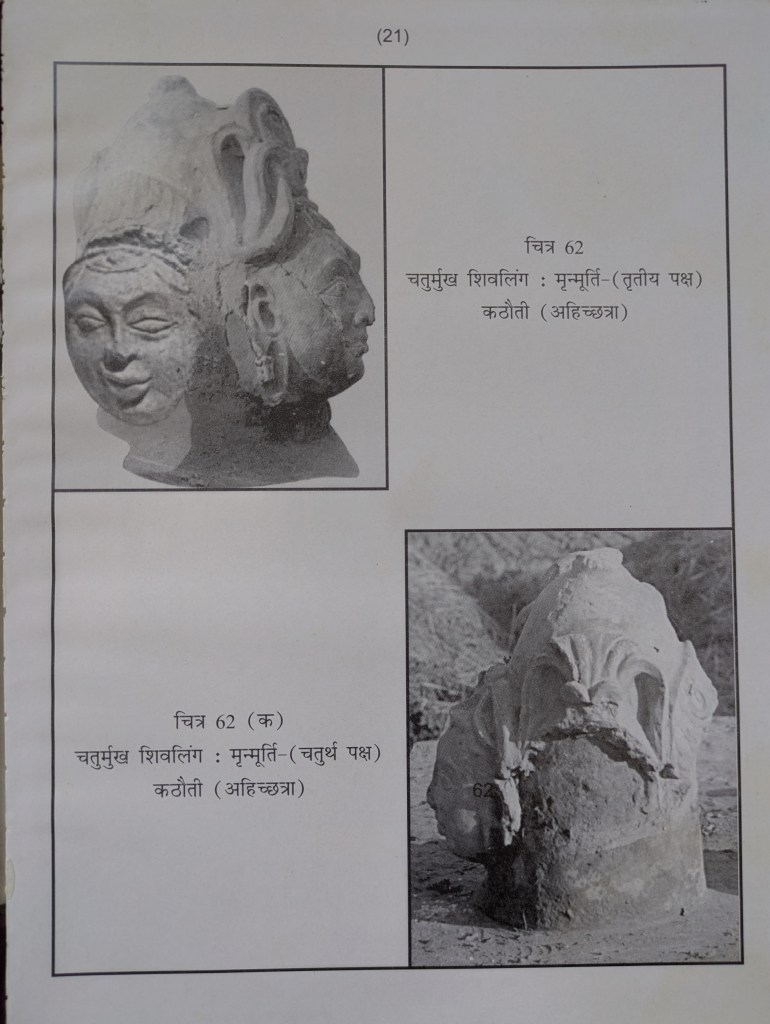
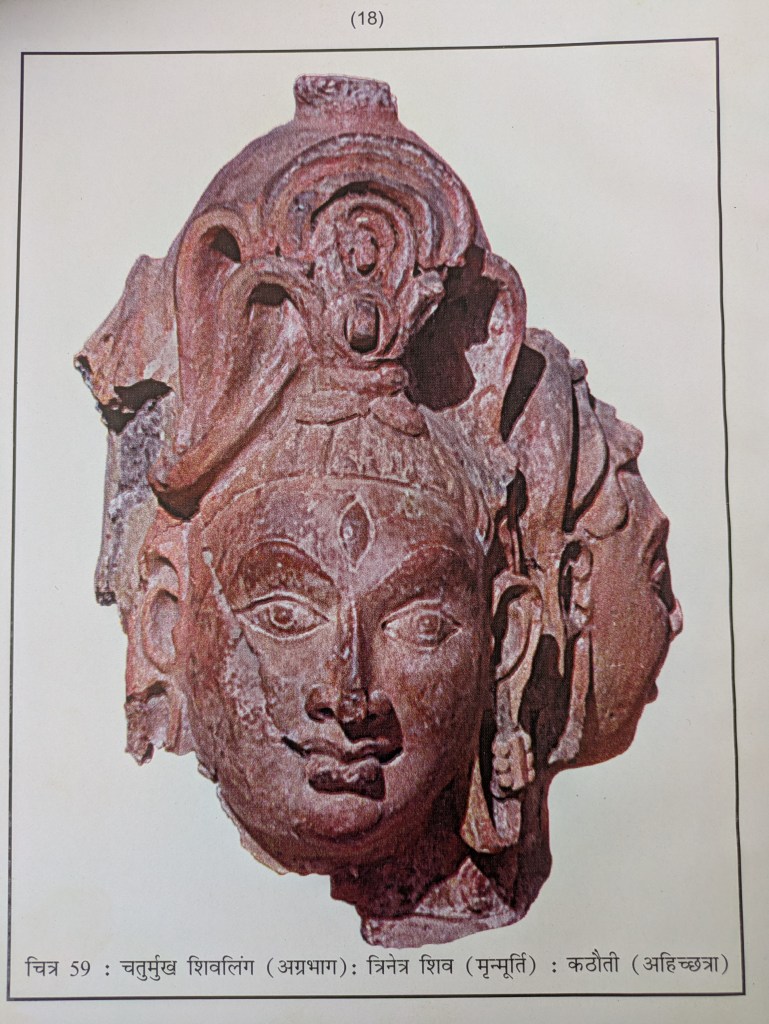
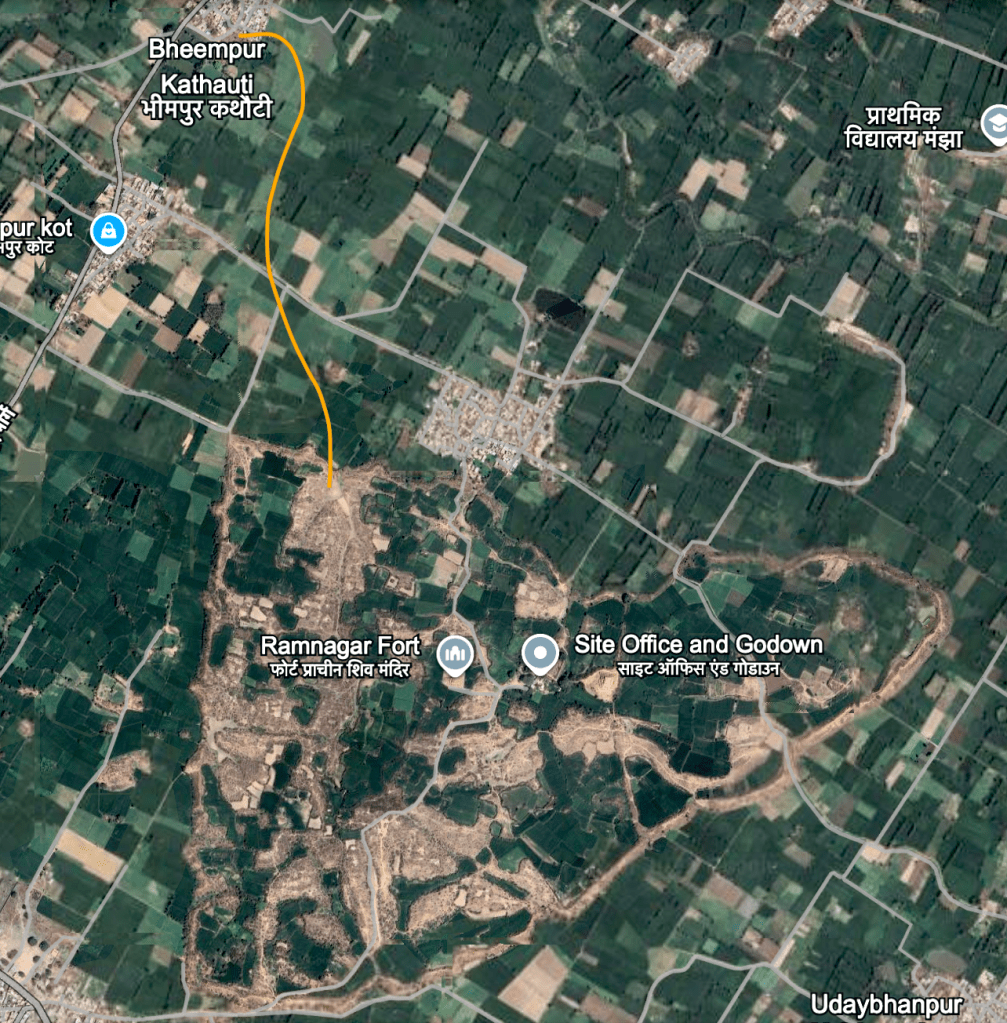
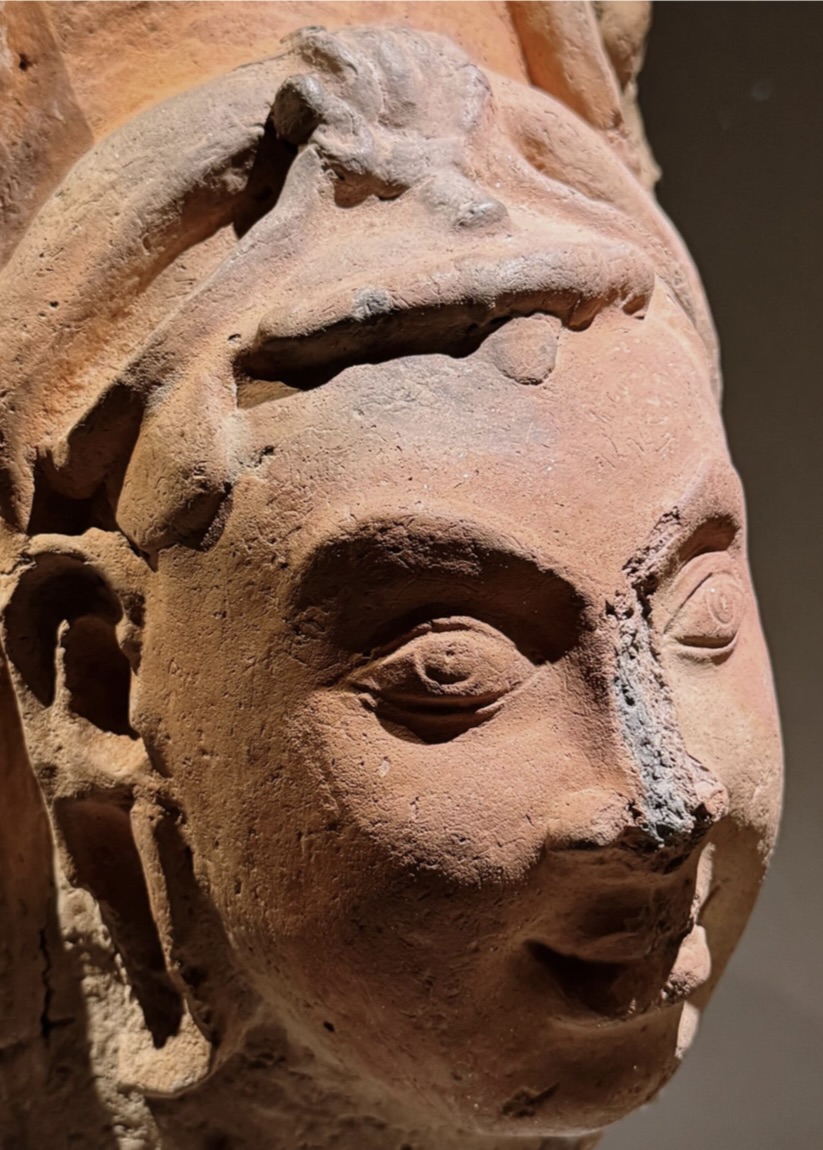
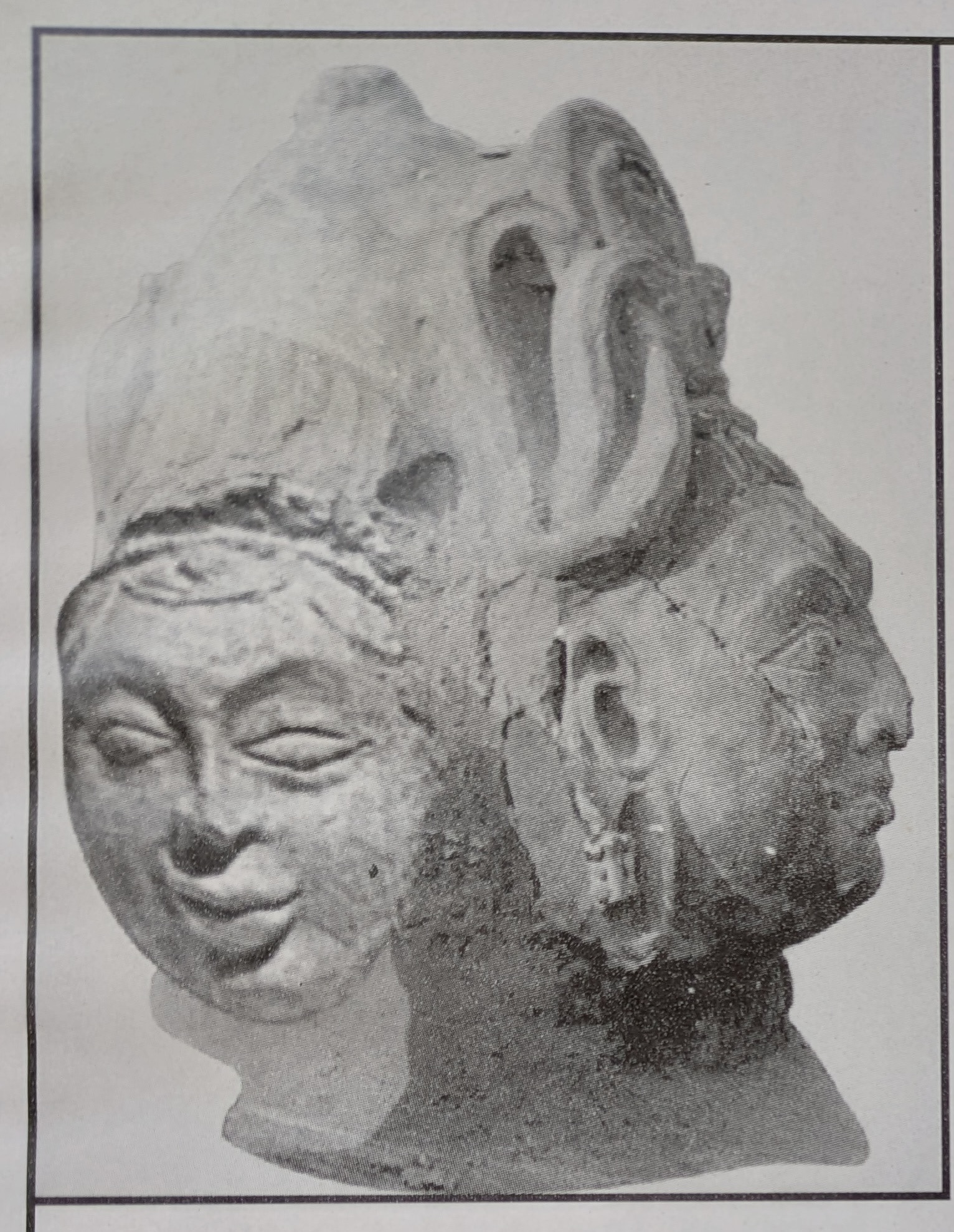
Back in 2016, Virjanand Devakarni, director of the Gurukul Museum in Jhajjar, Haryana, gifted me Dr Sushma Arya’s book: Panchāla Rajya kā Itihāsa (History of the Kingdom of Panchala). In it there are several photographs and a description of a damaged but striking terracotta pañchamukhaliṅgā (a five-headed Śiva liṅgā), or a liṅgā with four heads, with the fifth, usually unmanifest head, here clearly inferred at the apex of the liṅgā. The liṅgā is thought to belong to the Gupta period (I would suggest early Gupta at the latest) and was located in a small village called Bheempur Kathauti about 1 km north of the ancient fortress city of Ahichhatrā (Bareilly district, Uttar Pradesh).
A page from Dr Sushma Arya’s book
A plate from Dr Sushma Arya’s book
Photograph courtesy of the Asian Civilisations Museum, Singapore.
Now this liṅgā sits in the collections of the Asian Civilisations Museum, Singapore. The accession code suggests that it entered the collection in 1997 and it is labelled as coming from the state of Madhya Pradesh. The title given by the museum is chaturmukha lingam, meaning a four-headed liṅgā.
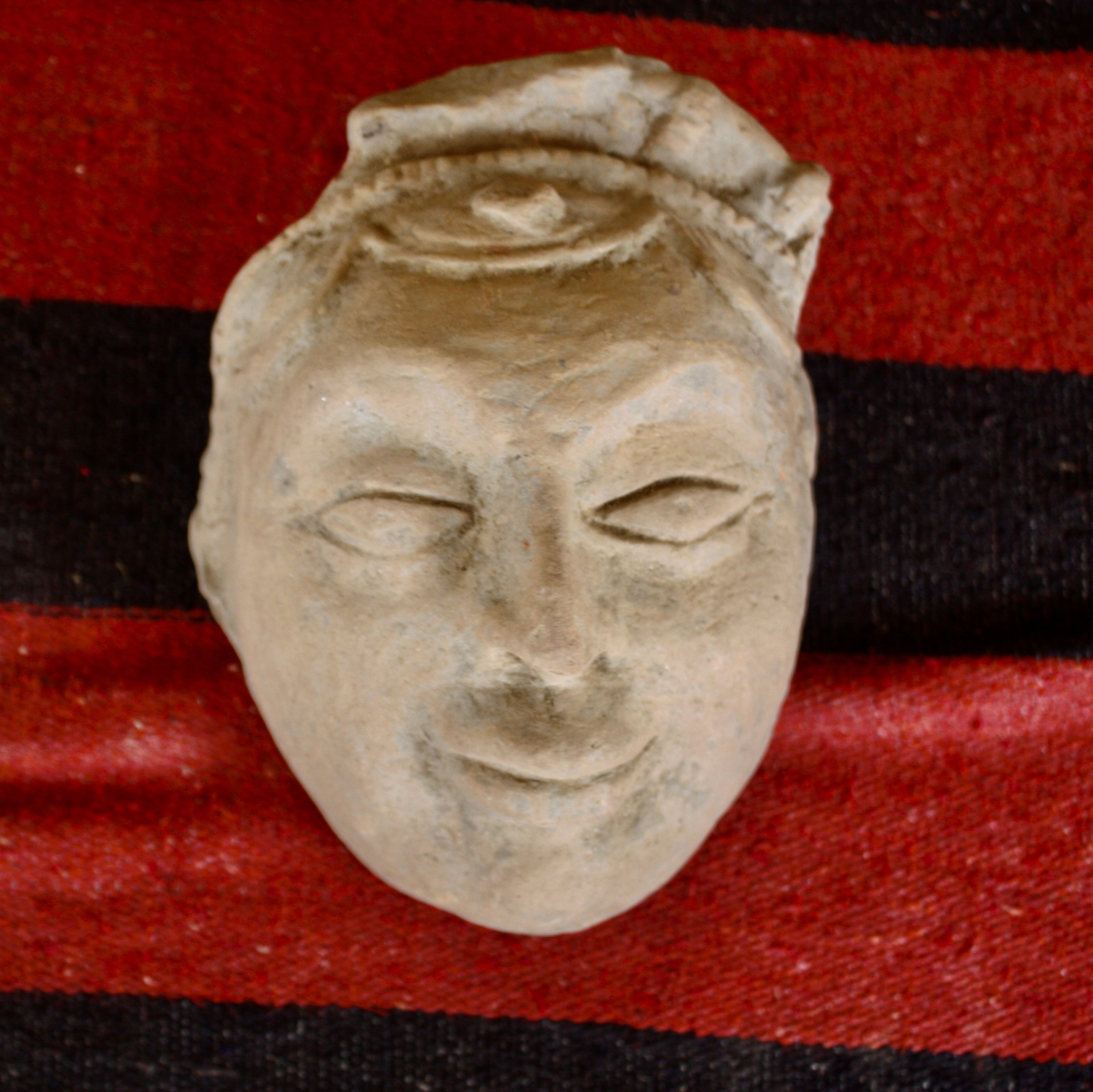
I came across a detached face of the liṅgā in the reserve collection of the Gurukul Museum in Jhajjar.
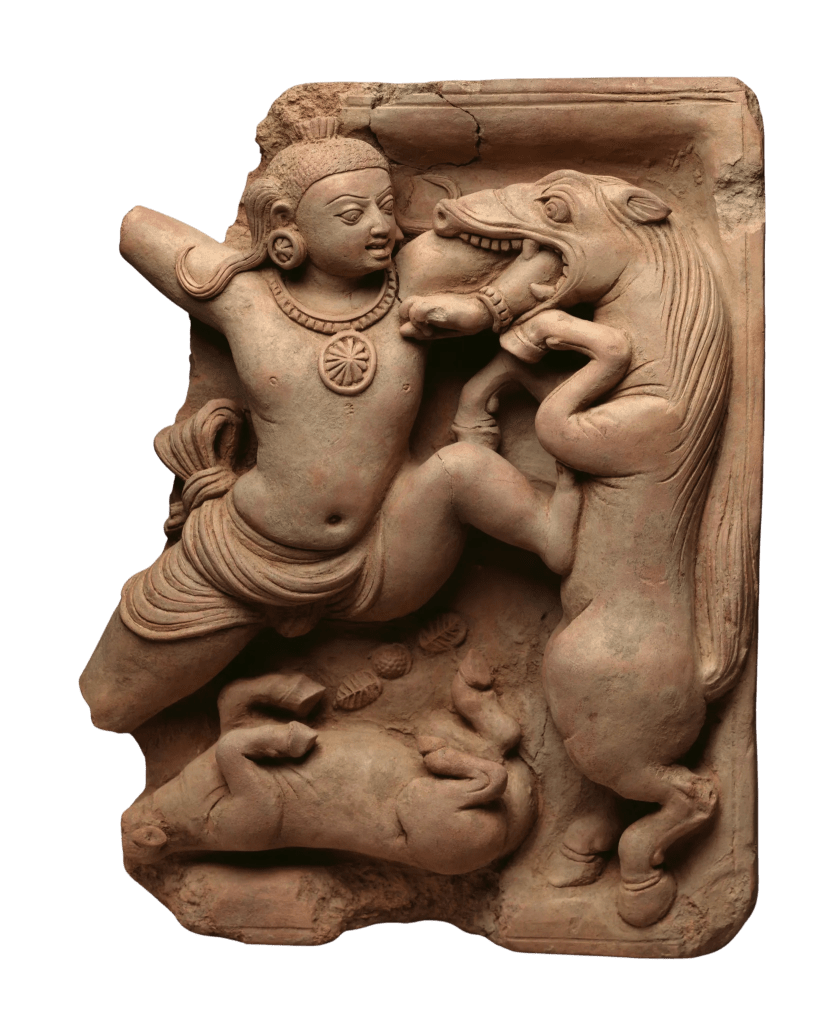
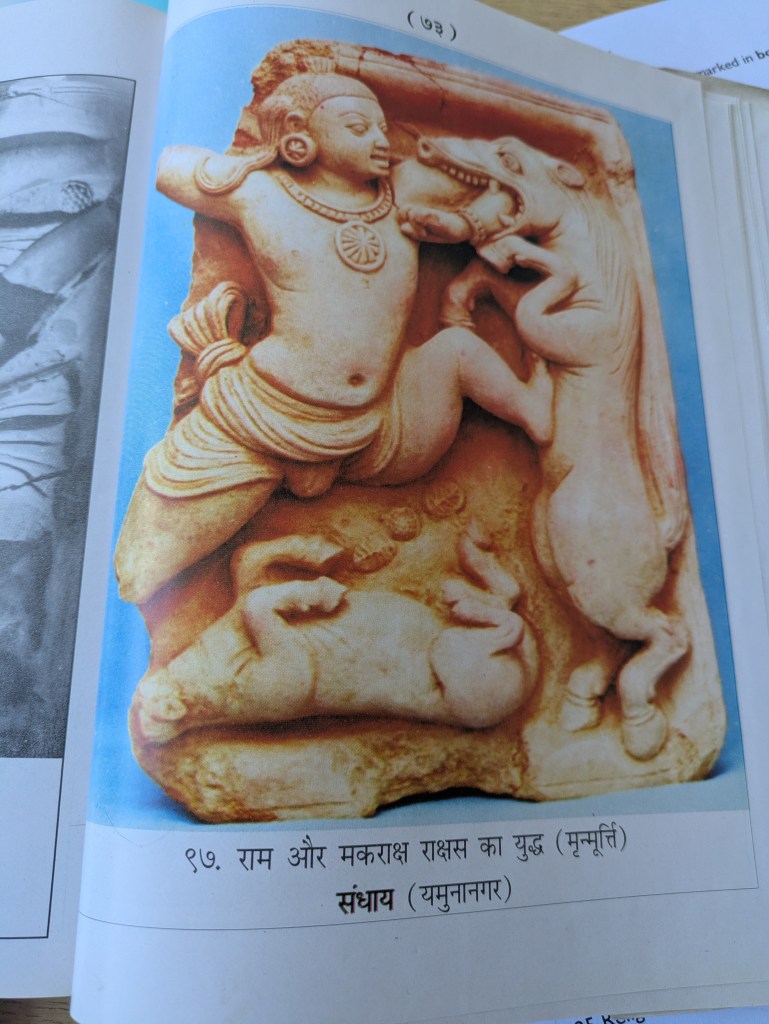
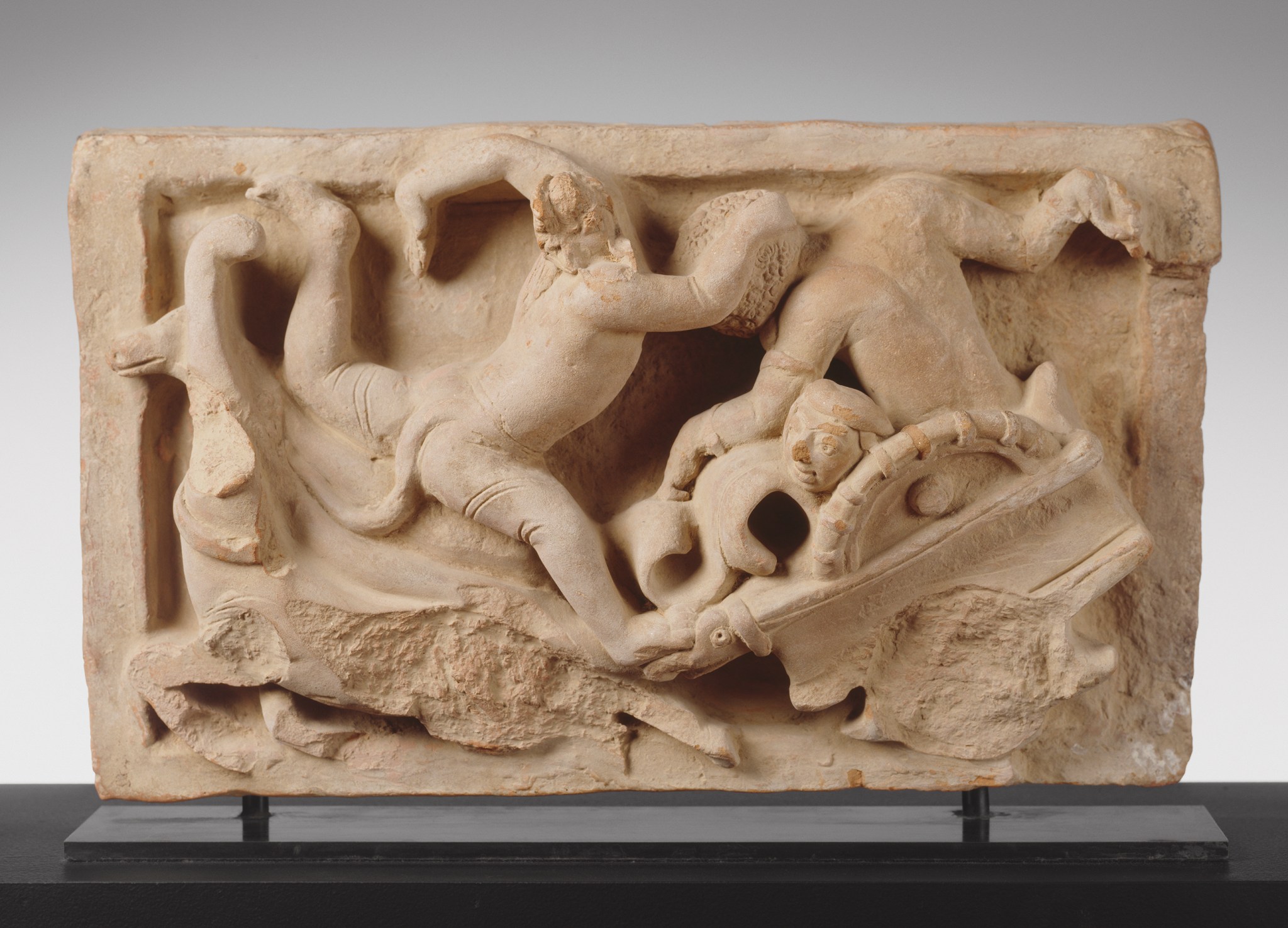
The next image is a well-known Gupta period terracotta depicting Kṛṣṇa in combat with the horse demon Keśin, on display at the Metropolitan Museum of Art in New York. This panel, described as originating in Uttar Pradesh, was purchased by the museum in 1991.
This panel was previously in the Gurukul Museum, Jhajjar, as attested by one of their catalogues, but was stolen (as told to me by Virjanand Devakarni). The Gurukul Museum describe it as coming from the village of Sandhāya in the Yamunanagar district of Haryana.
In Shastri, Yoganand. 1999. Prachin Bharat main Yaudheya Ganarājya. New Delhi: Prachina Bharatiya Itihas Shodha Parishad.
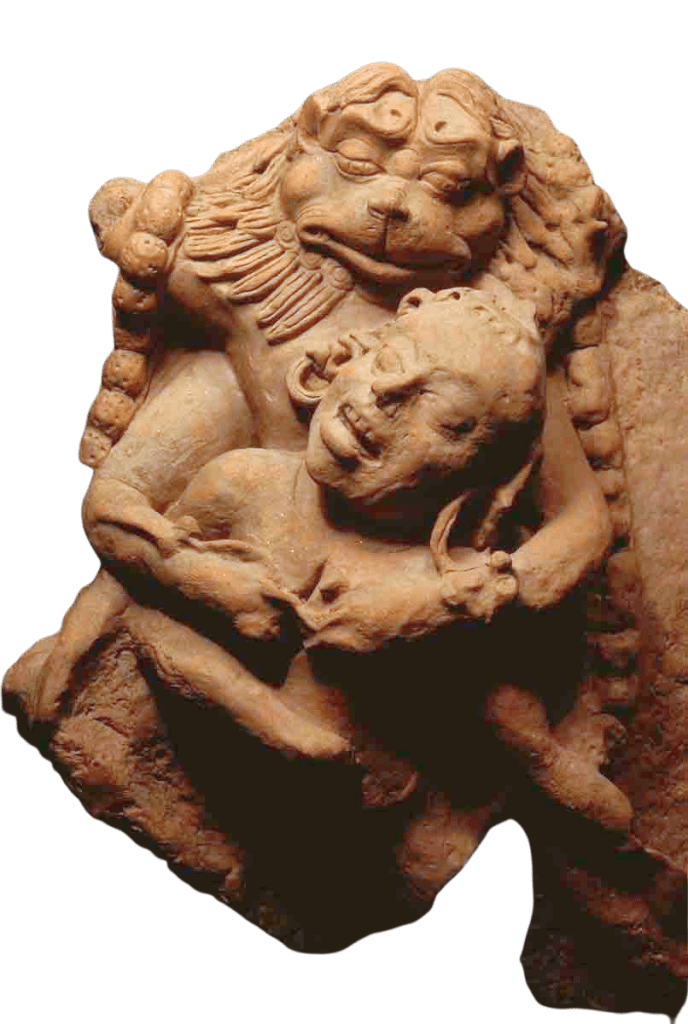
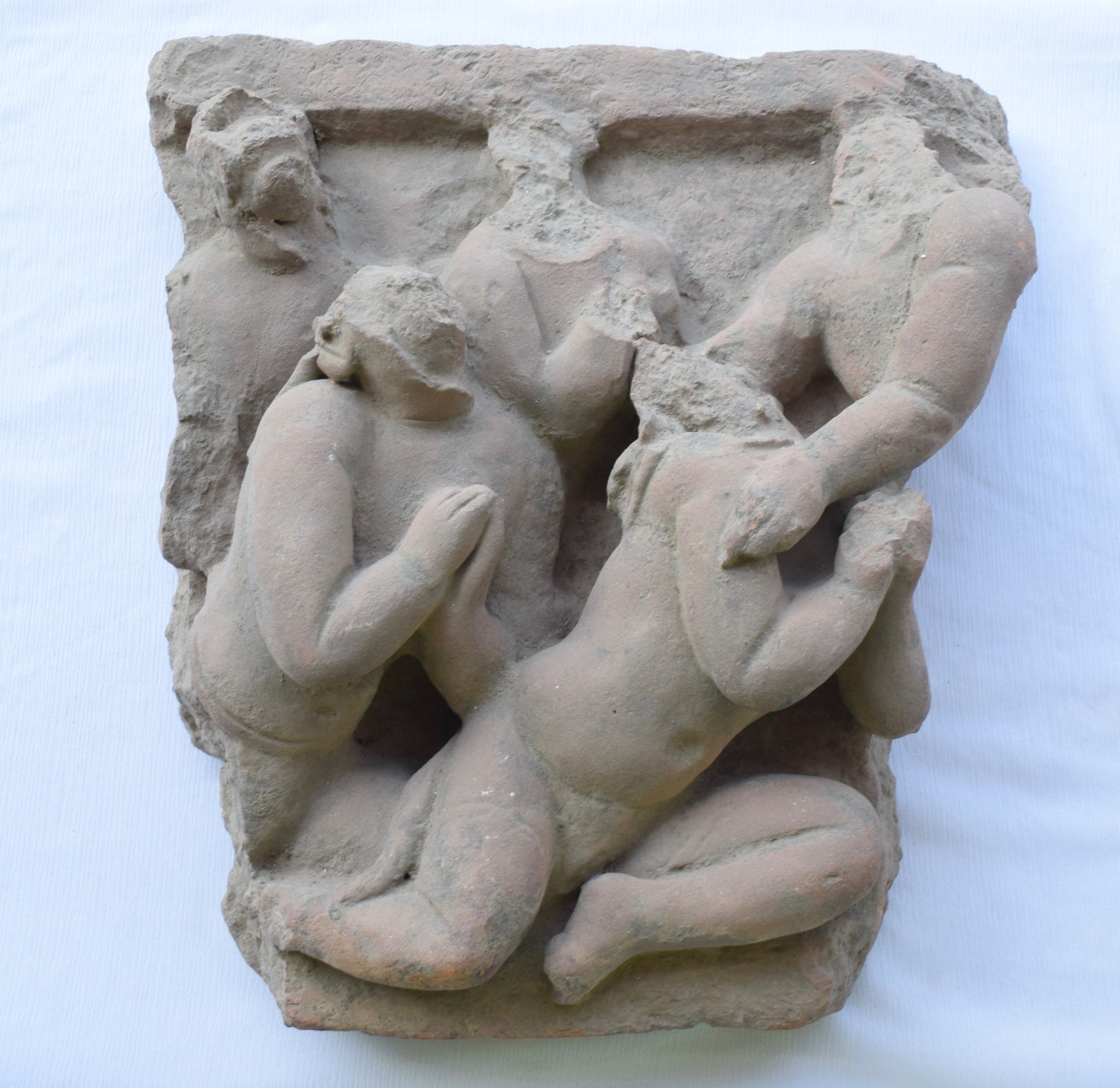
The next piece is a terracotta panel fragment depicting the blood curdling moment when the man-lion avatar of Viṣṇu, Narasiṃha, tears open the chest of the demon Hiraṇyakaśipu.
This fragment featured in the 1986 exhibition catalogue by Amy G. Poster titled, From Indian Earth: 4000 Years of Terracotta Art, where it is described as hailing from Uttar Pradesh. At the time it belonged to the Pritzker collection. I do not know whether it still does. This fragment features in the Gazetteer of India, Uttar Pradesh: District Unnao, edited by Amar Singh Bagel (1979). Here we are informed that this piece was found in an important mound (which has mostly yielded Kuṣāṇa material) called Sanchankot or Sujankot in the village of Ramkot near Bangarmau in Hardoi district, Uttar Pradesh (see p. 15 and the plate after p. 14).
The next Gupta period panel included in this post depicts a climactic moment in an episode from the Rāmāyaṇa in which the demon Triśiras is disposed of by Rāma.
This panel is now in the Linden-Museum, Stuttgart, but, like the Kṛṣṇa and Keśin panel, was once in the ownership of the Gurukul Museum, Jhajjar, and was stolen. The Gurukul Museum catalogue describes it as being purchased in Sirsā, Haryana (see, Devakarni, Virjanand. 2007. Prachin Bharat main Rāmāyaṇ ke mandir. Gurukul Jhajjar, Haryana: Pranttiya Puratattva Sangrahalaya).
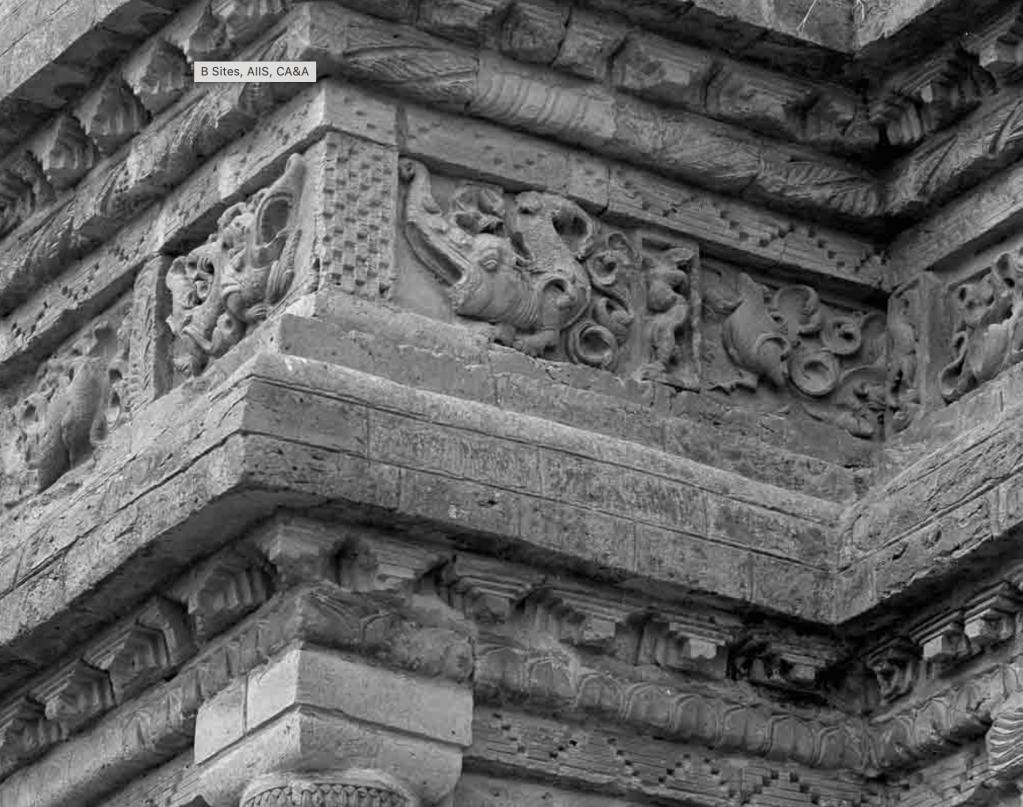
The final panel I will “reunite” with its place of origin is this beautiful terracotta panel representing a composite sea creature. Currently it resides in the Nelson Atkins Museum of Art in Kansas, North America, where its place of origin is described very loosely as India. It in fact belongs to the temple of Bhitargaon in Kanpur district, Uttar Pradesh; the only Gupta period brick and terracotta temple still standing. A photograph from the AIIS (American Institute of Indian Studies) records it in situ.
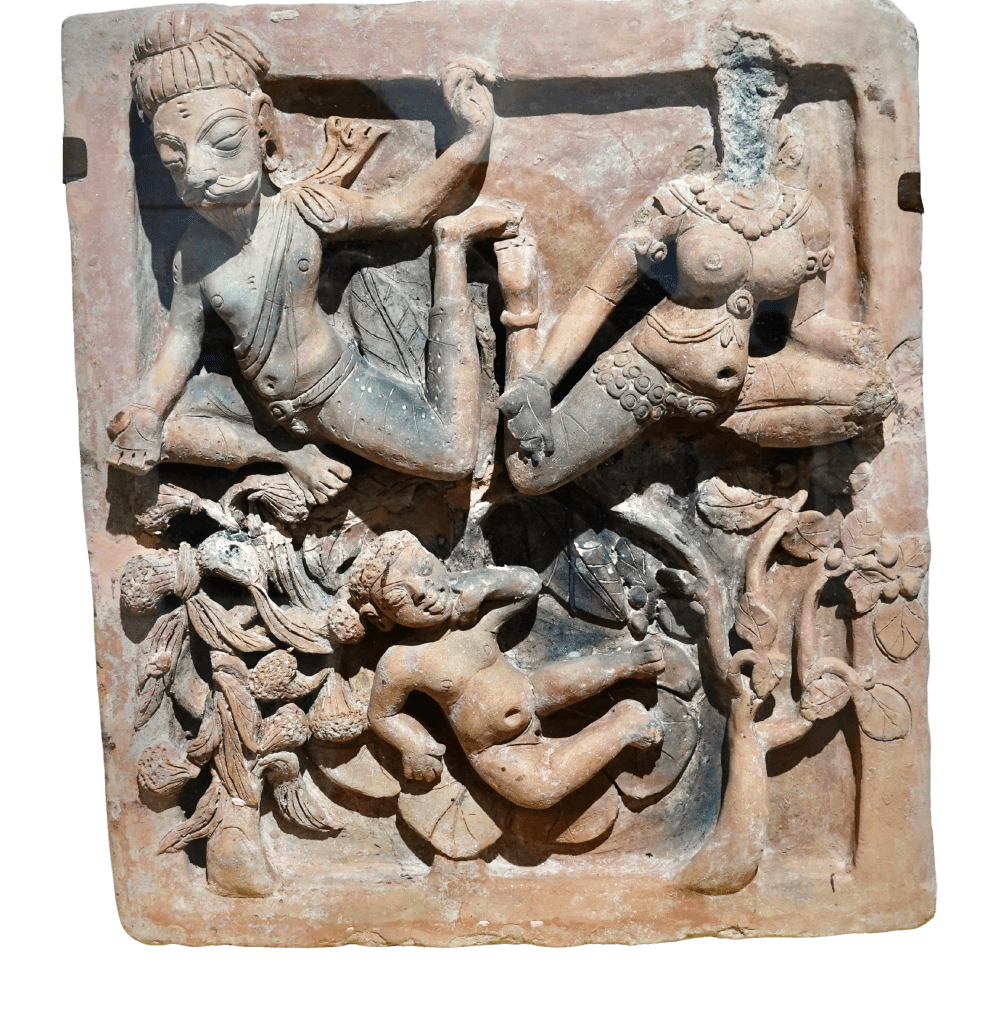
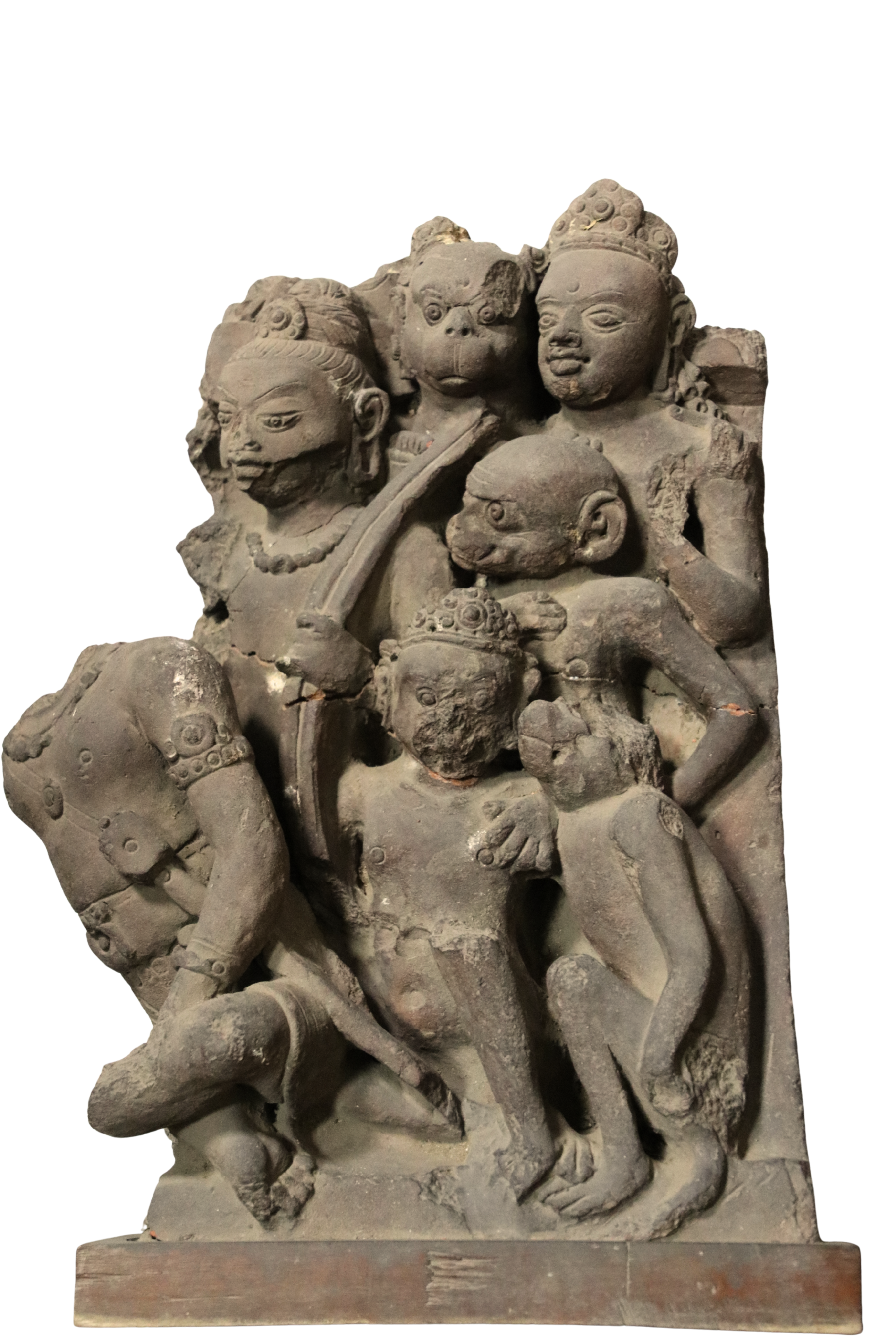
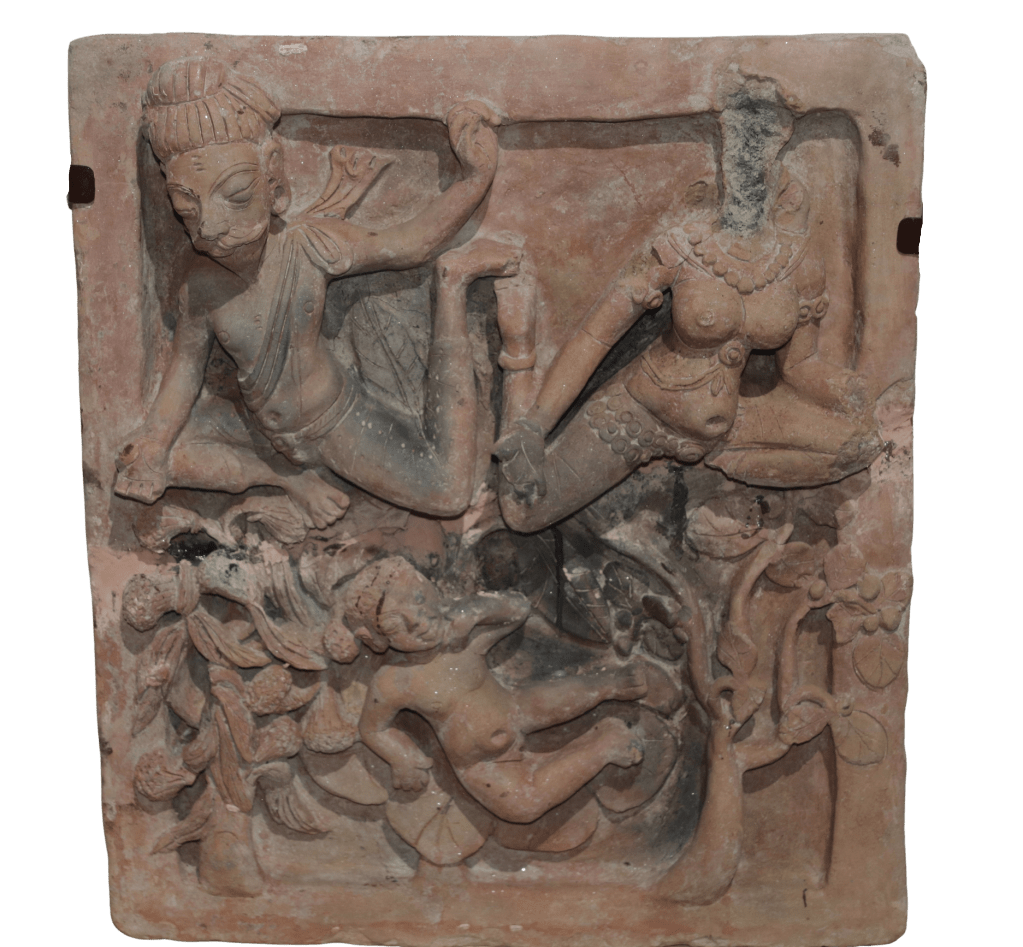
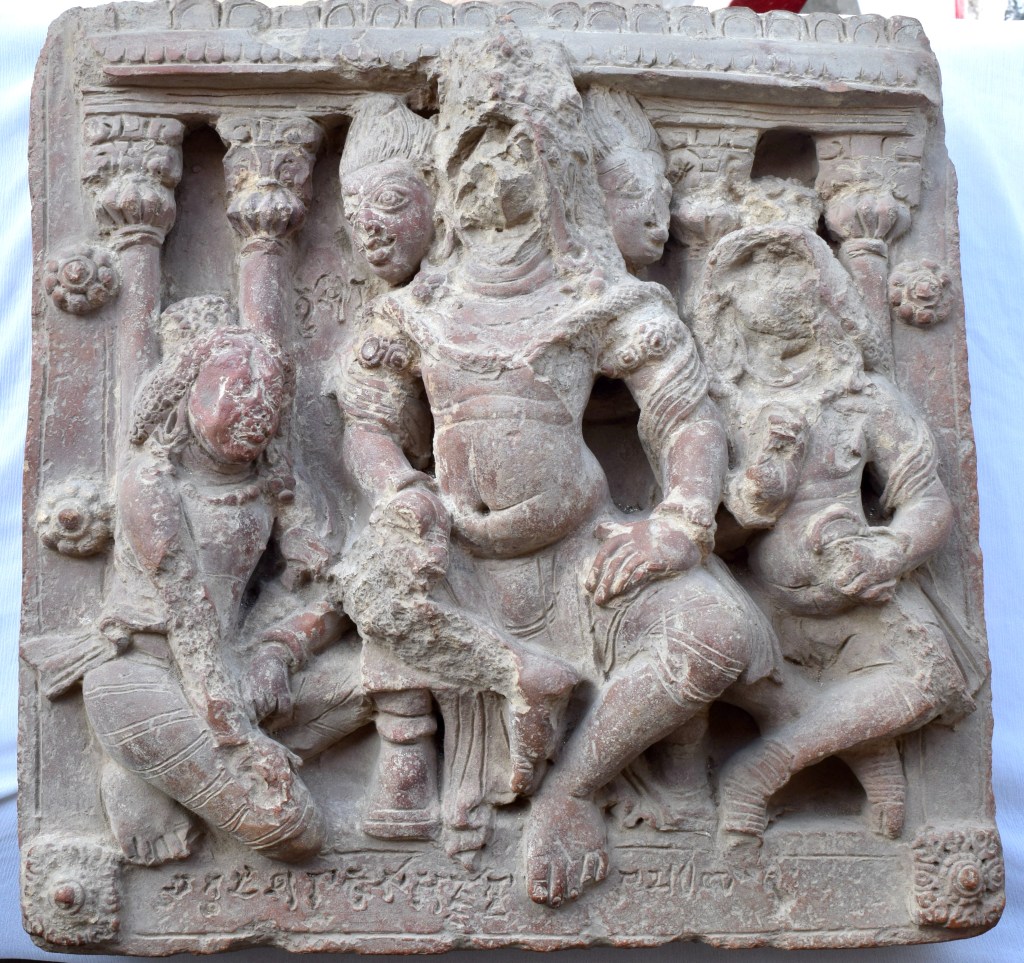
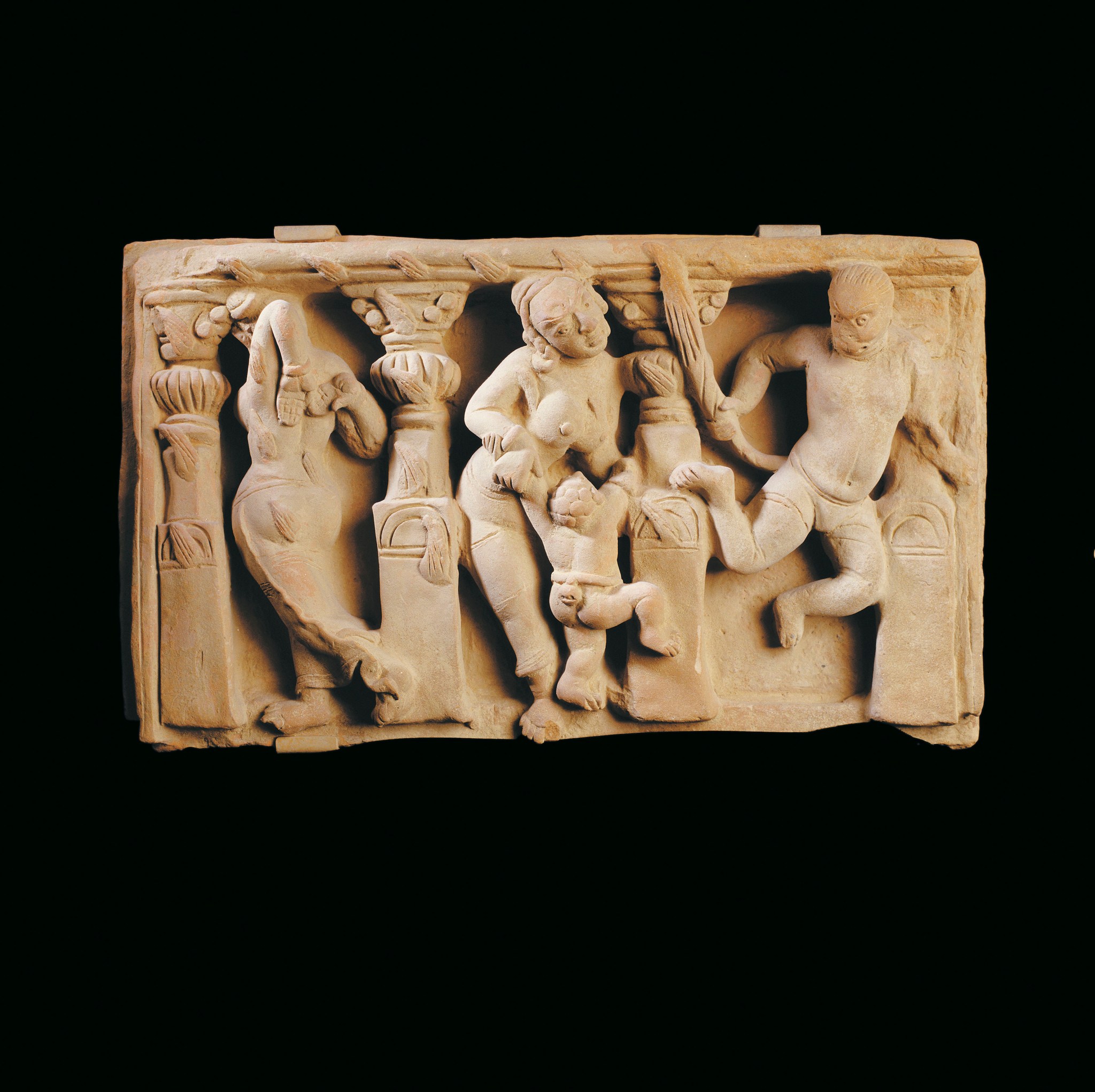
This early Gupta period terracotta panel has been identified by the excavators as representing Viśvāmitra, Menakā, and their newborn daughter, Śakuntalā.
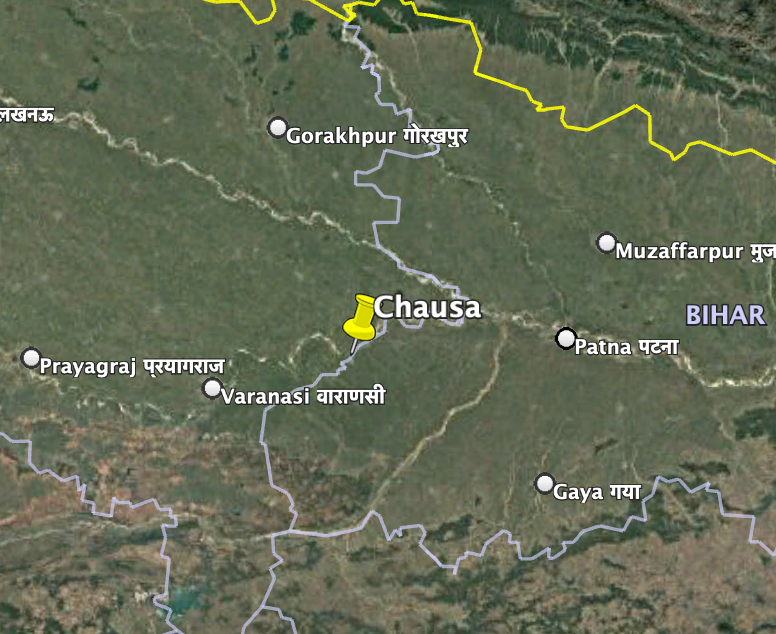
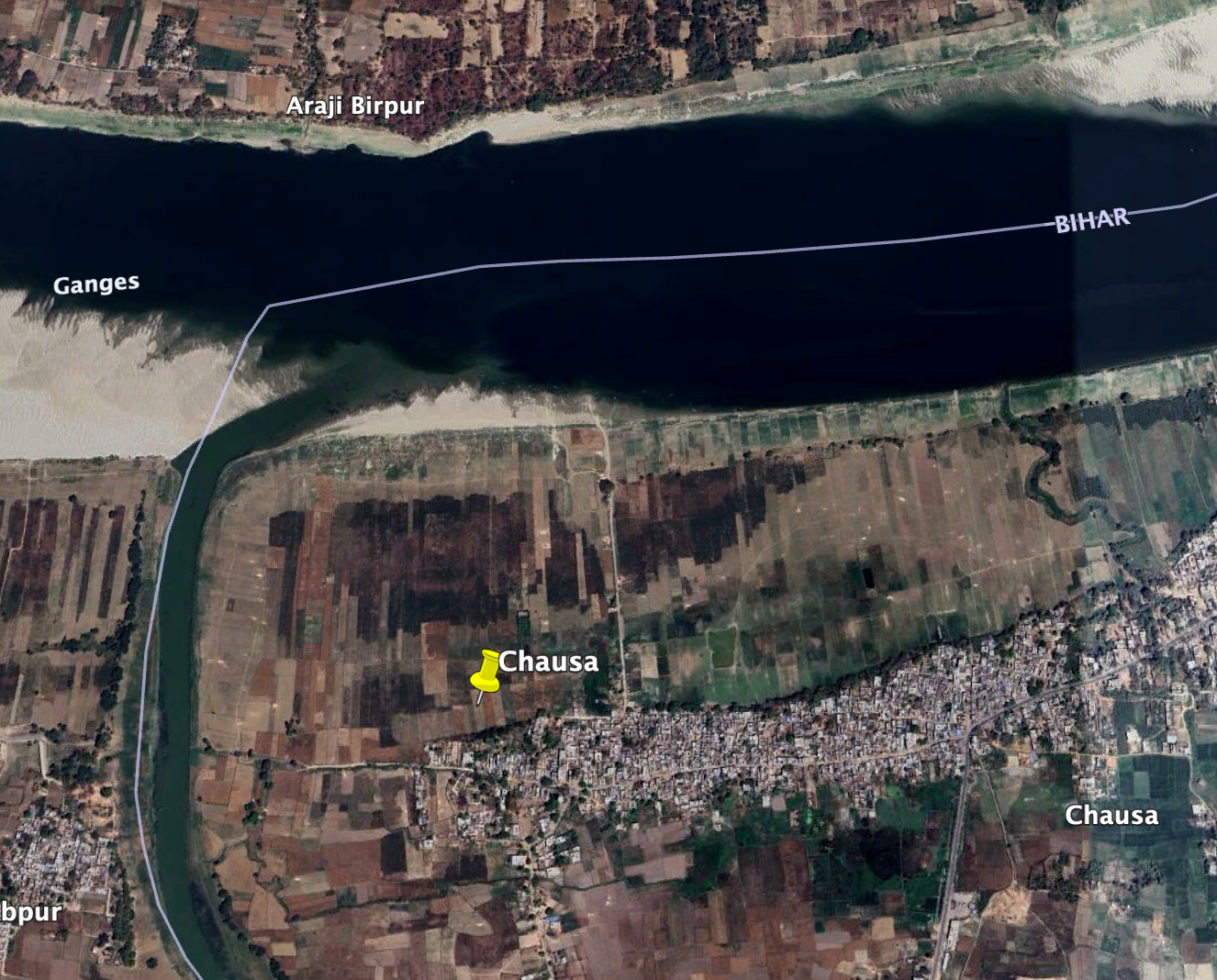
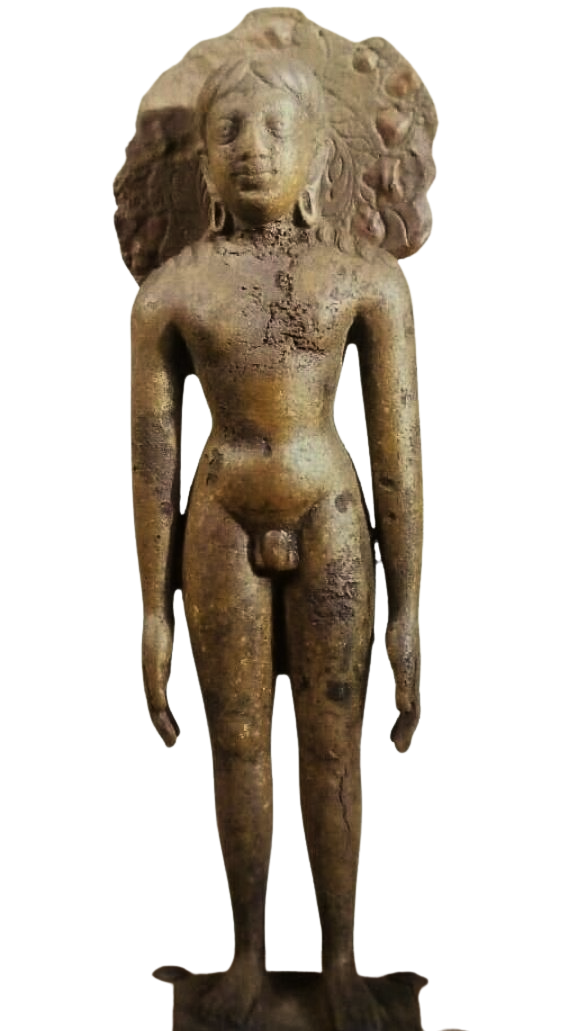
I was recently in Bihar where I visited the Sita Ram Upadhyaya Museum in Buxar with the purpose of studying early fifth-century terracotta temple panels and architectural elements excavated from a large archaeological mound, 10 metres in height, in the nearby village of Chausā in 2014, for an article I am working on. This mound is perhaps most famous locally for being the site of the 1539 battle of Chausā in which the Afghan ruler, Sher Shah Suri, defeated the Mughal Emperor Humayun. Chausā has been known to scholars of Indology and art history since 1931 due to the important hoard of 18 early Jain bronzes that were unearthed in a field here. Some of these bronzes are distinctly Gupta in style. Chausā is also known for being the place of origin of a terracotta panel depicting a Rāmāyaṇa scene housed in the old Patna Museum (possibly transferred by now to the new Bihar Museum). This panel belongs to the same lost temple as the panels excavated decades later.
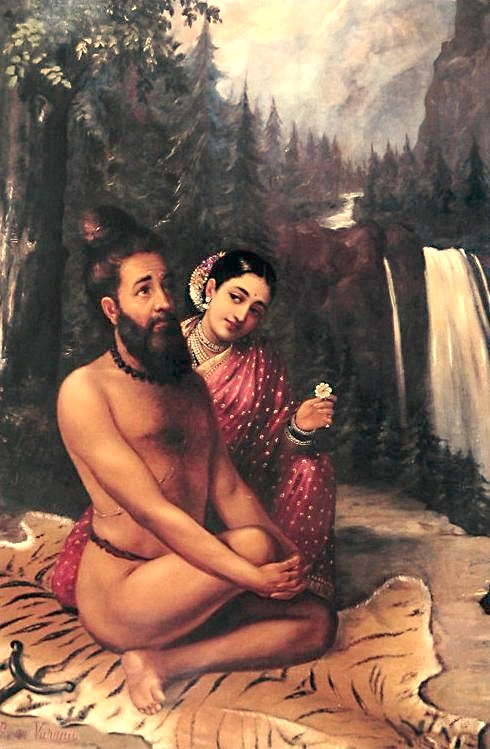
In this post I am going to discuss a single panel from the Chausā collection which might constitute the earliest extant temple image of the birth of Śakuntalā. This story features in chapters 71–72 of the Sambhava Parva of the Ādiparvan (first part) of the Mahābhārata. It tells of how Indra, king of the gods, was becoming perturbed at the increasing power of king-turned-sage, Viśvāmitra, who was performing advanced austerities. Indra, keen to protect his throne, sent the most beautiful of the asparas‘ (celestial nymphs), Menakā, to tempt Viśvāmitra away from his penances. Menakā, aware and afraid of the great power of Viśvāmitra, asks Indra to send the gods of wind and love with her to ensure her success. When Menakā arrives at the āśrama of the sage, the wind god causes a great gust to blow away her clothes which she then shyly attempts to retrieve. Having witnessed this mishap, Viśvāmitra falls in love there and then and invites Menakā to live with him. They spend many happy years together frolicking; years that feel like no more than a day.
Vishvamitra and Menaka by Raja Ravi Varma (1848–1906)
When Menakā becomes pregnant, she leaves the sage, her task having been completed. She gives birth to a girl on the bank of a river in the Himalayas and then returns to the heavens leaving the infant behind. The vulnerable baby girl is protected by forest birds and so receives the name Śakuntalā (the one protected by birds). She is discovered by Sage Kaṇva who becomes her foster father.
We turn now to the Chausā panel and its exuberant iconography.
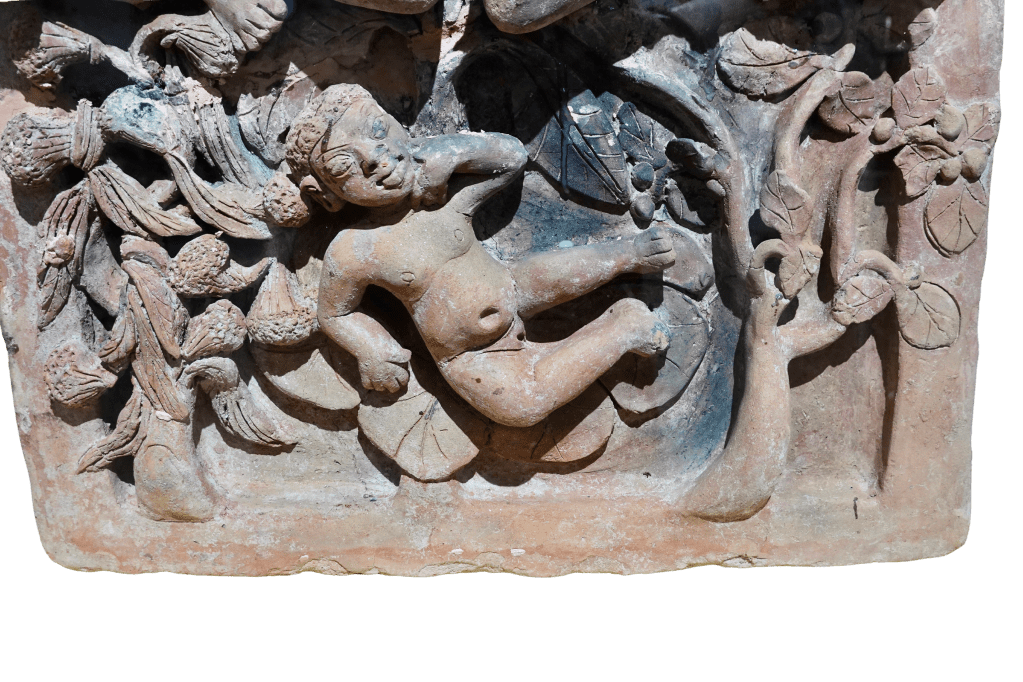
In the top register we observe Viśvāmitra and Menakā departing at speed in opposite directions, conveying the end of their relationship and the abandonment of their daughter Śakuntalā, who is depicted in the lower register lying on lotus pads in a forest glade. In the upper midpoint of the panel, a foot each of the erstwhile couple touch, perhaps an intentional reminder of the love and intimacy they shared. On the lower left of the panel is an Ashoka tree (saraca asoca), while to the right is a tree that could be a young Peepal (ficus religiosa) or a type of ficus palmata. The leaves of a palm tree are visible behind the fleeing figures. Despite being deserted by her parents, Śakuntalā has a smiling, content countenance.
Viśvāmitra has wonderfully characterful appearance. His matted hair is worn in a top knot and he sports a thick moustache and a suave pointed beard. He has tripuṇḍra (three lines, usually made from sacred ash) smeared on both his head and chest, marking him out as a devotee of Śiva.
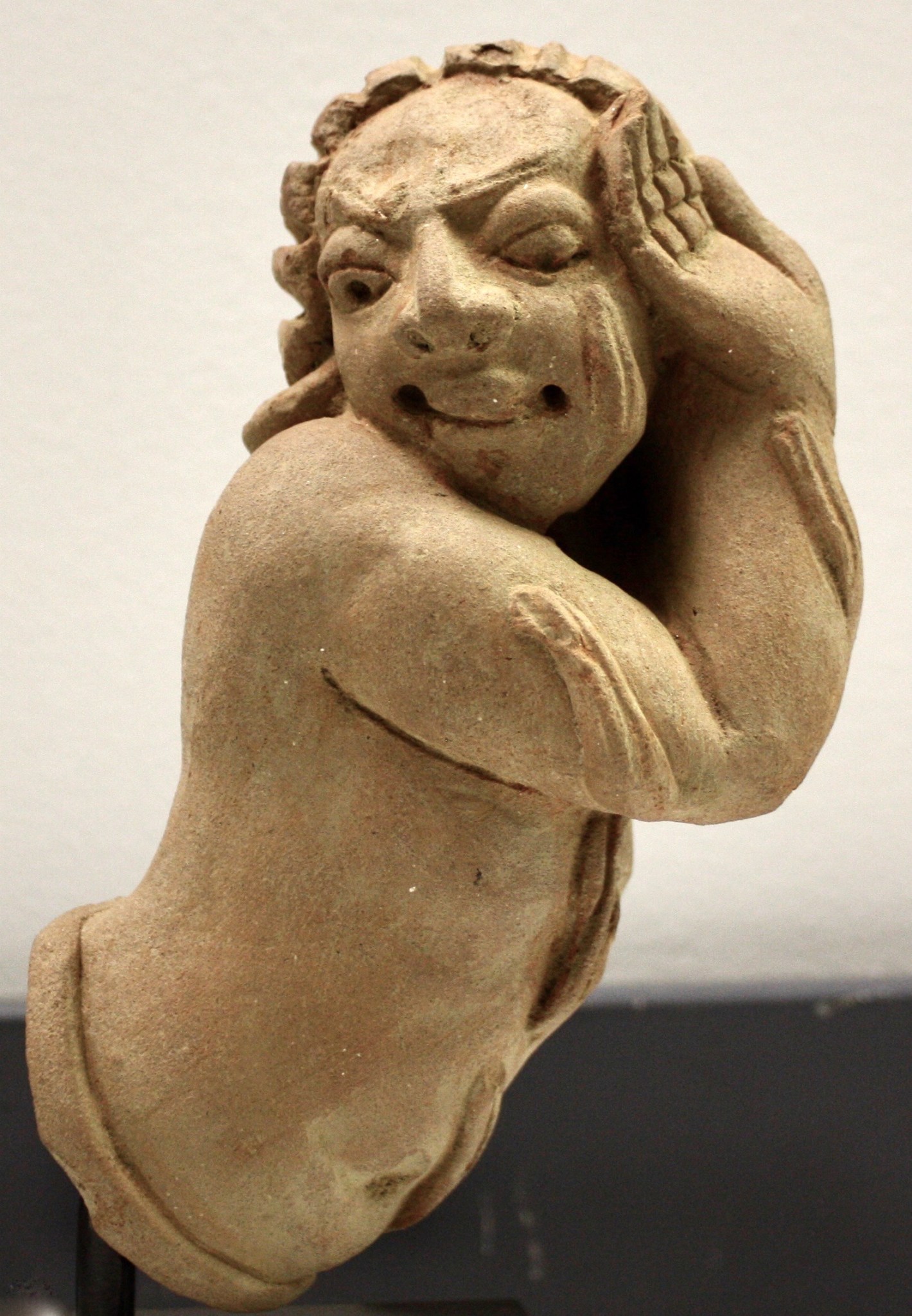
Menakā’s face is sadly lost so I include here an image of one of the graceful terracotta women of Chausā to give an approximate indication of what she might have looked like.
The panel imagery does not precisely align with the Mahābhārata telling. Most significantly, both Viśvāmitra and Menakā appear to be airborne in the panel. For all his powers, there is, to the best of my knowledge, no surviving textual account of Viśvāmitra having the ability to fly without the aid of a vehicle. Secondly, in the Mahābhārata, the couple separate before the birth of Śakuntalā. And finally, there are no birds represented in this panel – perhaps they would have featured in a lost sequential panel. There are various tellings of the relationship between Viśvāmitra and Menakā in ancient and early texts including one in the Rāmāyaṇa, but this and many others do not include the birth of Śakuntalā. The panel then, might constitute a unique take on the myth, or might illustrate an oral or textual telling that has not survived in another medium.
There are possible traces of red and white paint on the panel but this would need to be confirmed via scientific examination.
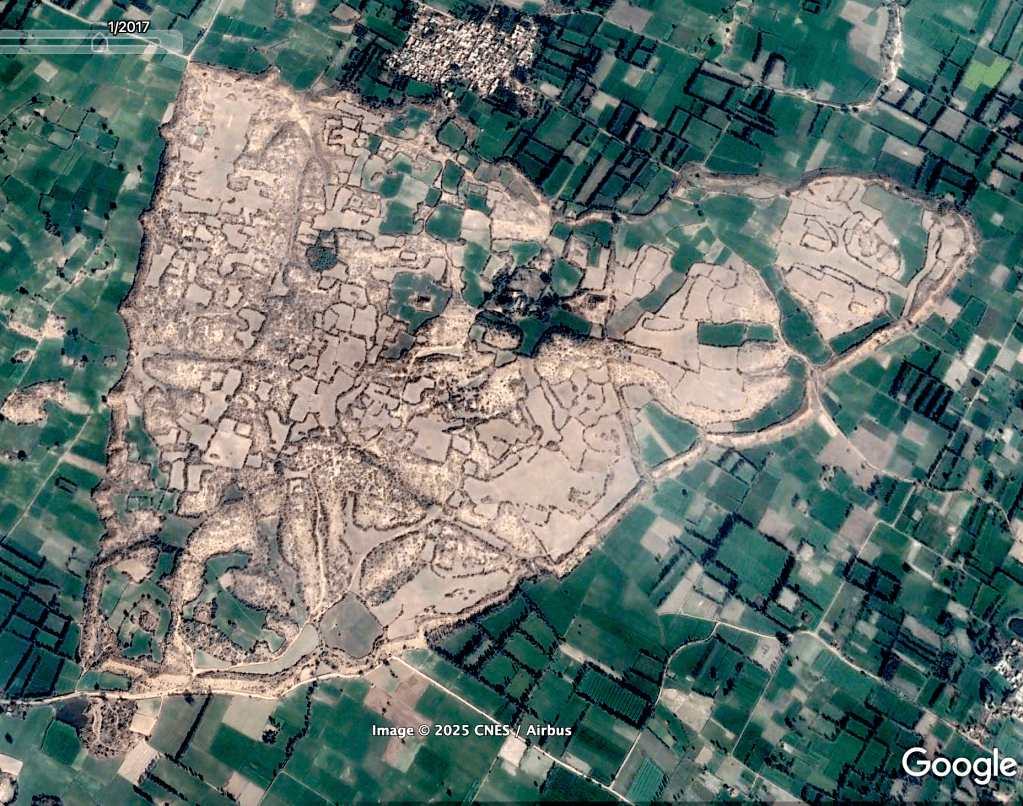
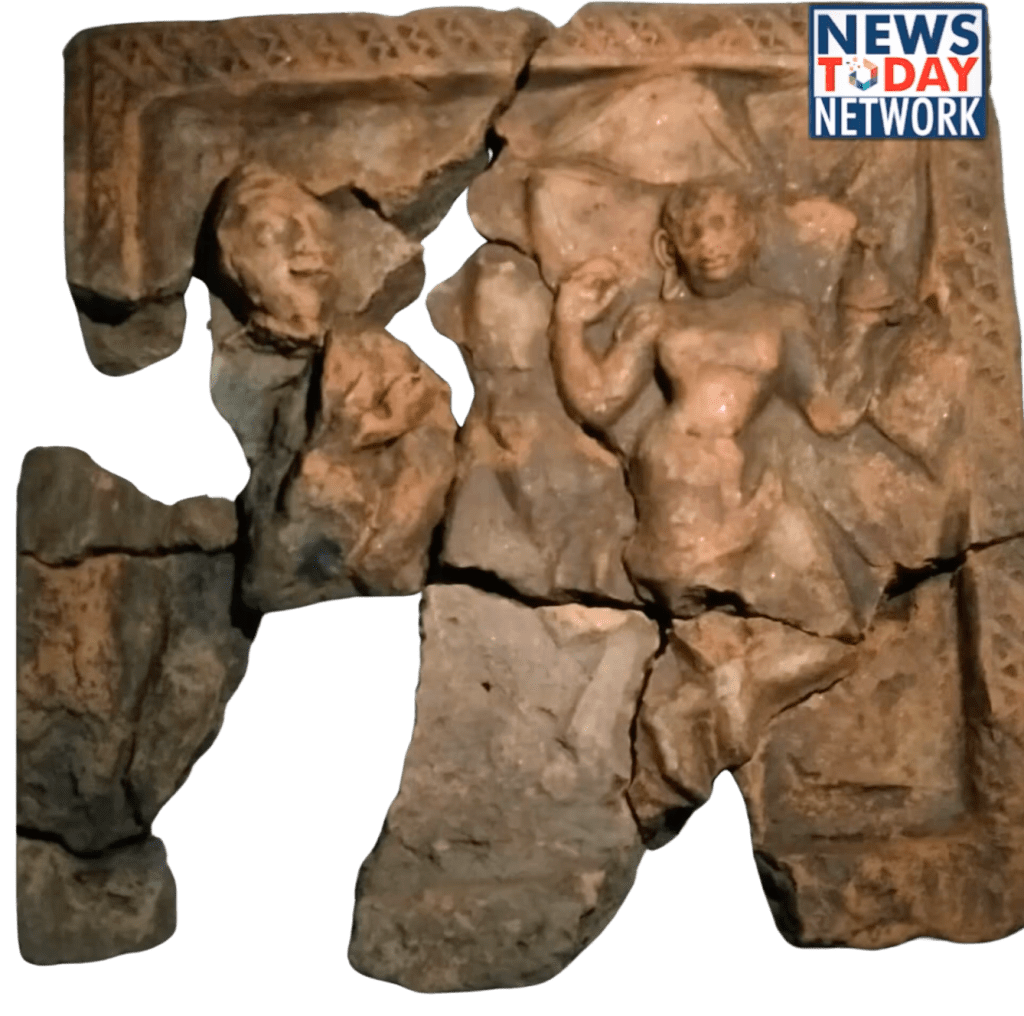
I recently came across an article dated 1st September 2022 in the newspaper, Live Hindustan, reporting the discovery of two terracotta panels on the south side of the pyramidal brick monument known as ACI or Bhimgaja situated at the heart of the ancient city of Ahichhatrā, Bareilly district, Uttar Pradesh. These panels, dating to circa the 5th/6th century CE, were unearthed during excavations in 2022 and were regrettably damaged in the process. The panels are exciting additions to the corpus of panels retrieved from ACI during the 1940–44 excavations, now divided between the National Museum, New Delhi, and the Lucknow State Museum. I am still trying to ascertain the whereabouts of the ‘new’ panels in order to study them in person, but meanwhile, I have to make do with the slightly blurred images from the newspaper article.
ACI/Bhimgaja following excavation in the early 1940s. Photograph courtesy of the Archaeological Survey of India.The ancient walled city of Ahichhatrā. Google Earth.
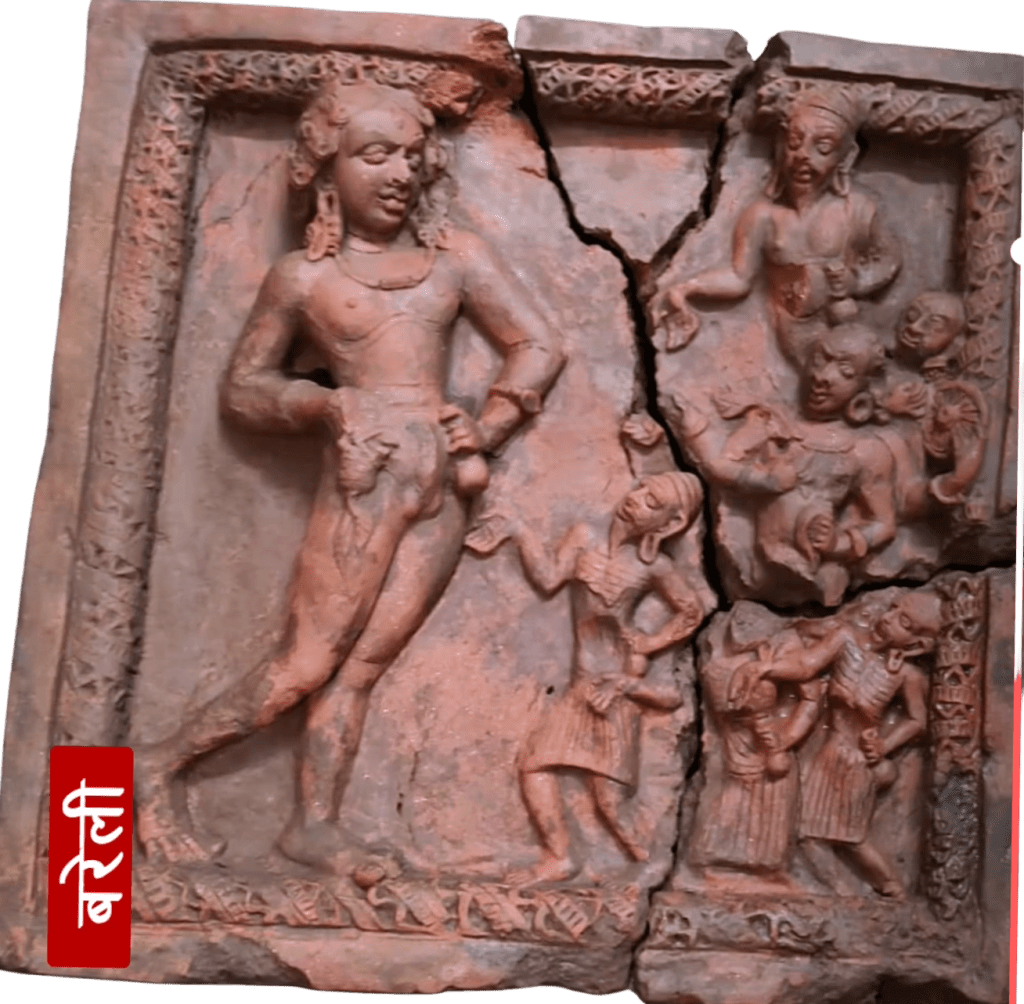
I suggest that the more damaged of the two panels might potentially represent the beautiful enchantress Mohinī – a female manifestation of Viṣṇu – standing in front of Mount Mandara and holding the vessel of amṛta (nectar of immortality) churned up from the ocean of milk. The figure on the left is too fragmented to identify.
The second panel represents Śiva as the devastatingly handsome naked mendicant, Bhikṣāṭana. This is a rare, if not unique, sculptural relief of the supreme beggar encountering Viṣṇu and a group of ṛṣis (sages), three of which are severely emaciated. Viṣṇu partly conceals a figure who looks remarkably similar to the woman in the previous panel. Interestingly, in this early image, Bhikṣāṭana is not furnished with several of the features and accoutrements that later come to distinguish him in temple sculpture, for example, having four arms, sandals, bells to announce his approach, and a pet dog or deer.
The Bhikṣāṭana myth features in various purāṇas, each telling distinct. More investigation is necessary to establish which version the imagery is most closely aligned with, if any. The presence of Viṣṇu, however, could point to it representing a segment of an episode in which there is an altercation in the Deodar forest (see below), or alternatively, an episode in which there is an altercation in Vaikuṇṭha, Viṣṇu’s abode, after Bhikṣāṭana has cut-off the head of the gate keeper of Vaikuṇṭha.
Regarding the Deodar myth, a version in the Kūrma Purāṇa tells how Bhikṣāṭana enters the forest accompanied by Viṣṇu disguised as Mohinī with the objective of teaching a lesson to some arrogant ṛṣis who, obsessed with austerities and rituals, have lost sight of supreme knowledge. Upon meeting the pair, the sages’ wives are immediately enamoured with the dashing Bhikṣāṭana and likewise, some of the sages find themselves attracted to Mohinī. Angry at this state of affairs, the sages insult Bhikṣāṭana, and curse his liṇga to fall off, which it does, albeit transforming into a radiating shaft of light. Anusūyā, the wife of Sage Atri, then recognises the pair as Śiva and Viṣṇu.
One tentative identification for the woman standing behind Viṣṇu in the Ahichhatrā panel is Mohinī, Viṣṇu having just ‘stepped out’ of her. Another option is Anusūyā, with the healthy looking sage in the upper register being Atri. Or it could be another woman altogether!
That Viṣṇu looks angry in the panel somewhat jars with the Deodar forest story and would suit the Vaikuṇṭha episode better. On the other hand, ṛṣis do not play a role in the latter episode.
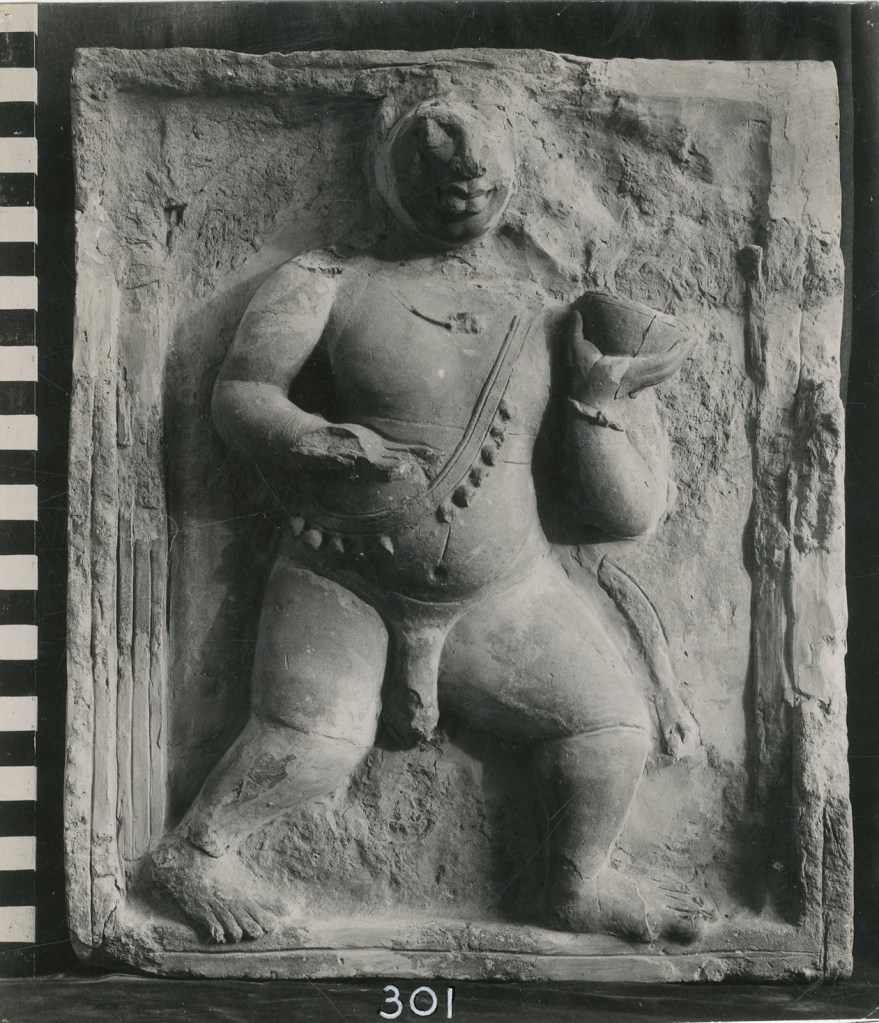
Significantly, there is another panel of Bhikṣāṭana from ACI (now in storage at the Lucknow State Museum), very different in character and clearly produced by a different pair of hands.
A terracotta panel of Bhikṣāṭana from ACI. Photograph courtesy of the Archaeological Survey of India.
I plan to spend more time studying this panel (it’s in a queue!), especially if I have the opportunity to view it in person, and my hope is that both panels will one day be reunited with the other finds from ACI – perhaps in a gallery of their own.
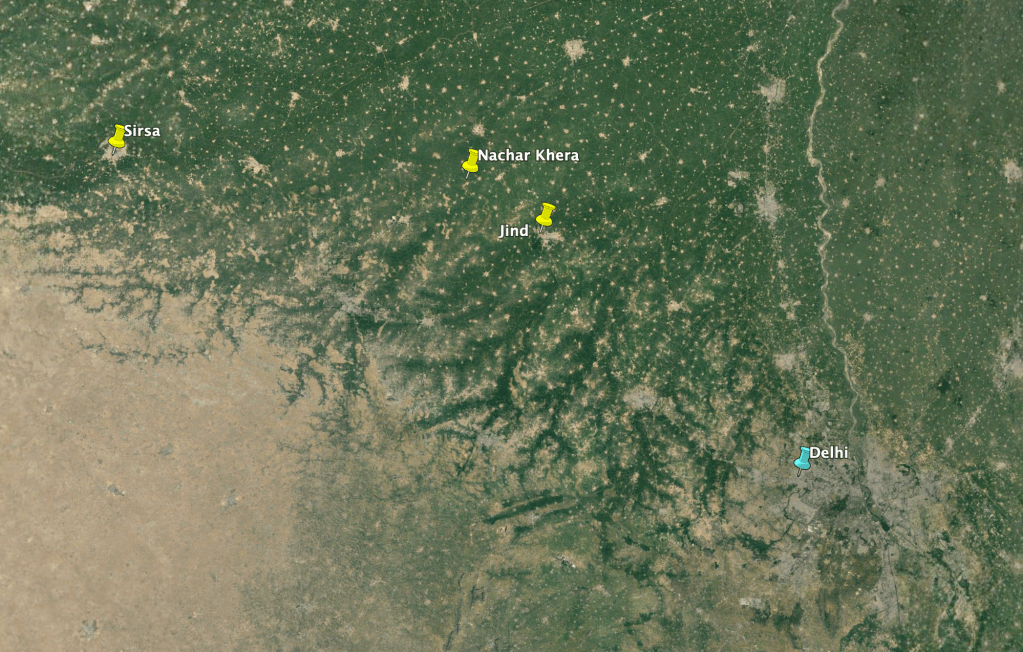
An inscribed fifth century CE terracotta panel depicting a Rāmāyaṇa scene was sold in London this autumn by John Eskenazi (Fig. 1). To the best of my knowledge this piece has not been published before and is an excellent addition to the corpus of Rāmāyaṇa images of this period. Although its find spot is reported as unknown, the panel can in fact be traced back, not to a particular archaeological mound, but to Sirsā in the state of Haryana in North India. The panel might not have been unearthed in Sirsā itself – though the town does sit on large ancient mounds – but could be from a site located somewhere in the region surrounding the town (Fig. 2). This can be inferred from the existence of a second panel with which the ‘London panel’ shares several characteristics, such as style, a similar scale, theme, and colour of terracotta (Fig. 3). Moreover, both panels bear inscriptions that appear to have been engraved by the same hand. I will return to this second panel later in the post.
Figure 1: Gupta period terracotta panel depicting Aṅgada killing Narāntaka. 38 cm in height, 34 cm in width. Photo: courtesy John Eskenazi.Figure 2: Map showing key places. Sirsā and Nachar Khera are 63 miles apart. Photo: Google Earth.
The Sanskrit inscriptions in Brāhmī script etched on the borders of the ‘London panel’ helpfully inform us that the scene represents Narāntaka, a rākṣasa son of Rāvaṇa, king of Laṅkā, and Aṅgada, the simian son of the deceased erstwhile monkey king, Vālin. Parts of the inscription are difficult to read, but in light of comparable Gupta period inscribed panels from Haryana, the legend could comprise a short sentence rather than simply naming the featured characters.[1]
It is remarkable just how many details of this concise visual rendering of a battle correlate with Vālmīki’s telling. This episode as told by Vālmīki, is found in the Yuddhakāṇḍa (book 6), and takes place during the Laṅkā war, following the deaths of many key rākṣasas including that of Rāvaṇa’s brother, the giant Kumbhakarṇa. We are told that Narāntaka rampages through the monkey army on his majestic white horse, piercing hundreds of his enemies with his javelin. Alarmed, the monkey king Sugrīva asks his nephew Aṅgada to dispatch the rākṣasa swiftly and put a stop to the carnage. So Aṅgada:
Armed only with his claws and fangs and lacking any other weapon … confronted Narāntaka and spoke these words:
“Stop! Why bother with such common tawny monkeys? Hurl your dart swiftly against this chest of mine, as hard to the touch as adamant.” (6.57.79–80)
An enraged Narāntaka hurls his javelin at Aṅgada and it shatters against the monkey’s mighty chest and falls to the ground. Aṅgada then strikes Narāntaka’s horse on the head and it collapses in a heap. The disarmed rākṣasa hits Aṅgada who, in retaliation, lands a tremendous blow on Narāntaka’s chest with his clenched fist. The rākṣasa falls to the ground, dead (6.57.81–88).
The frenzied one-on-one combat between Aṅgada and Narāntaka is brilliantly captured in the animated panel composition. On the left of the scene stands Aṅgada whose head is fragmented. The bare-chested monkey holds a clenched fist above his head and with his other hand he pushes Narāntaka down by the neck. Aṅgada’s fingers are vividly depicted pressing into the rākṣasa’s supple flesh. Narāntaka has a whiskery moustache and wears a deep frown on his forehead – and no wonder! He is clad in a long-sleeved upper garment and long trousers both etched with horizontal lines. And unusually for early Indian art, he wears shoes. His attire might represent armour of sorts and he certainly looks better dressed for battle than Aṅgada who wears a short dhoti. Both characters have pleated cloth belts tied loosely around the waist, the ends of which flap in the air. This is an ubiquitous trope in South Asian art signifying movement. Even though the rākṣasa still clings to his horse, Aṅgada has forced his upper body backwards so that his head leans over the horse’s rump. One of Narāntaka’s hands is clenched in a fist behind his head, but the battle is clearly lost. The front legs of his horse have collapsed, and the horse’s nostrils are touching the ground. On the lower border of the panel lies Narāntaka’s javelin, broken in two with a horizontal split. This is the only extant Gupta period visual depiction of this story.
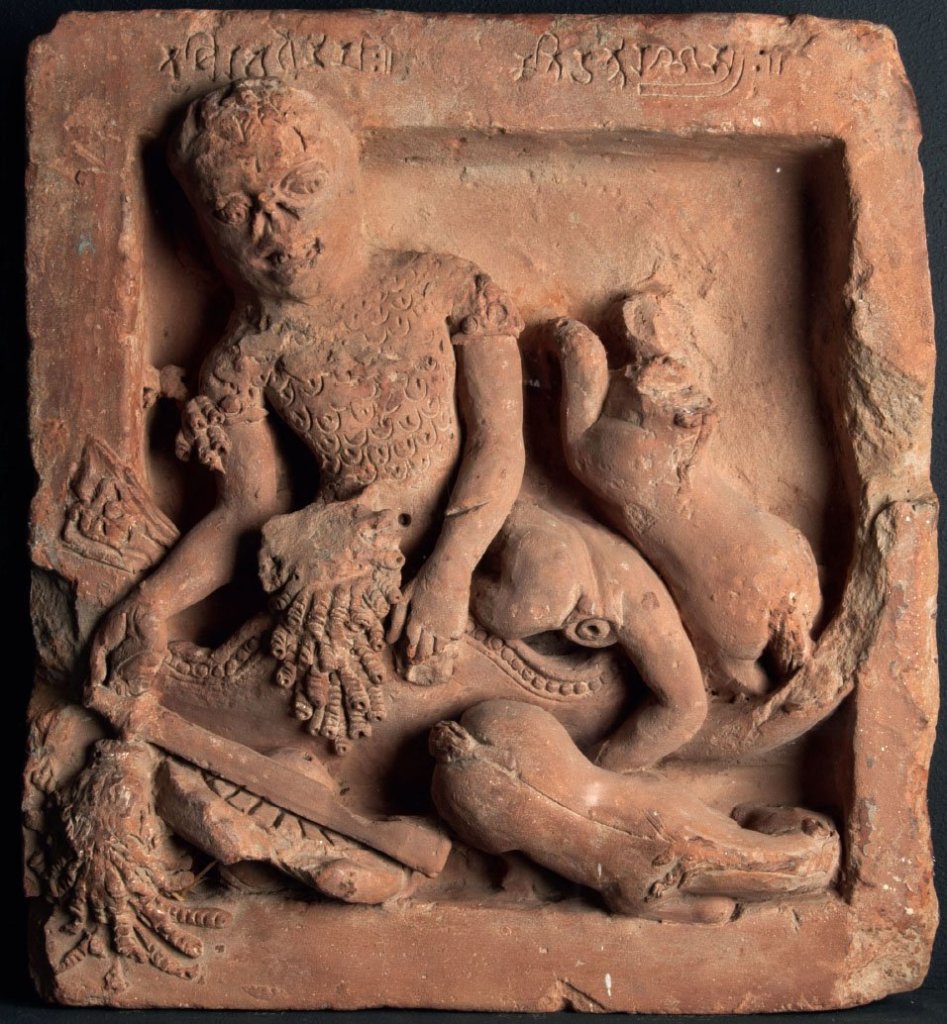
Its companion panel is in the Linden-Museum, Stuttgart, but was originally purchased from a dealer in Sirsā by the Gurukul Museum in Jhajjar (Devakarni 2007: Plate 6). How this panel ended up in Germany is unclear. Donald Stadtner has written on this panel and (like the Gurukul Museum) identifies it by its inscriptions as the killing of the three-headed rākṣasa Triśiras by Rāma, who is not pictured. Together the inscriptions read “In the killing of Triśiras lies deliverance” (Stadtner 2005: 215). In this scene Triśiras is pictured with one remaining head. The nose of this head has been sliced-off recalling the punishment inflicted on Śūrpaṇakhā. In this rather gruesome portrayal, the other two heads of Triśiras are represented lying, one on the ground, and one poised on the rim of the chariot. Both fallen heads are shown from behind with their ringleted hair tumbling upside down. Triśiras stands in his chariot, the wheel of which has flipped to one side. One of the horses is lying on the ground with its back towards the viewer and the other horse is rearing in the background. Triśiras’s charioteer is dead, flopped over the edge of the chariot. His head is missing, and the orifice of his neck is displayed. Triśiras is wearing a short-sleeved upper garment with a fish-scale-like motif.[2] Perhaps this is armour.
There are two demons named Triśiras (“three heads”) in Vālmīki’s Rāmāyaṇa. In the Araṇyakāṇḍa we meet Triśiras, a general of Khara who is a brother of Rāvaṇa and Śūrpaṇakhā. The second Triśiras is a son of Rāvaṇa and we encounter him in the Yuddhakāṇḍa. General Triśiras is described as riding a magnificent chariot pulled by horses. He is killed by Rāma who slices off his three heads with arrows (3.26.17–18). Rāma also kills his charioteer (3.27.15). In the Yuddhakāṇḍa, Hanūmān kills Triśiras, son of Rāvaṇa, following a fierce battle (6.58.41). This Triśiras also rides a chariot pulled by horses but no charioteer is mentioned (6.58.4). Which story this panel pertains to is not explicit, though the Triśiras of the Araṇyakāṇḍa features on a contemporaneous terracotta panel from Nachar Khera in Jind district, Haryana (Fig. 4).[3] On the other hand, the companion ‘London panel’ depicts a scene from the Yuddhakāṇḍa in which another of Rāvaṇa’s sons is disposed of. This pair of panels, however, might comprise only a small part of an extensive narrative sequence that could have illustrated episodes from several books of the Rāmāyaṇa.
Figure 3: Gupta period terracotta panel depicting Triśiras in the last moments of life. 38.5 x 38.5 cm. Linden-Museum, Stuttgart.
Both the iconographic style of the panels and the fact that they are inscribed, recalls other Gupta period terracotta panels representing scenes from the Rāmāyaṇa found in Haryana, most of which come from Nachar Khera and from other (unrecorded) mounds in the Jind region. None of these mounds have been scientifically excavated.
It is evident that for a certain amount of time during the rule of the Guptas, the Rāmāyaṇa was a popular theme on brick temples in this area. These engrossing terracotta relief panels possess a highly theatrical or even bardic quality, probably echoing, albeit in sculptural form, the manner in which many people would have encountered the Rāmāyaṇa in this era.
Bibliography
Devakarni, Virjanand. 2007. Prachin Bharat main Rāmāyaṇ ke mandir. Gurukul Jhajjar, Haryana: Pranttiya Puratattva Sangrahalaya.
Goldman, Robert P., Sally J. Sutherland Goldman and Barend A. van Nooten, trans. 2010 [2009]. The Rāmāyaṇa of Vālmīki, An Epic of Ancient India, Volume VI: Yuddhakāṇḍa. Delhi: Motilal Banarsidass.
Pollock, Sheldon I., trans. 2006. Ramāyana Book Three, The Forest by Valmīki. New York: New York University Press and JJC Foundation.
Stadtner, Donald M. 2024. ‘An Inscribed Gupta Terracotta Panel in the Linden-Museum.’ Tribus, 64: 206–17.
For more information on Gupta Ramāyana panels from Haryana see:
Bawa, Seema. 2018. ‘Visualising the Rāmāyaṇa: Power, Redemption and Emotion in Early Narrative Sculptures (c. Fifth to Sixth Centuries CE)’, Indian Historical Review, 45.1: 92–123.
Handa, Devendra. 2006. Sculptures from Haryana: Iconography and Style. New Delhi: Aryan Books International.
Notes:
[1] This information was provided by John Eskenazi.
[2] A Gupta period terracotta lunette housed in the Asian Art Museum, San Francisco, depicts Sītā being kidnapped by Rāvaṇa, and Jaṭāyus trying to save her. In this image the rākṣasa king also wears an upper garment with a fish-scale-like motif. It is a re-occurring theme in narrative art of the Gupta period that the rākṣasa warriors are fully clothed, while the gods and heroes have bare torsos and wear dhotis. I propose that this is a way of creating an iconographic distinction between the two groups, but probably also of ‘othering’ the rākṣasas by making them look in some way ‘foreign’ or barbaric, at least as far as mainstream Brahmanical culture was concerned. See: http://searchcollection.asianart.org/view/objects/asitem/search@/0?t:state:flow=87e4bd8b-8102-4b52-9c18-3d72bf30ce17
[3] An inscription on the panel from Nachar Khera clearly identifies this Triśiras as that of the Araṇyakāṇḍa.
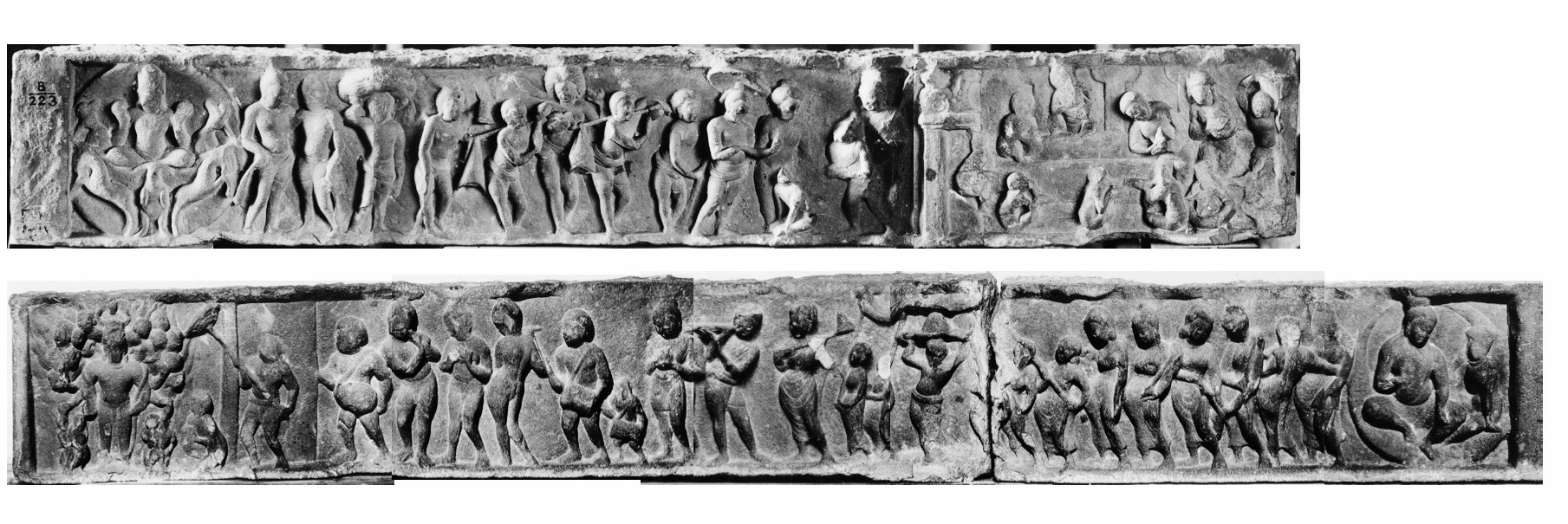
I recently published a paper on a Gupta period frieze from Gaṛhwa near Prayagraj (until recently Allahabad); one of the most intriguing friezes to survive from early India. Here I am taking the opportunity to discuss a small detail on the frieze that I only considered once my paper had already gone to press. The paper can be accessed here: https://www.degruyter.com/view/book/9783110674088/10.1515/9783110674088-004.xml?rskey=MYCfm5&result=2
A view of Gaṛhwa with the ruins of a twelfth-century temple, a colonnade from the same period or slightly earlier, and one of two tanks. Incidentally, the sattra dwellers might have been depicted sitting on the sides of one of the tanks to keep cool.
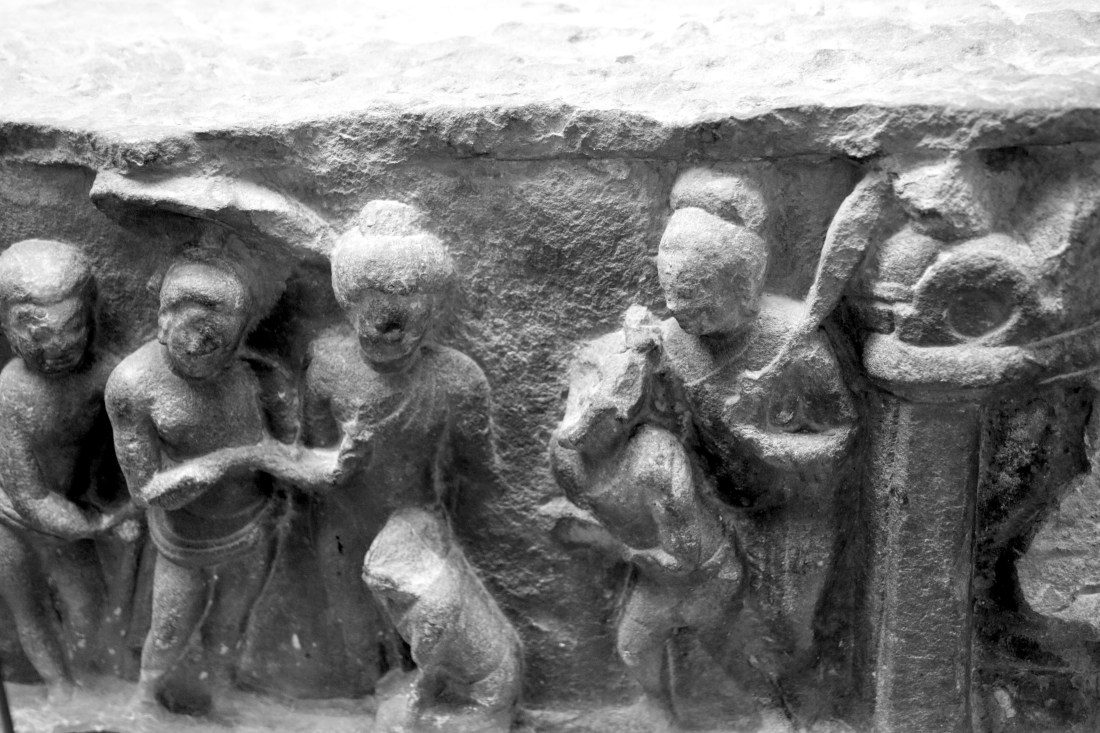
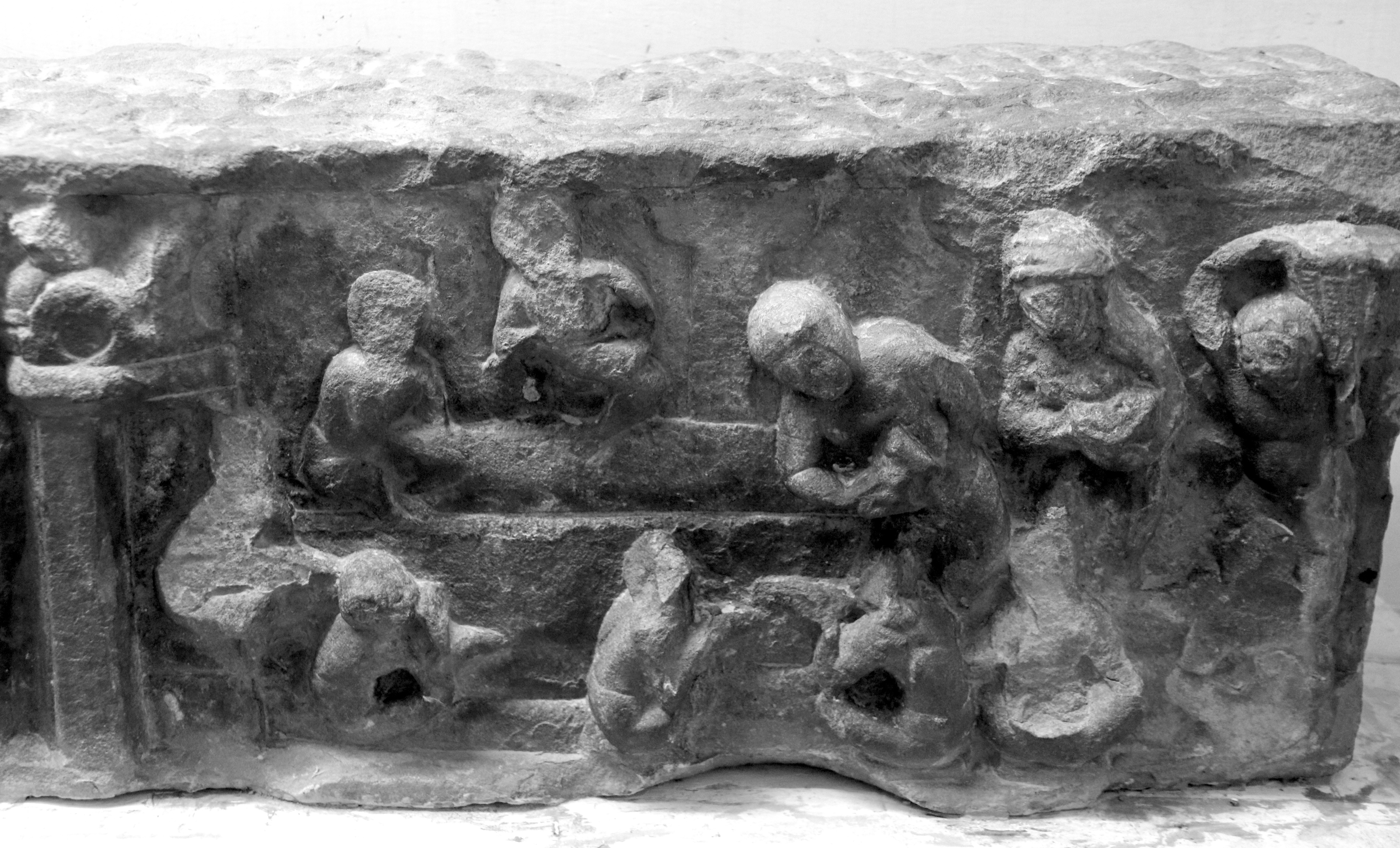
I have interpreted the frieze as depicting two processions – one leading to a temple enshrining Viṣṇu Viśvarūpa who is offering a magnificent theophany of himself to a kneeling king; while the other procession winds its way to a sattra, a charitable institution that seems to have had its naissance in the early Gupta period. Incredibly, this is the only surviving visual representation of a sattra, and moreover, by happy coincidence, Garhwa is also home to the earliest epigraphic mention of this type of sattra. Such sattraswere almshouses of sorts; dwelling places attached to temples for the benefit of brahmins, wandering ascetics and the poor. Clothing and food was given to the inhabitants of the sattras, but beyond this little is known.
The sattra dwellers being fed and watered by pilgrims.
One of the most notable features of the frieze is the clever way in which it draws together gods, astronomical and astrological deities, kings and consorts, soldiers, brahmins, the needy, musicians, servants, and possibly mythical heroes, and also I will argue, pilgrims.
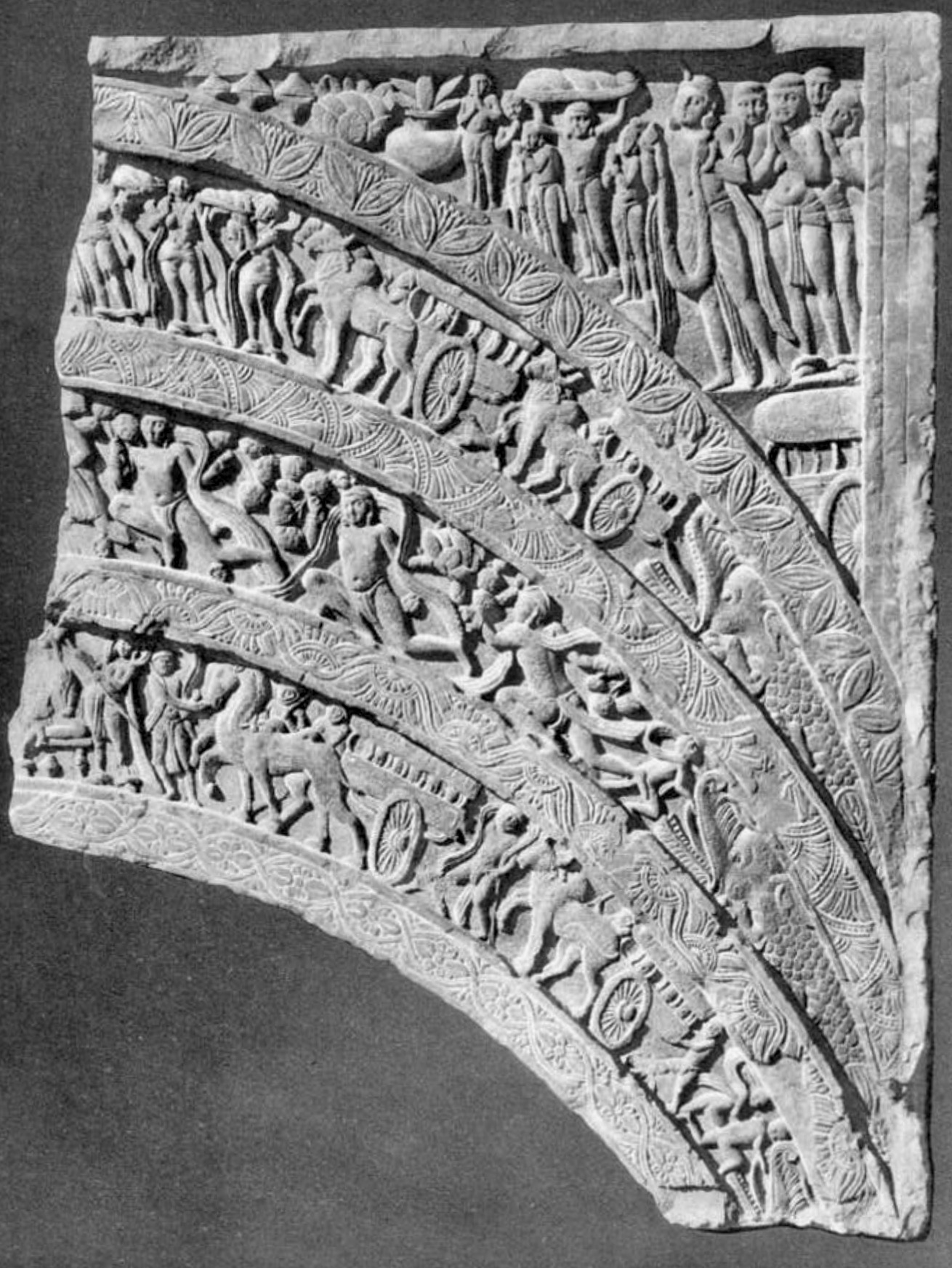
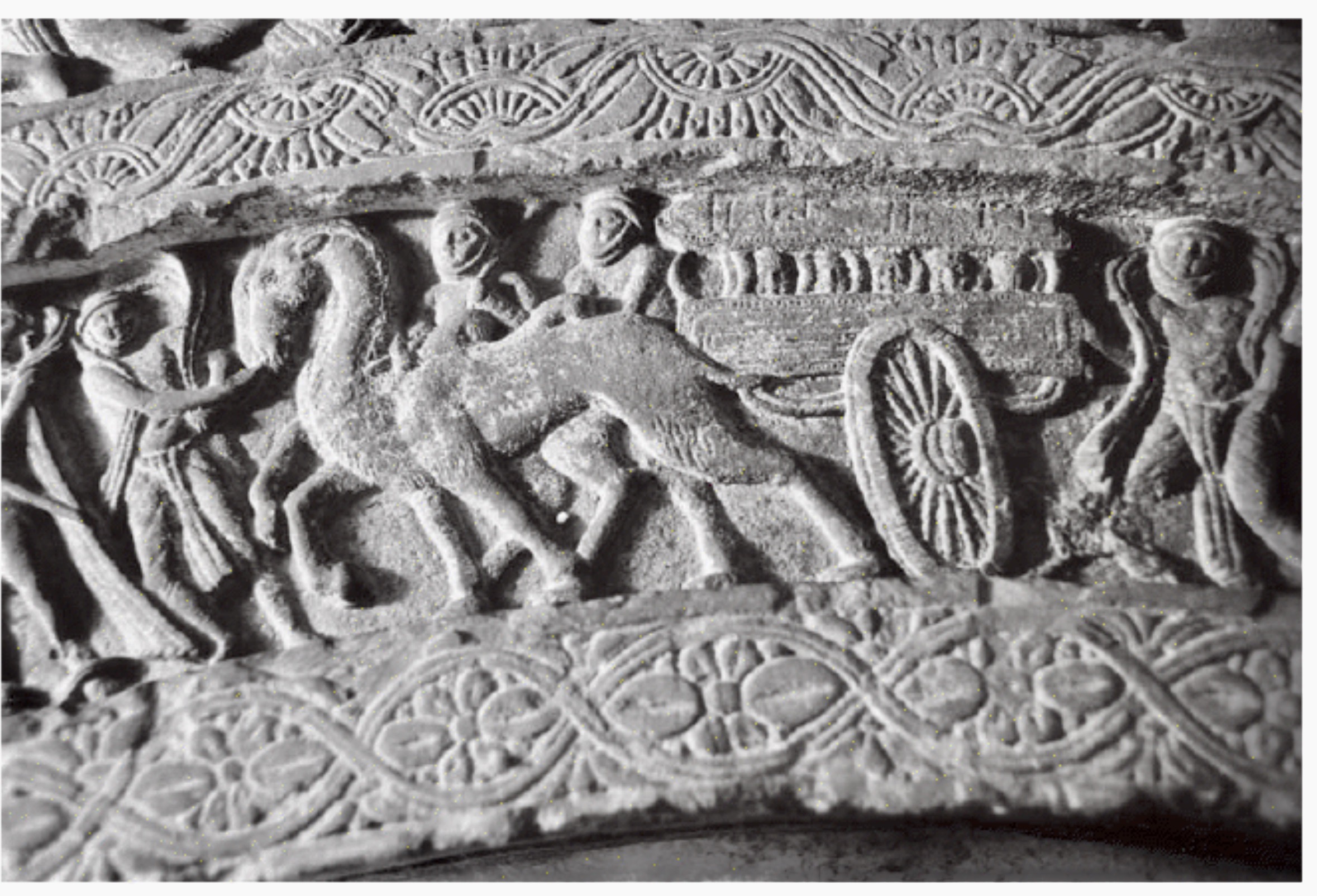
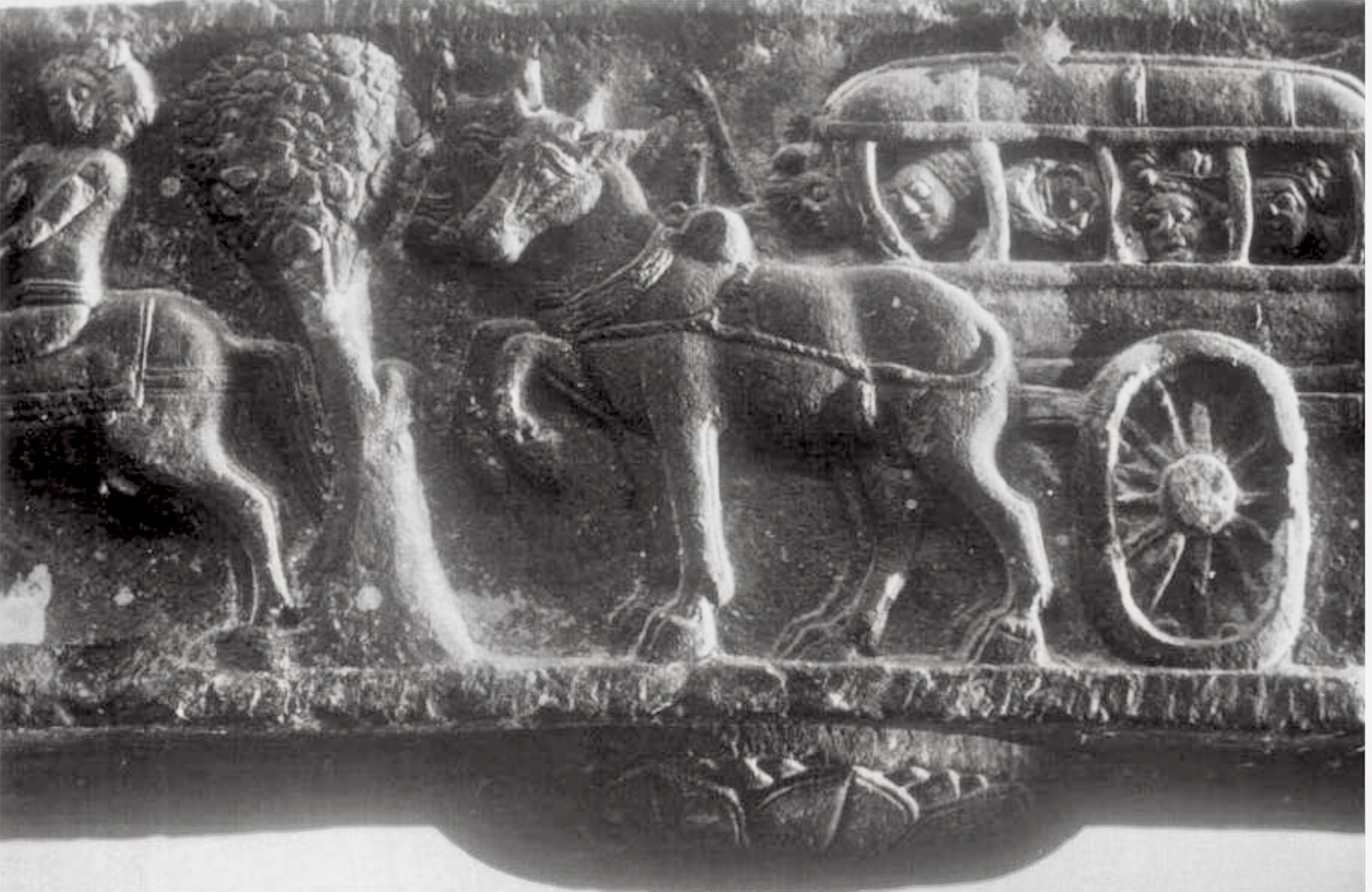
The inhabitants of the sattra, who sit on the steps of a tiered structure, are receiving food and drink from a couple who wear unusual head coverings – the woman’s headdress has a long scarf draping down behind her neck and shoulders. The attire of this couple points to them being pilgrims, probably having stopped off at the sattra during a long journey. This I have deduced by making a comparison with imagery on a stone tympanum in two pieces from Kaṅkalī Tīlā, Mathura, produced during the Śuṅga period (c. 100 BCE), although slightly outside of the Śuṅga empire. In three separate registers this tympanum depicts caravans arriving at the city, and comprises figures riding or walking next to camels, horses, buffalos and elephants. Moreover, in each caravan are coaches pulled by animals. These coaches have several windows, each one framing the face of a person who looks out in anticipation. In the uppermost register to the left, the pilgrims stand above a coach carrying offerings to bring to the stūpa pictured to their fore.
Already by the 1st century BCE Mathura was an important religious centre as is evidenced by material remains and epigraphic records, and this evidence coupled with the iconography on the tympanum, suggests that the sacred monuments pictured here were drawing in (or were hoping to attract) worshippers from far and wide. The most salient point here, however, is that several of the travellers wear head coverings that wrap under the chin – strikingly similar in fact to those worn by the couple in the Gaṛhwa frieze. No doubt this is a practical clothing choice for what would be a very dusty journey.
Red sandstone tympanum from Mathura, c. 100 BCE. National Museum, New Delhi. Photo credit: author.Red sandstone tympanum from Mathura dating to circa 100 BCE. National Museum, New Delhi. Photo: L. Bachhofer, Early Indian Sculpture, Pl. 102.Here the characters wear the same type of head coverings as the pilgrims in the Gaṛhwa frieze. Photo: S.R. Quintanilla. History of Early Stone Sculpture at Mathura, ca. 150 BCE-100 CE (Leiden: Brill, 2007), fig. 231.Photo: Pramod Chandra in Quintanilla, fig. 23.
Since giving to a sattra was considered to increase the merit of the benefactor, it comes as no surprise that pilgrims would find it beneficial to make a stop at Gaṛhwa to donate to the inhabitants of the sattra, and to perform pūjā at the Viṣṇu temple.
In the Yuddhakaṇḍa(book 6) of Vālmīki’sRāmāyaṇa, the heroes Rāma, Lakṣmaṇa, and their monkey allies led by Sugrīva and Hanumān, set off on a mission to rescue Sītā who has been forcibly taken by the demon king Rāvaṇa to his island kingdom of Laṅkā. Once the heroes arrive at the shore of the immense ocean, they stop and stare:
For it was dreadful with its fierce sharks and crocodiles. And now, as the day waned and the night came on, the ocean, Varuṇa’s lair, agitated at the rising of the moon, was covered with reflections of its orb. It was swimming with huge crocodiles as powerful as fierce gales and with whales and whale sharks. It was teeming, it appeared, with serpents, their coils flashing. It swarmed with huge creatures and was studded with all sorts of rocks. The abode of asuras, it was fathomless, unapproachable, and impossible to cross. (6.4.78-80)*
At this juncture, the troop gain a new ally, the righteousrākṣasaVibhīṣaṇa, younger brother of Rāvaṇa. Vibhīṣaṇa advises Rāma on how to propitiate Sāgara, god of the ocean, in order that they might find a way to cross the ocean’s depths. After an interval, Sāgara rewards Rāma, declaring that he will:
… divise some means that I can tolerate whereby the sea monsters will not attack while the army is crossing … (6.15.7)
He instructs Nala, the simian son of the divine architect Viśvakarman, to build a bridge across the ocean.
Then with Rāma’s permission, all the leaders of the troops of tawny monkeys rushed excitedly into the great forest by the hundreds and thousands.
There those monkeys, bulls among the hosts of tree-dwelling monkeys, resembling mountains, broke down trees and dragged them to the sea…
Heaved up violently by the boulders hurled into it, the water rose into the sky and cascaded down on all sides.
Nala constructed a great bridge, ten leagues in width and one hundred in length, right through the middle of the ocean, lord of rivers and streams (6.15.14-12).
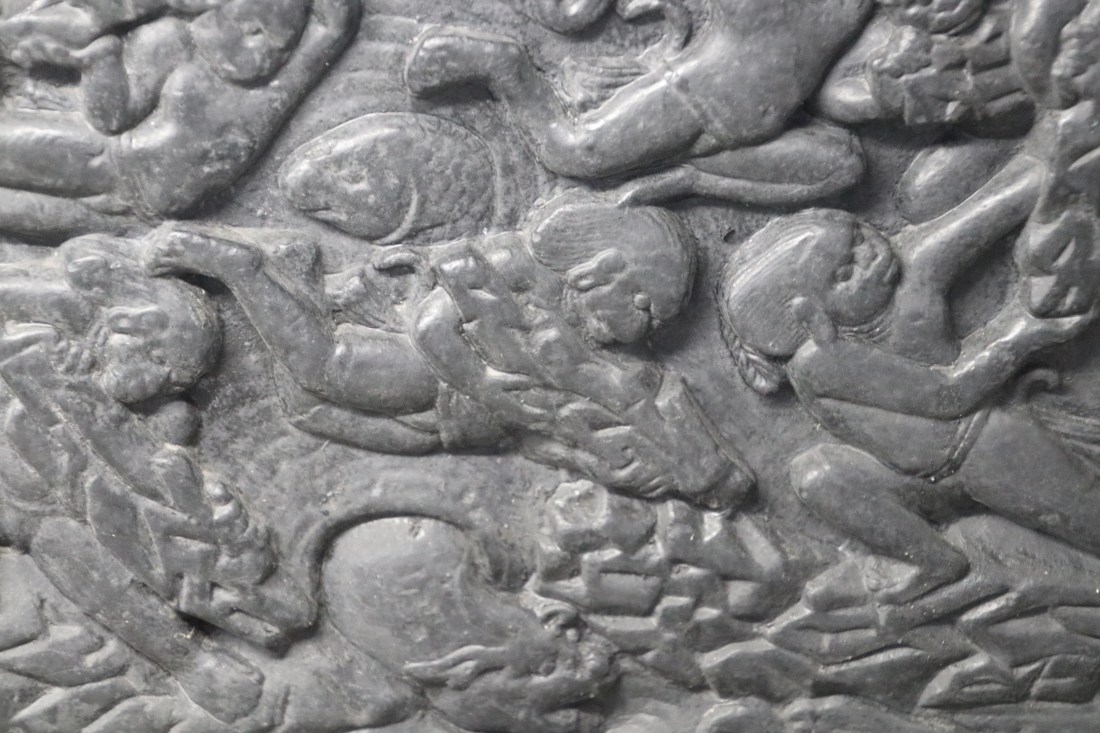
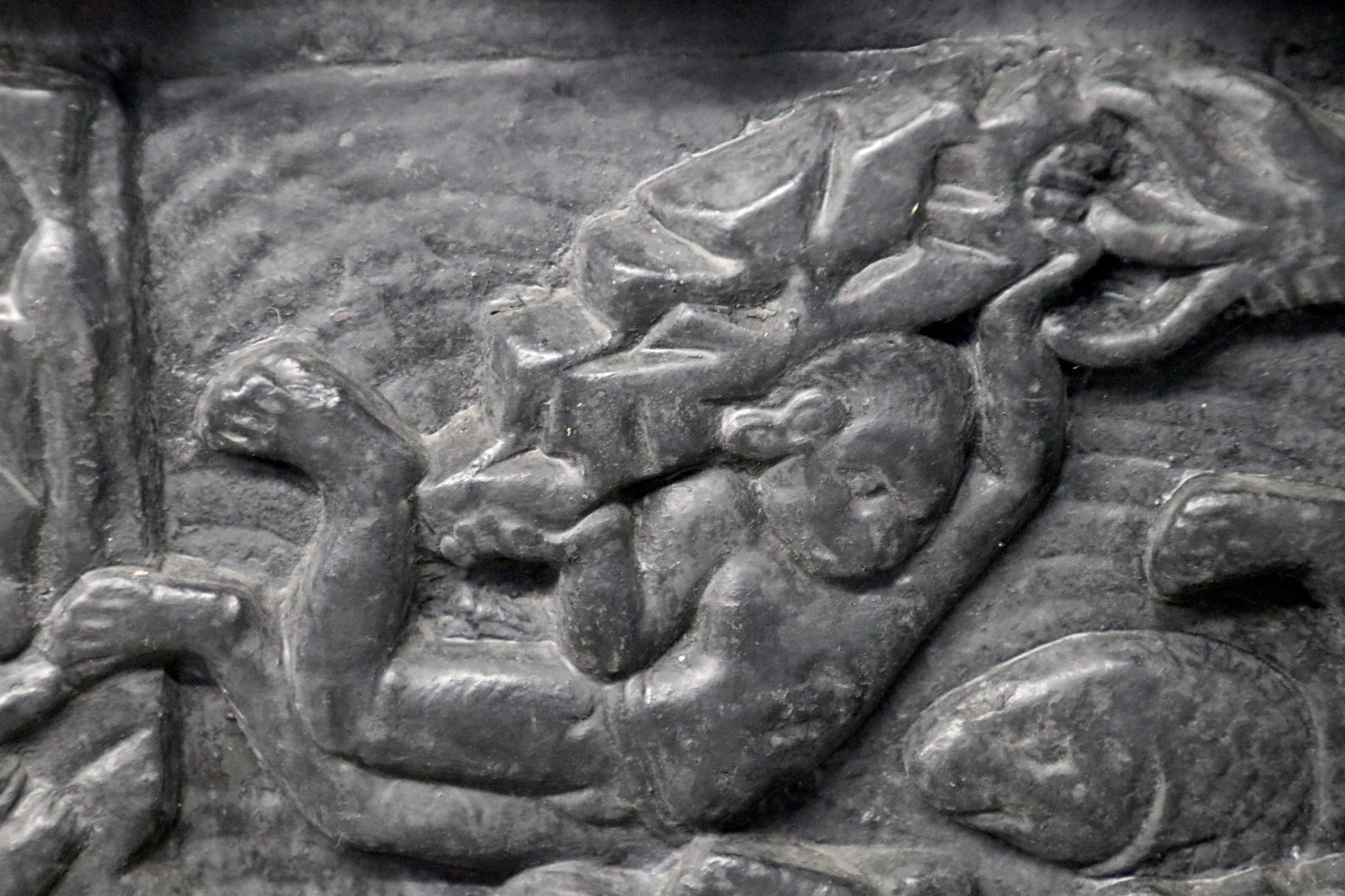
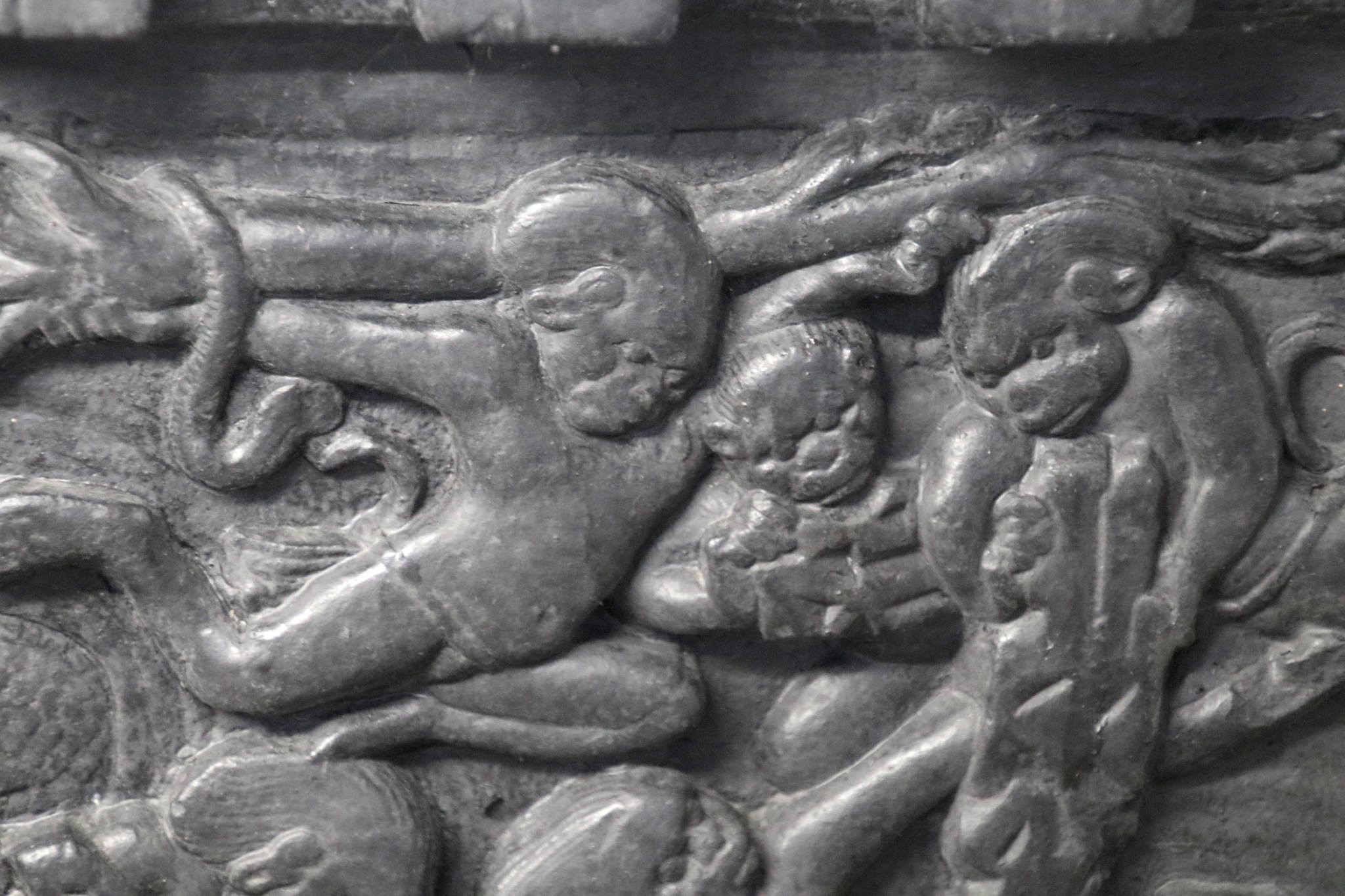
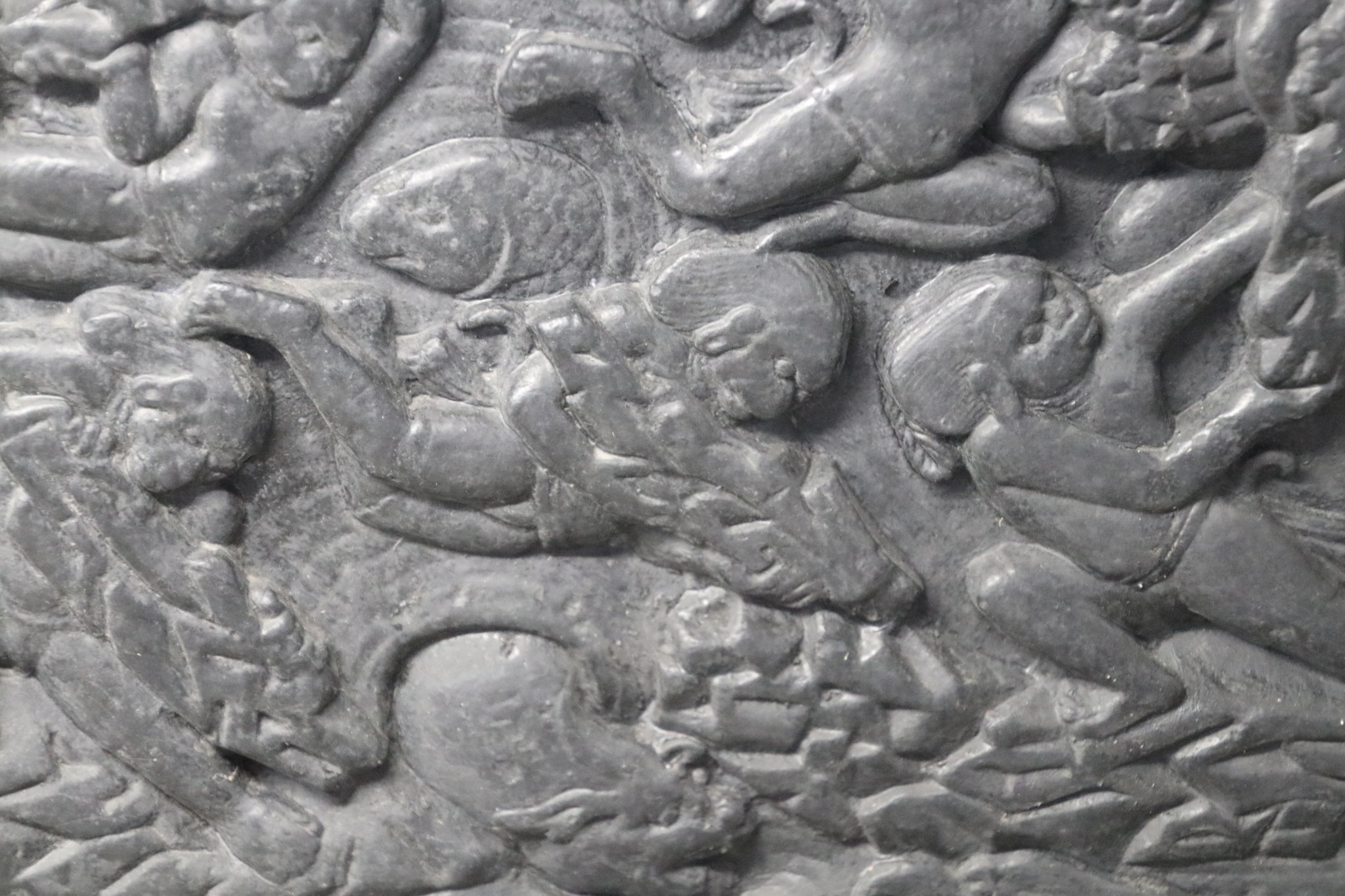
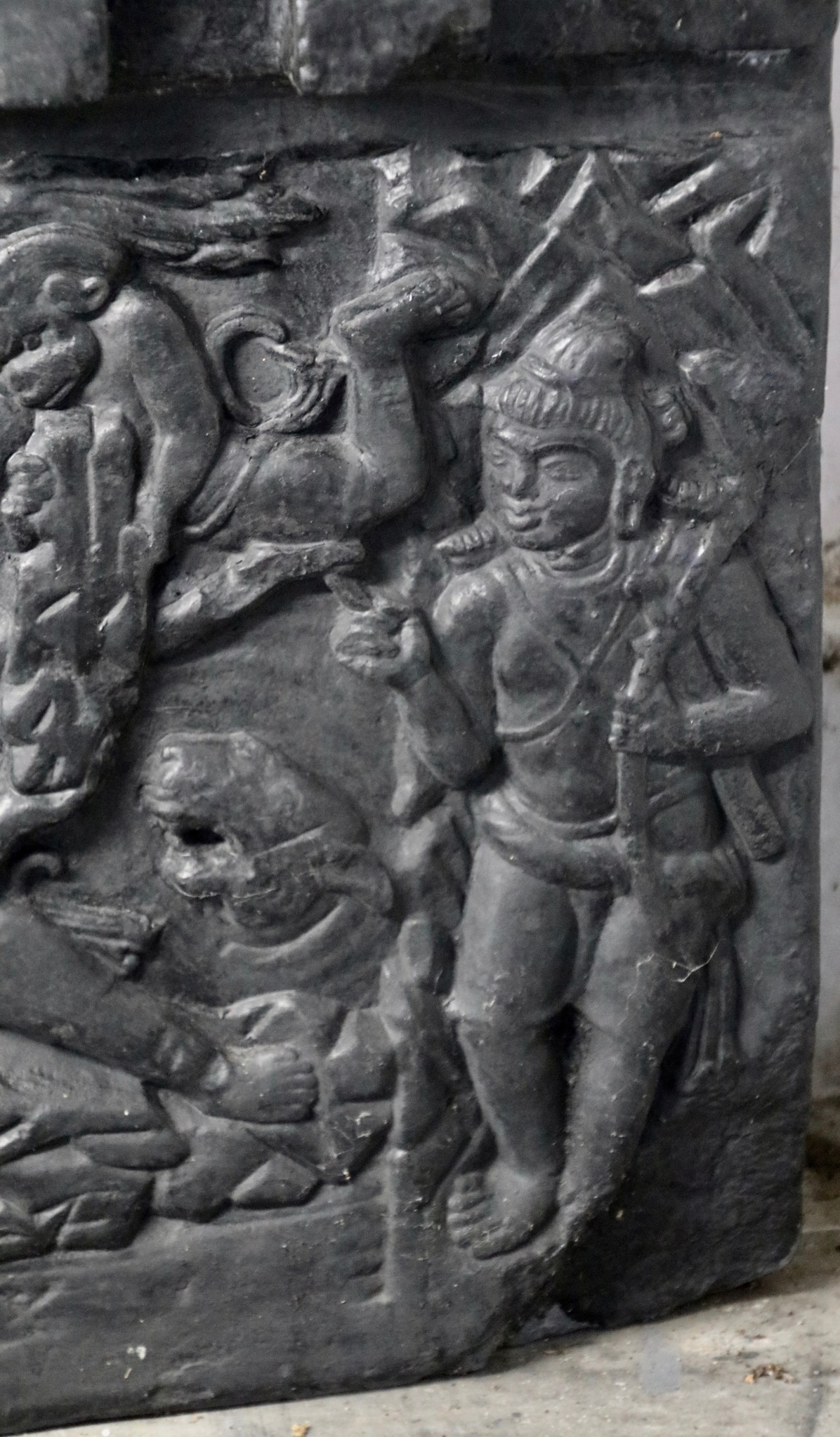
Of all the sculptural depictions of the building of the causeway to Laṅkā, the one, in my opinion, that most closely captures the picture conjured by Vālmīki, is a little-known polished black basalt panel from Rajaona in Lakhisarai district, southeast Bihar. It just so happens, that this is also the earliest surviving visual imagining of this important episode, and arguably the most engaging.
This highly animated scene portrays Rāma standing on the right extremity, his matted hair arranged in a topknot. He wears a cross belt, with quivers of arrows strapped to his back, and carries a bow. With his free hand he instructs the monkeys who wade through, and dive into, the dark swirling waters of the ocean. The composition is positively buzzing with frenetic energy as figures hurtle about in opposing directions. All hands are on deck for the building of the bridge, including, rather endearingly, those of a baby monkey watched over by its elders (in the upper register). Most of the monkeys – each of whom have a generous mop of hair swept back from the face – shift jagged boulders, while one carries an entire tree over his shoulders, its roots and leafy branches depicted. The most captivating element of this composition, and that which most recalls Vālmīki’s narrative, are the animals, reptiles and sea creatures which swim in the waters. There is a creature which looks like a cross between a hippopotamus and a lioness, its mouth wide open, hungrily eyeing a monkey. A snake slithers over a tree trunk and begins to wrap itself around the arm of a monkey who pays it no heed. In the lower register, the head and curved snout of a gharial crocodile emerges, and is threatened by a snarling slightly lynx-like monster. A harmless-looking fish, one of only two creatures here who actually belong in saline waters, leaps out of the waves.
The glossy surface of the stone has a liquid-like appearance which works exceptionally well with the theme of the relief carving here.
This episode is the fourth and final scene represented on a Rāmāyaṇa panel, now housed in a small museum at the modern Aśokdhām Temple in Chauki, close to the village of Rajaona. This panel is one of a pair; I am not sure, however, of the current whereabouts of its counterpart but Frederick Asher has kindly shared his photographs with me. The iconography of these panels is explored at length in my forthcoming monograph.
Aśokdhām Temple in Chauki, Lakhisarai district, Bihar (2019)
The two Rāmāyaṇa panels were found among the foundations of a Gupta period temple dating to circa the late 5th or early 6th century CE, probably the same temple excavated by Alexander Cunningham in the late nineteenth century (he makes no mention of the Rāmāyaṇa panels). Frederick Asher was the first scholar to publish these panels in his excellent article on ‘Sculptures from Rajaona, Valgudar and Jaynagar: Evidence for an Urban Centre,’ East and West 36.1/3 (1986): 227-246, but the imagery is not explored in great detail. Asher presents a persuasive argument for this collection of villages, situated at the confluence of three rivers – the Haruhar, Kiul and Ganges, once having been a thriving urban settlement, Kṛmilā, which seemingly held some importance during the Pāla period, evidenced by the sheer volume and outstanding quality of the sculptures (many inscribed) and architectural elements found here. Indeed Anil Kumar notes that there are more than thirty large unexplored archaeological mounds in this area (see Anil Kumar, ‘Kṛimilā: A Forgotten Adhiṣṭhāna of Early Medieval India’, Indian Historical Review 38.1 (2011): 23-50 (23)). Importantly, Cunningham identified this locale with lo-in-ni-lo visited by Xuanzang in the seventh century CE (see Report for the Year 1871-72, Volume III (Calcutta: Archaeological Survey of India, 1873)).
To date, three ancient sites in Bihar have turned up wonderfully vivid Rāmāyaṇa images dating between the 5th and 7th centuries. These comprise the basalt panels at Rajaona, a terracotta plaque from Chausa in district Buxar (now in the Bihar Museum in Patna), and large-scale stucco panels at Aphṣāḍ in Nawadah district, the latter explored in a previous blog post (April 11th, 2019).
My hope, in the not too distant future, is to make an extensive study of the early epic and purāṇic temple iconography located across the length and breadth of Bihar.
*I have used the following translation of the Rāmāyaṇa: Robert P. Goldman, Sally Sutherland Goldman and Barend A. van Nooten, The Rāmāyaṇa of Vālmīki, An Epic of Ancient India. Volume VI: Yuddhakāṇḍa (Delhi: Motilal Banarsidass Publishers, 2010 – 1st published 2009).
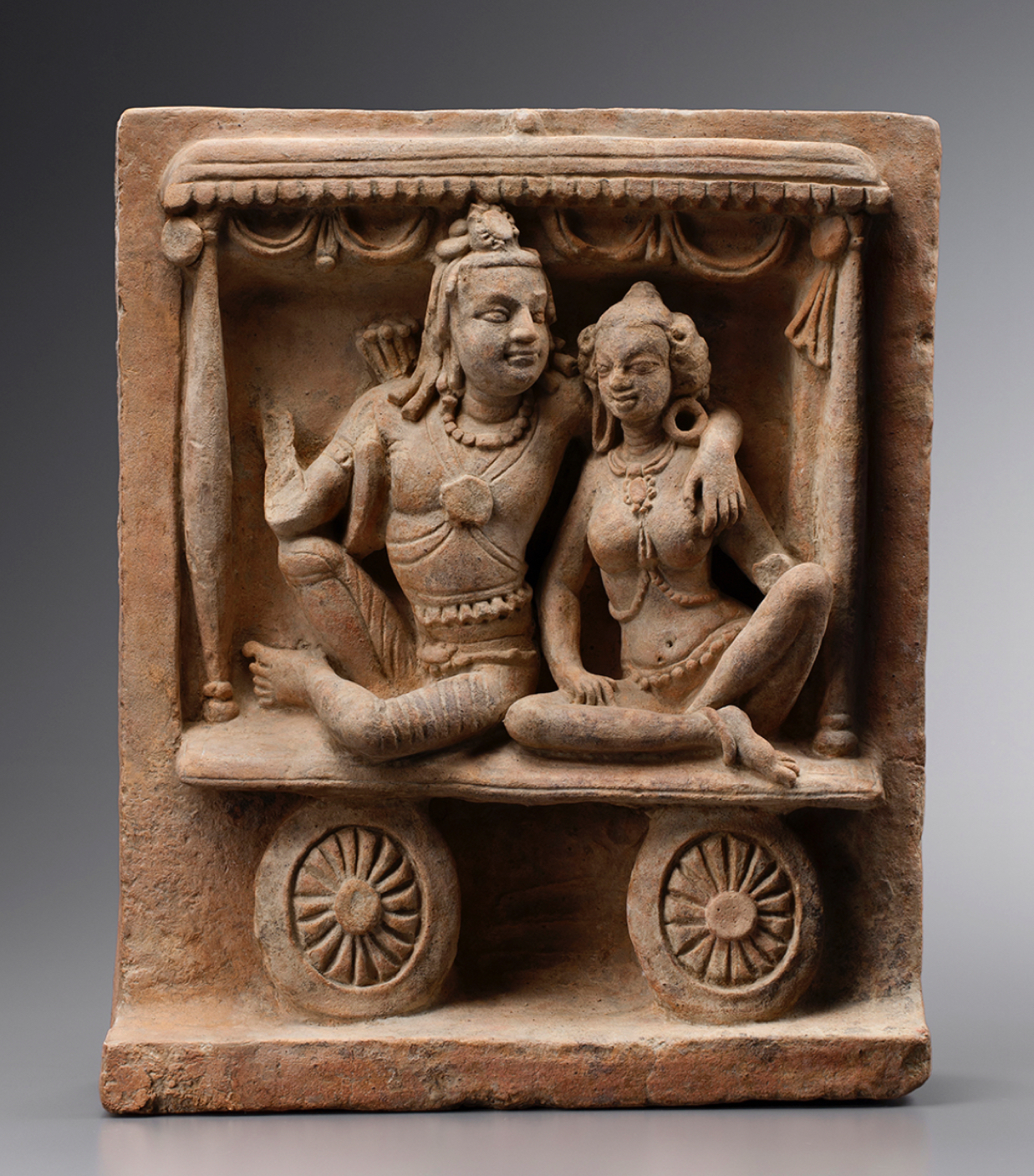
This terracotta relief panel (44 x 37 cm) depicts an enamoured couple of high-status seated together on a chariot under an elegant canopy from which swags of fabric hang. The pair have previously been identified as Rāma and Sītā and there is little reason to doubt this reading.* The male figure wears a channavīra (cross-belt) with a quiver of arrows strapped behind his right shoulder. Fragments of a bow survive above his right knee. He wears jewellery and a crown or elaborate turban, signalling his aristocratic rank. The female figure is adorned with jewellery including an ornament that resembles a channavīra, albeit without a martial function. Both have disproportionately slender legs in comparison with the rest of their bodies.
This image most probably represents Rāma and Sītā after their marriage, or perhaps returning to Ayodhya following their forest exile and Sītā’s horrific ordeal on Lanka.
The panel dates to the Gupta or early post-Gupta period (5th/6th century CE), and judging by style, probably originates from eastern India or Bangladesh. This image is rare for two reasons. Firstly, to my knowledge, despite plentiful Rāmāyaṇa temple images surviving from the 5th and 6th centuries, none depict Rāma and Sītā on a chariot together wearing ensembles more lavish than the ascetic garb we are accustomed to seeing them in. Secondly, there is only a border on the lower register rather than the usual frame.
I have only recently become aware of this panel. It was sold by Van Ham Fine Art Auctioneers in June of this year for €8500. The plaque has undergone thermoluminescence testing (Oxford Authentication N116c43). Apparently it has been in a private collection in Hong Kong since 1990. Frankly, however, without the name of the owner, this provenance is entirely meaningless and may or may not be factual. It is worth remembering that Hong Kong is a free port and thus an ideal channel via which to smuggle antiquities. Curiously the panel also seems to have been sold recently by Galerie Hioco, Paris, although no date of sale has been provided online.
It is a great shame that this terracotta relief has no recorded find spot or known archaeological context. Yet, regardless, it is a wonderful addition to the corpus of early Rāmāyaṇa iconography.
* I am following the identification of the auction house.
The course of fieldwork does not always run smooth. One learns to expect a certain amount of the unexpected. This might include, for example:
Searching for artefacts (often literally in fields) which, since having being reported decades ago, have been moved to an unspecified location.
Visiting a temple only to find that it has been encroached by modern buildings, rendering the germane images inaccessible.
Travelling to the wrong village with the right name.
Following misleading information in search of something that probably never existed to begin with.
Not being able to gain access to an essential reserve collection.
Images being unreadable due to erosion.
Difficult lighting conditions for photography.
On my recent three month field trip, I experienced all of the above, alongside much fruitful research, but here will focus on point number 4.
My current project maps visual manifestations of the Rāmāyaṇa between the fifth and tenth centuries CE. During this five-hundred year period, all extant examples comprise sculptural reliefs in stone, terracotta and stucco. I was very excited, then, when I read that there are ninth or tenth century murals depicting scenes from the Rāmāyaṇa in the Pandya period rock-cut Thirunadhikkara Cave Temple (also known as Thirunanthikarai) near Thiruvattar in the Kanyakumari district of Tamil Nadu, excavated by Vikramaditya Varaguna. Not only was this apparently the most southerly locale for pre-eleventh century Rāmāyaṇa art, but also the only surviving painted scenes belonging to my period of study.
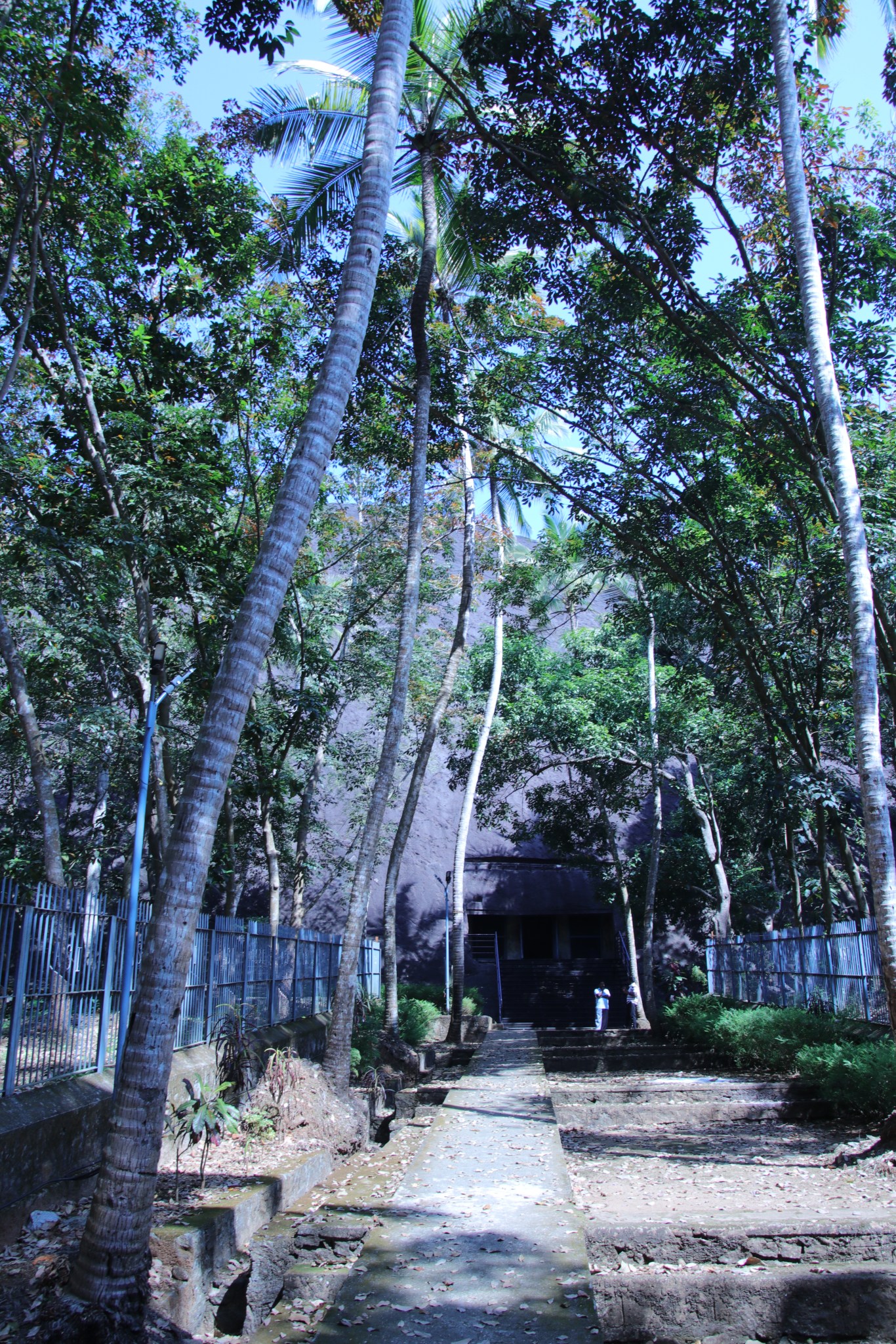
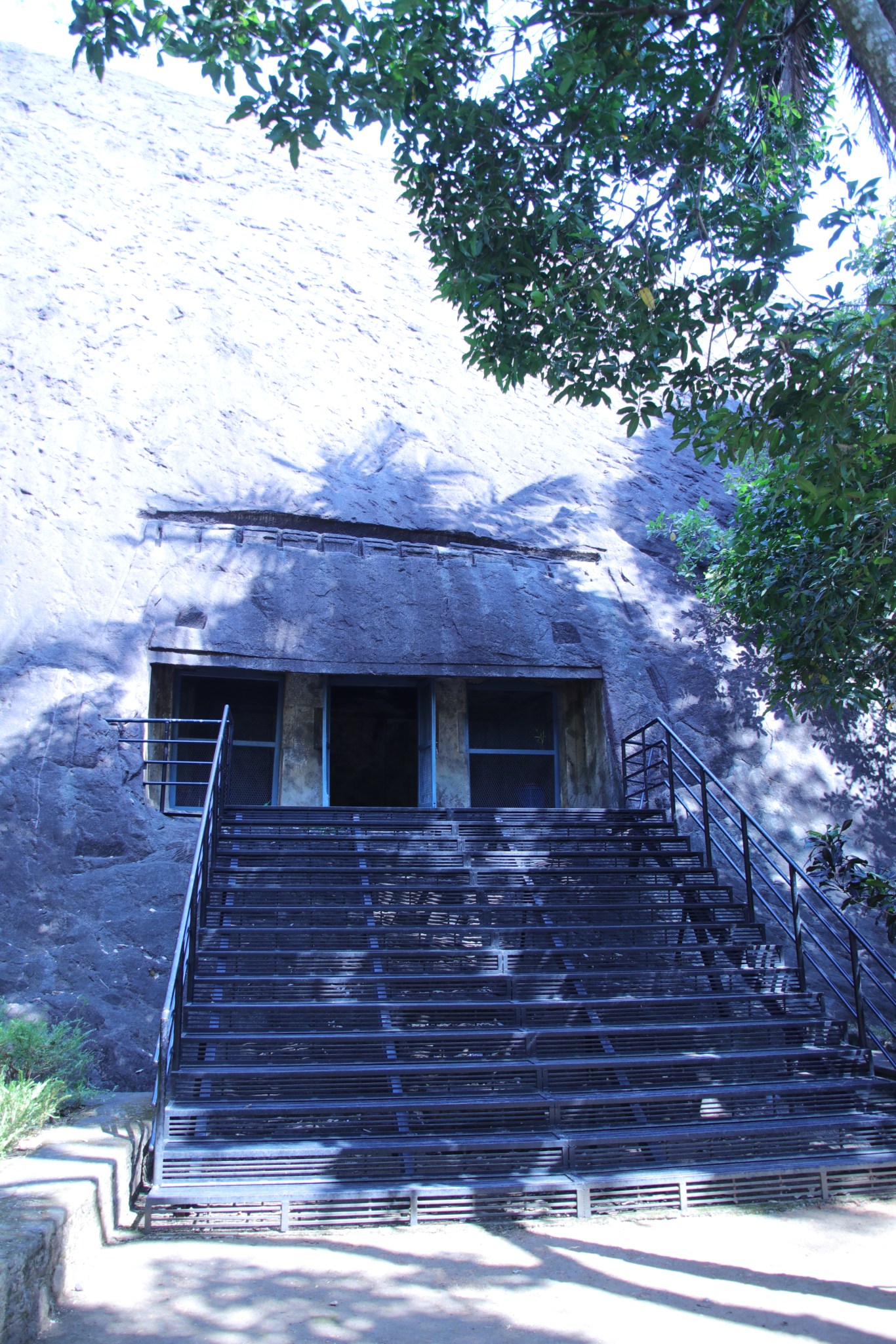
My journey to the cave was long, although not particularly arduous, it being an exceptionally beautiful part of India. I arrived in Thiruvananthapuram at the start of a two-day general strike. In the meantime it was necessary for me to obtain permission from the Thrissur Circle of the Archaeological Survey of India (ASI) in order to be allowed to take photographs in the cave. On the third day I took a taxi across the border from Kerala to Tamil Nadu (prior to 1956, the region which is home to the Thirunadhikkara Cave Temple was part of Kerala and to this day, the cave is looked after by the Keralan branch of the ASI).
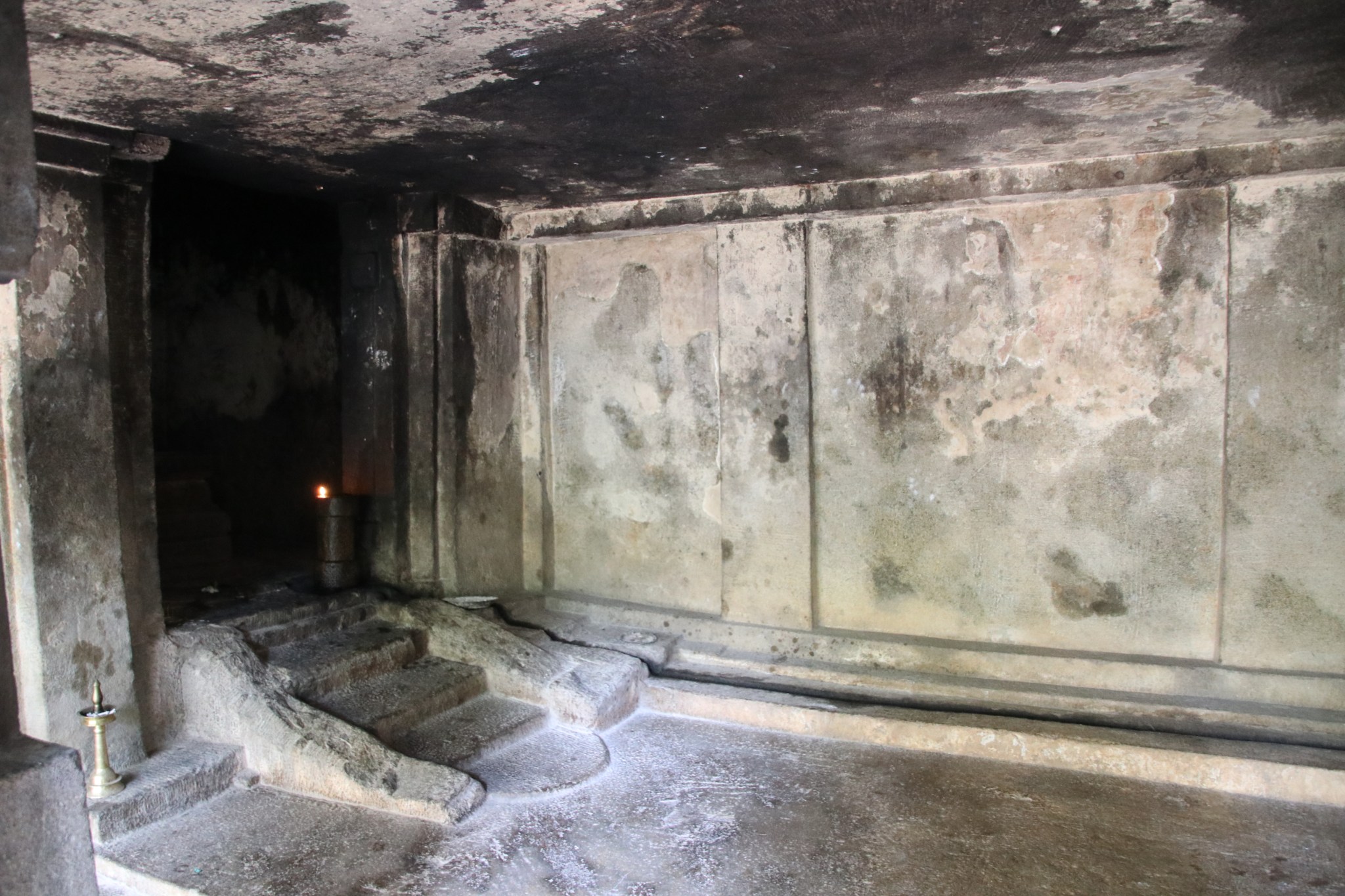
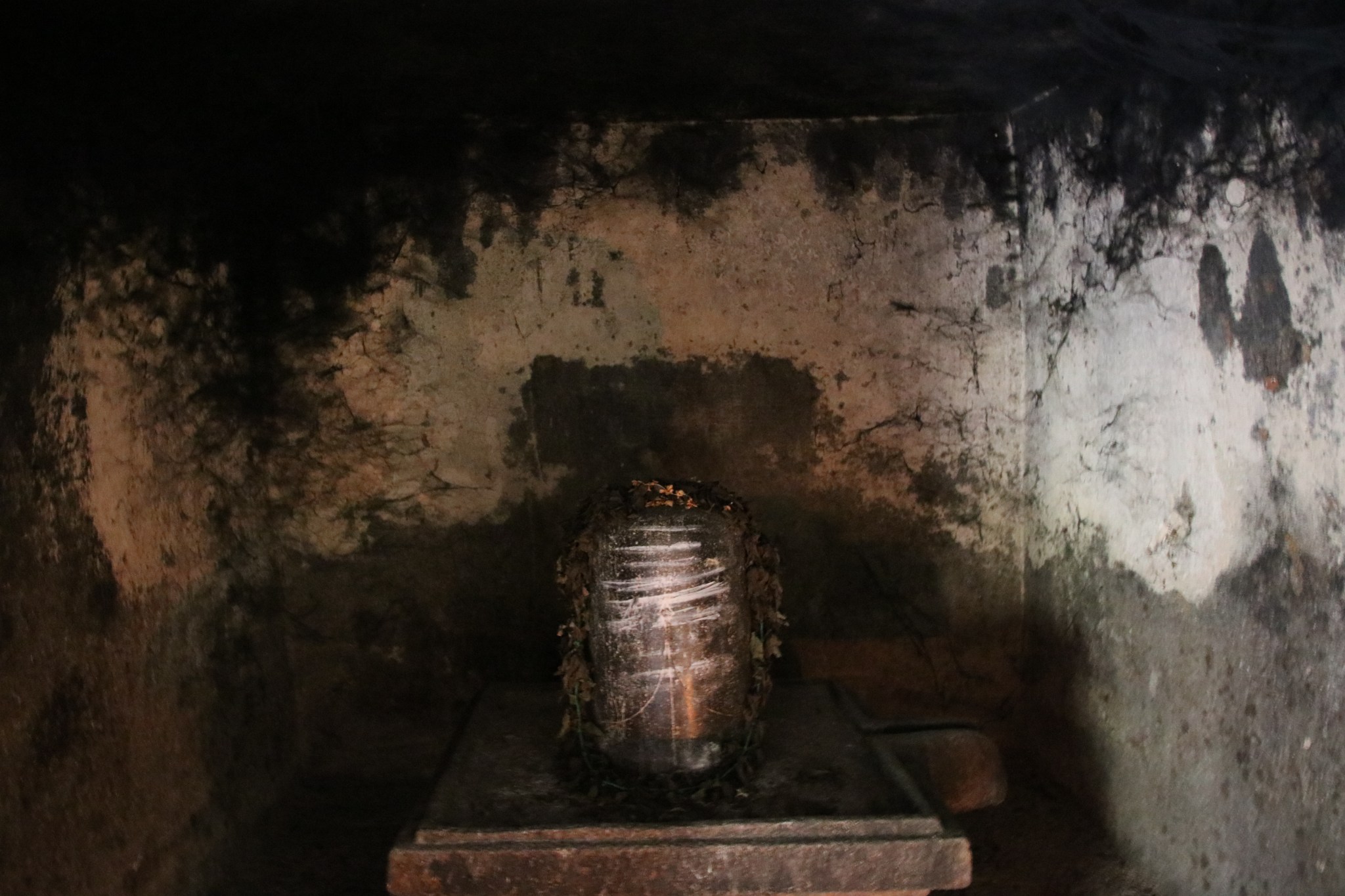
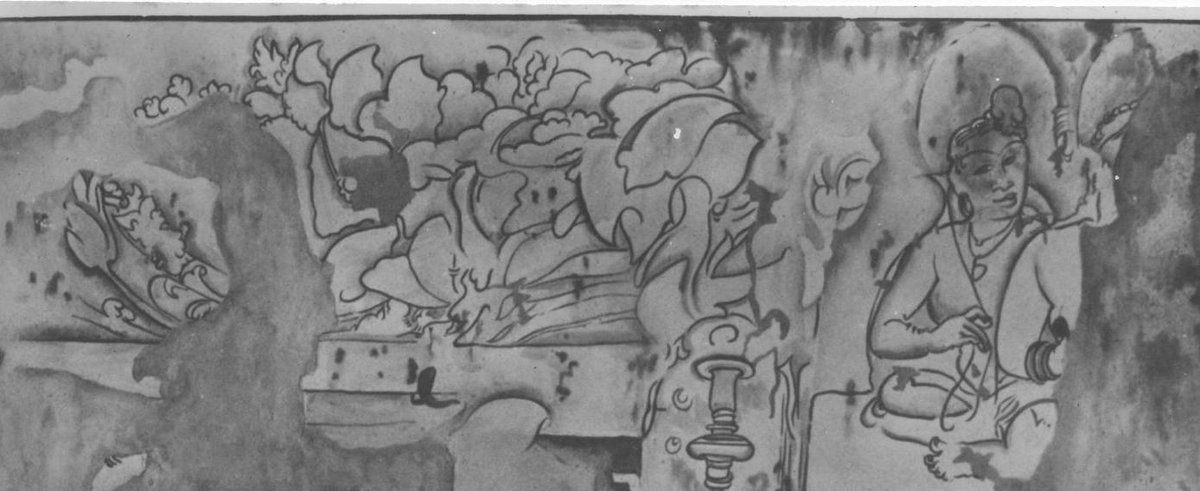
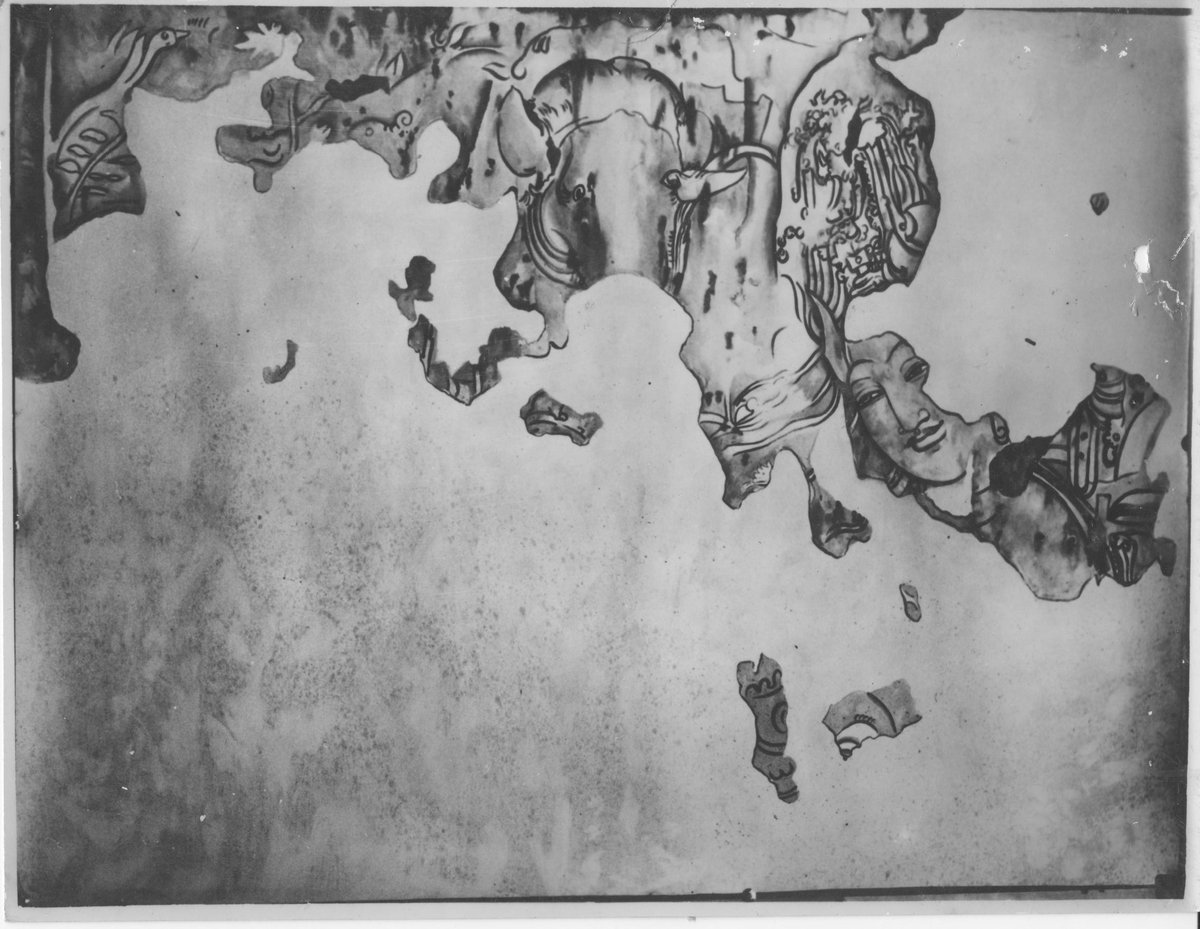
Under the incongruous modern staircase sit ten rock-cut steps. Inscriptions dating between the 8th and 11th centuries CE are engraved on the pillars and walls flanking the exterior of the entrance to the cave. Upon entering the cave, which houses a Śiva liṅga in the sanctum, my disappointment was palpable. I could not find any Rāmāyaṇa images. Indeed, almost all the of the painted plaster which had once coated the walls and ceiling of the cave had chipped away, leaving a gloomy dappled grey interior lit by low light filtering through the entrance and from an oil lamp burning inside the sanctum.
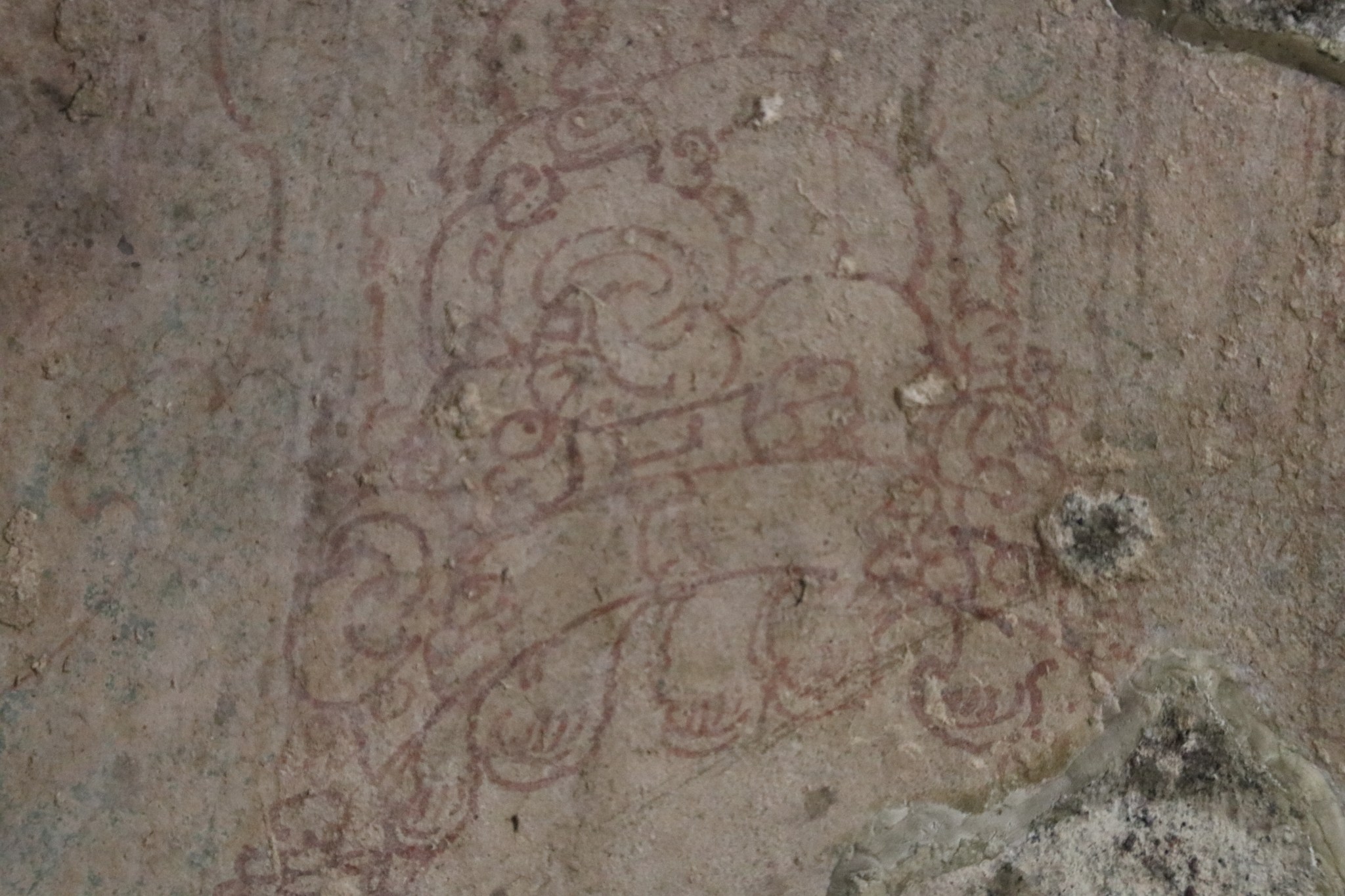
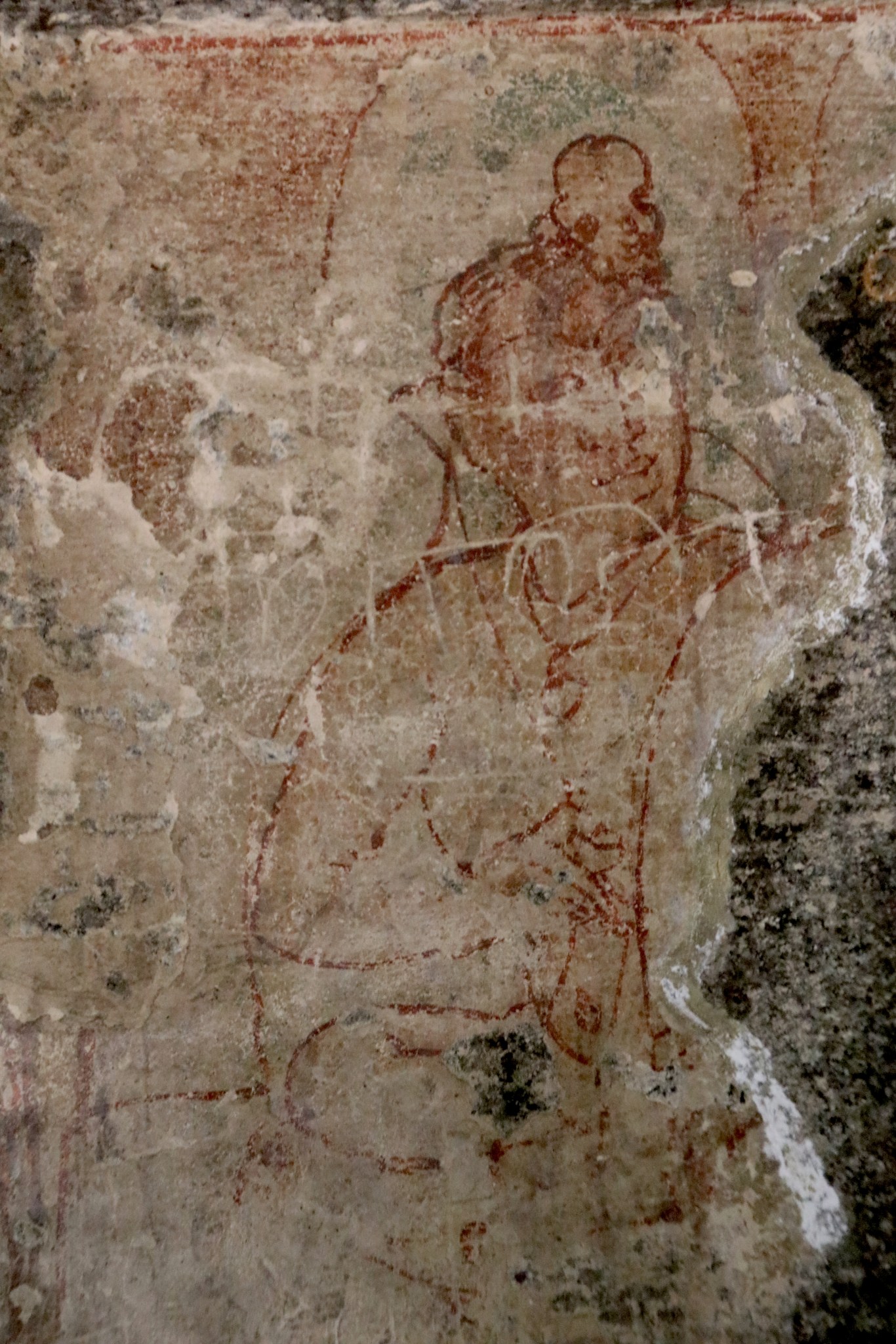
The surviving traces of the mural, painted with confident but delicate brushstrokes, are an indication of how dazzling and colourful this cave must once have been. One image to the left of the sanctum depicts the outline of the elephant-headed god, Gaṇeśa, wearing an ornate crown, while an image on the back wall depicts a seated figure.
Vijay (vj@poetryinstone) kindly sent me two printed copies of the murals (of unknown provenance) he discovered discarded in an old paper shop. They show the same two images with more details and an additional male figure below the Gaṇeśa.
Courtesy of vj@poetryinstone
Courtesy of vj@poetryinstone
When Stella Kramrisch wrote about this cave temple in her 1948 publication on The Arts and Crafts of Travancore, more of the mural was surviving. She mentions, for example, a moustachioed ‘devata’. Ajit Kumar* notes a very damaged figure of Narasiṃha, the man-lion avatar of Viṣṇu.
How the rumour of the presence of Rāmāyaṇa murals in the Thirunadhikkara Cave Temple came into being I do not know. As much as anything, though, fieldwork is a process of elimination and an opportunity to dispel false information which has sometimes become well-established ‘truth’.
Despite not finding Rāmāyaṇa depictions here, it is likely that the Rāmāyaṇawas depicted in mural art in early India. An episode in Bhavabhūti’s eighth-century play, Uttararāmacarita, for example, follows Rāma, Sītā and Lakṣmaṇa as they witness painted murals of their own tumultuous exile. In this play-within-a-play, Sītā is overcome with emotion when faced with painted scenes representing the final moments before her abduction, and Rāma is compelled to remind her that this is only a painting.
After leaving the cave I visited the wonderful Travancore era Padmanabhapuram Palace constructed by the ruler Iravi Varma Kulasekhara Perumal in circa 1601 CE. The interior of the palace is now quite sparse (I’m imagining it being strewn with thick, luxurious rugs) with the exception of exquisite, intricately carved wood work throughout.
This slideshow requires JavaScript.
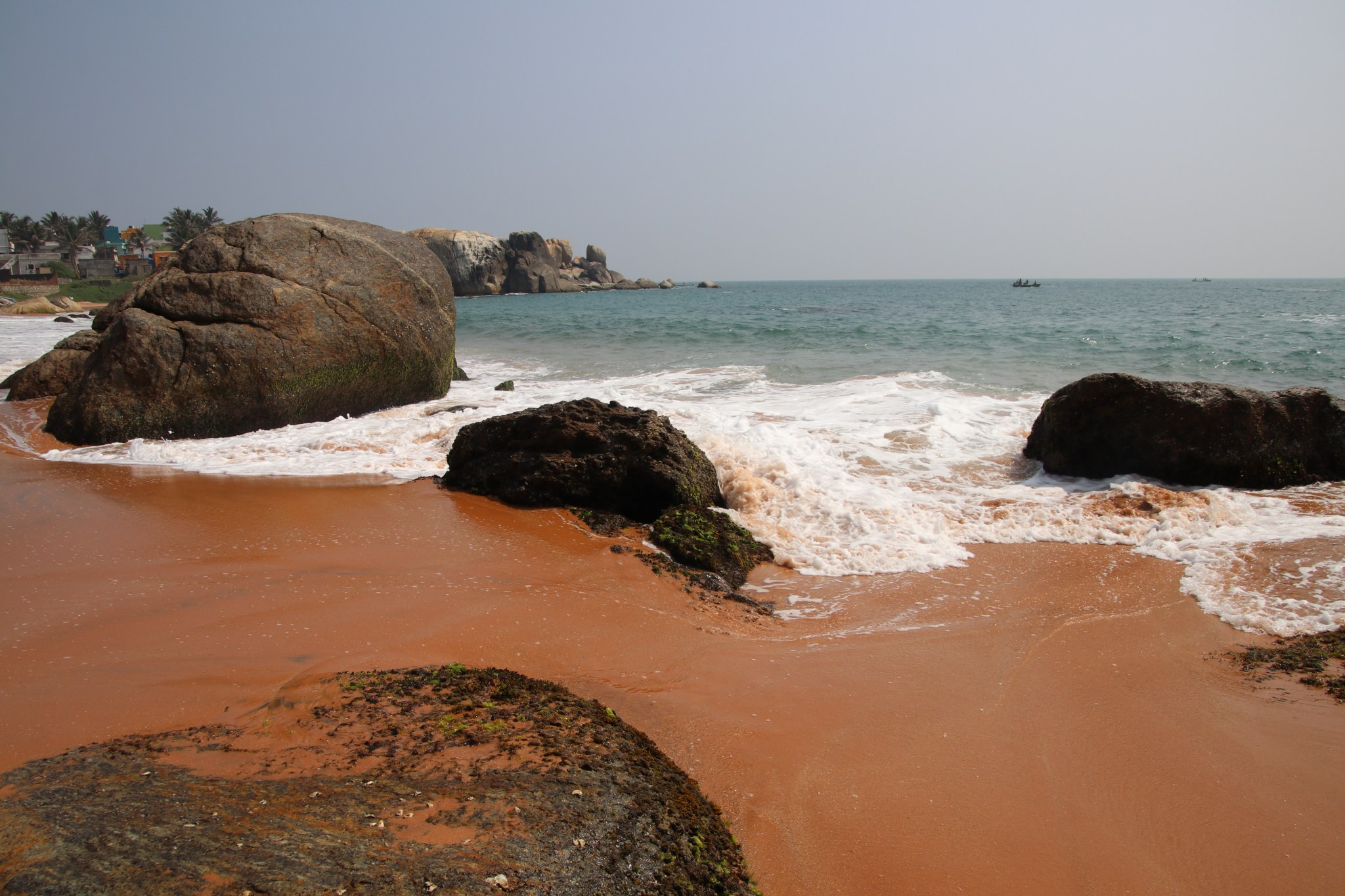
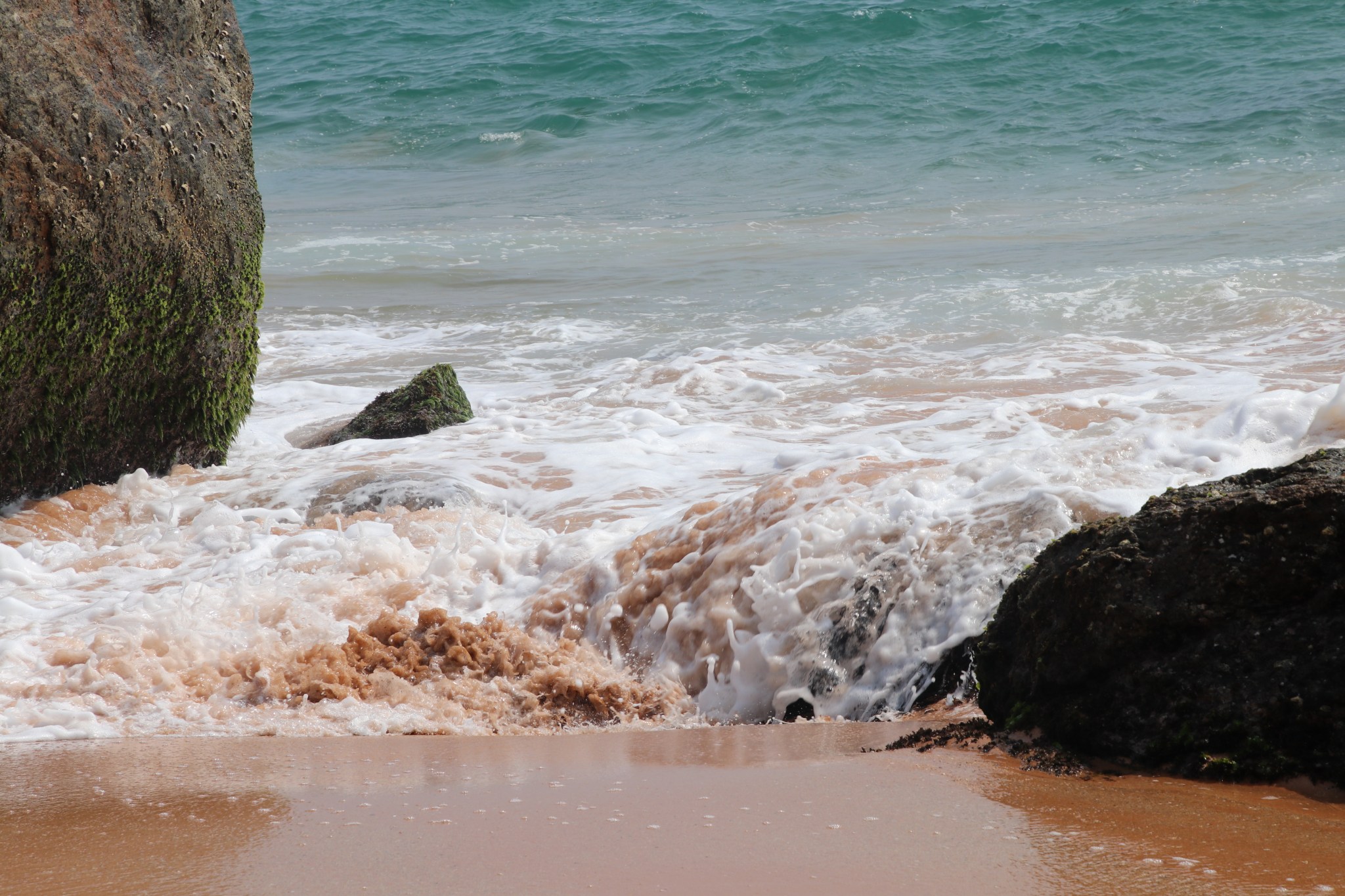
Being a lover of nature I take any opportunity I can to visit local beauty spots while out on fieldwork. On this occasion I looked at Google Maps and asked my patient driver to take me to Muttom Bay. With its caramel-coloured sand, azure sea and smooth rocky protrusions it was a real treat for the eyes and a moment to contemplate and detach from the morning’s disappointment.
Muttom Bay
Muttom Bay
At the insistence of my driver I then took a very relaxing, much needed, river boat ride on the backwaters at Pophnar, Kerala, before enjoying ice cream at Kovalam Beach. So, all in all a very enriching wild goose chase.
This slideshow requires JavaScript.
*For more information on the Thirunadhikkara Cave Temple see Ajit Kumar’s excellent paper: ‘A Review of Thirunanthikarai Rock-cut Shiva Temple with Special Reference to its Paintings’, Heritage: Journal of Multidisciplinary Studies in Archaeology, 4 (2016): 160-172.
TheRāmāyaṇa numbers among the world’s most enduring and beloved works of epic literature. Indeed, it continues to exert tremendous influence in the spheres of religion, culture and politics in South Asia and with Hindu communities globally. Yet visual manifestations of the textual narrative have been sidelined in epic studies despite their continued potency and efficacy; the shape and form they bring to the much-revered poem (in its various versions) most commonly transmitted orally; and their accessibility which transcends language and literacy barriers.
It was in the fifth-century CE that relief depictions of the Rāmāyaṇa embodied in stone, terracotta and stucco began to feature in the temple iconography of North and Central India, although, miniature terracotta plaques depicting Sītā’s abduction are found from the 1st century CE onwards.
Here, I bring together one of the earliest collections of fifth-century terracotta reliefs depicting scenes from the Rāmāyaṇa, and now scattered across numerous international museum and private collections. Surprisingly, the shared origin of these panels has not previously been noticed* despite all of the plaques having been made from terracotta of the same colour and texture, in addition to the remarkable likeness in style, scale and form between the panels. This oversight might, to some extent, be explained by the inferior position afforded to the medium of terracotta by art historians who have traditionally focused primarily on stone, bronze and painting (with numerous exceptions, of course). My research has been greatly aided by museum digital databases and online auction catalogues which have only become available in recent years.
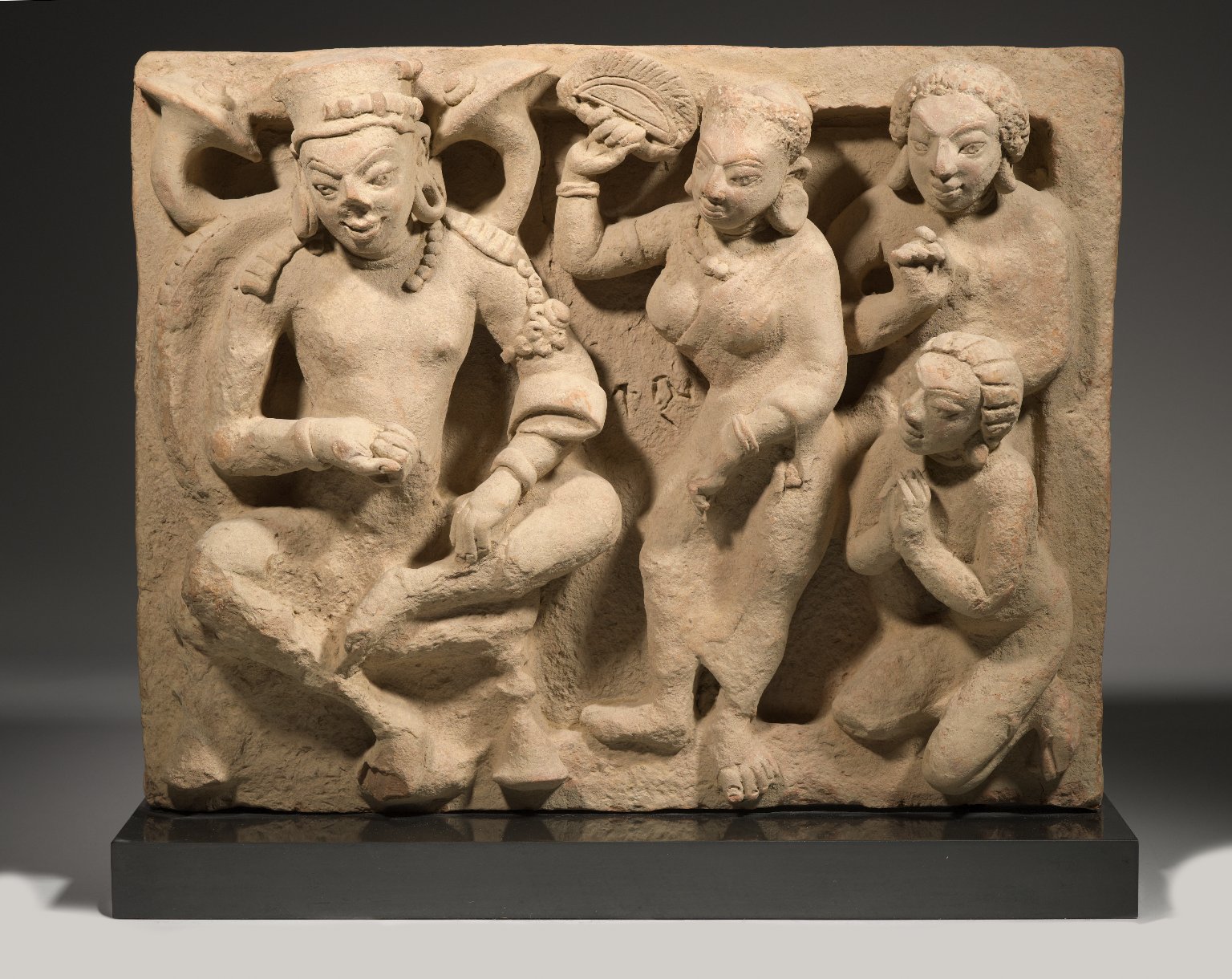
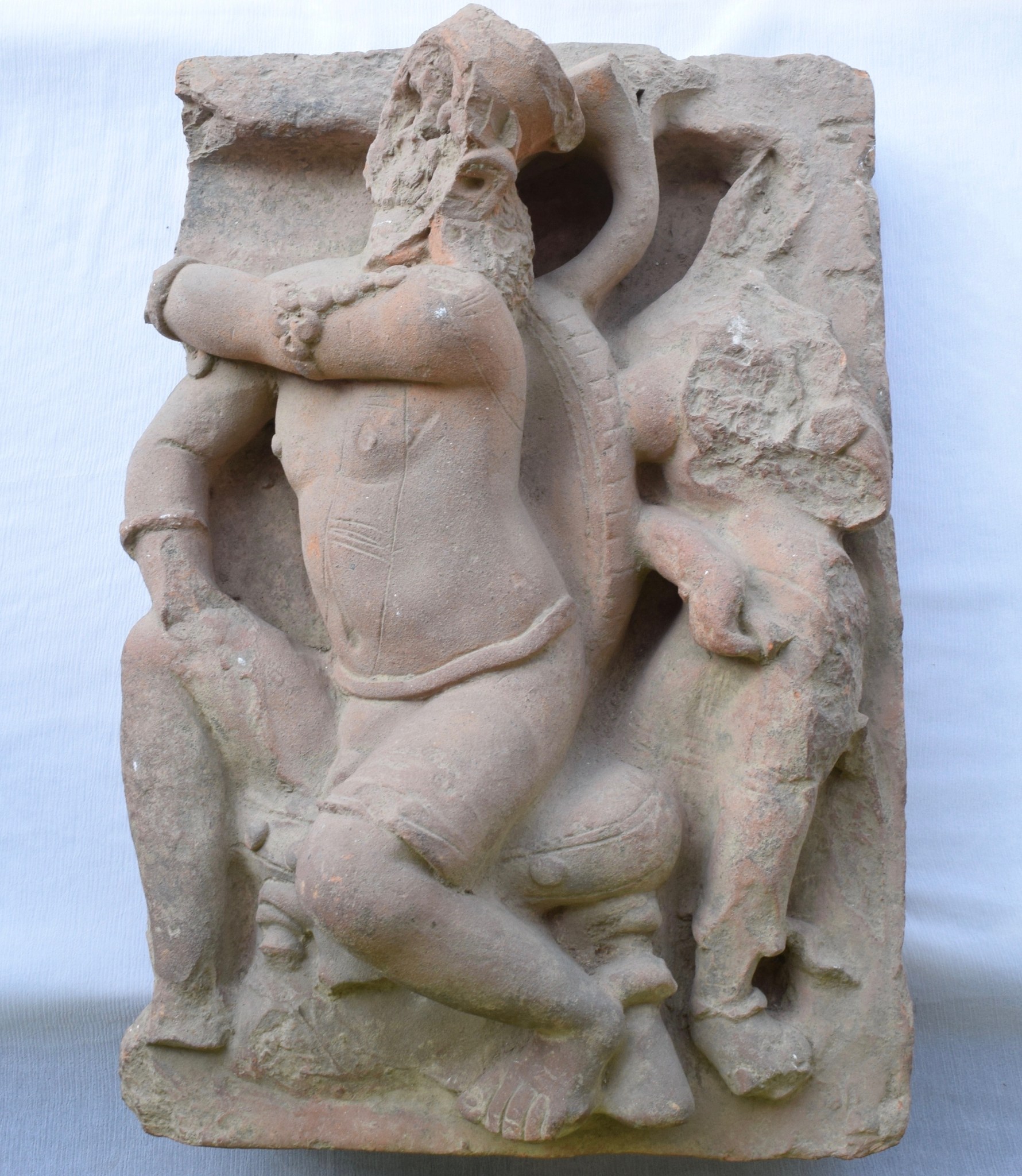
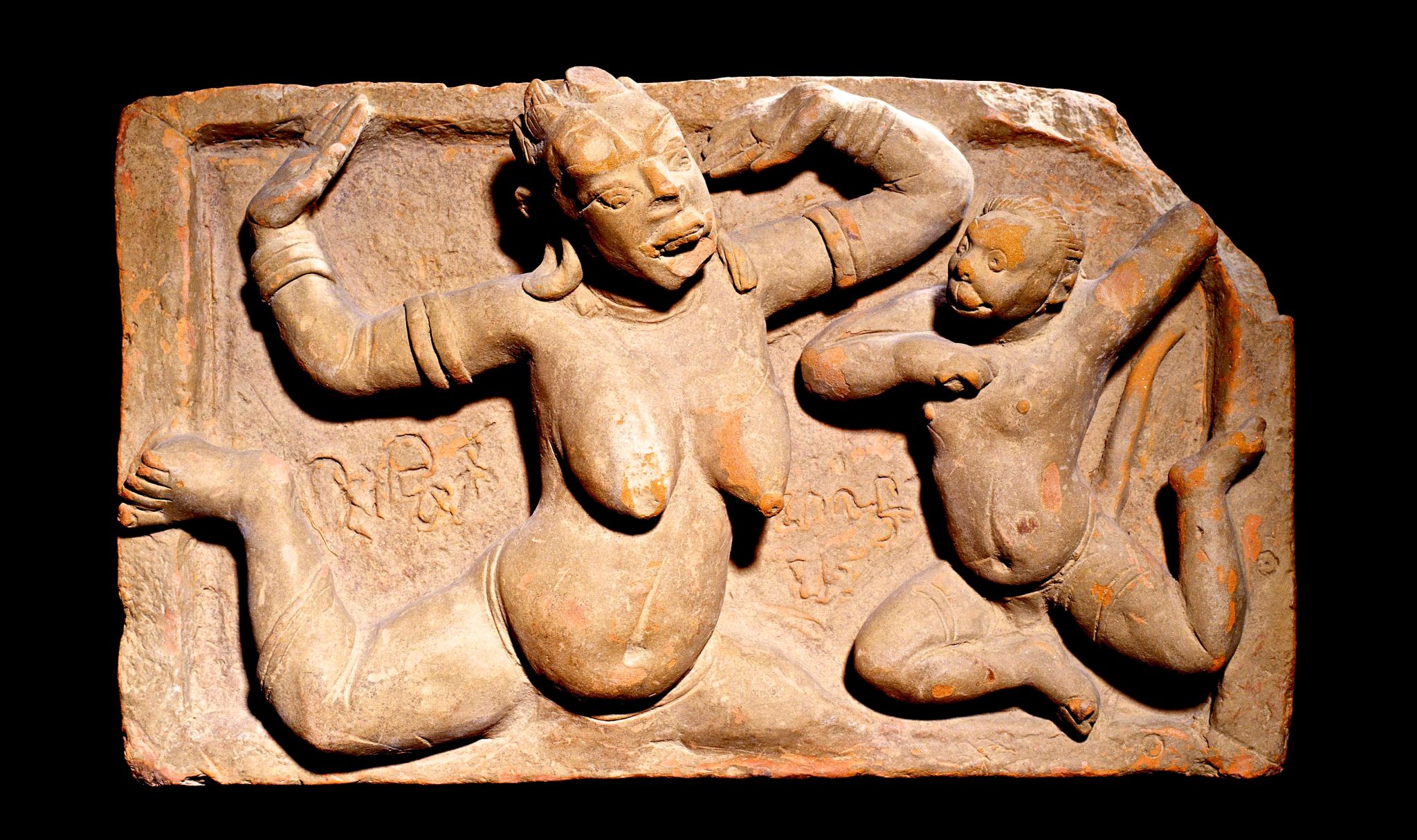
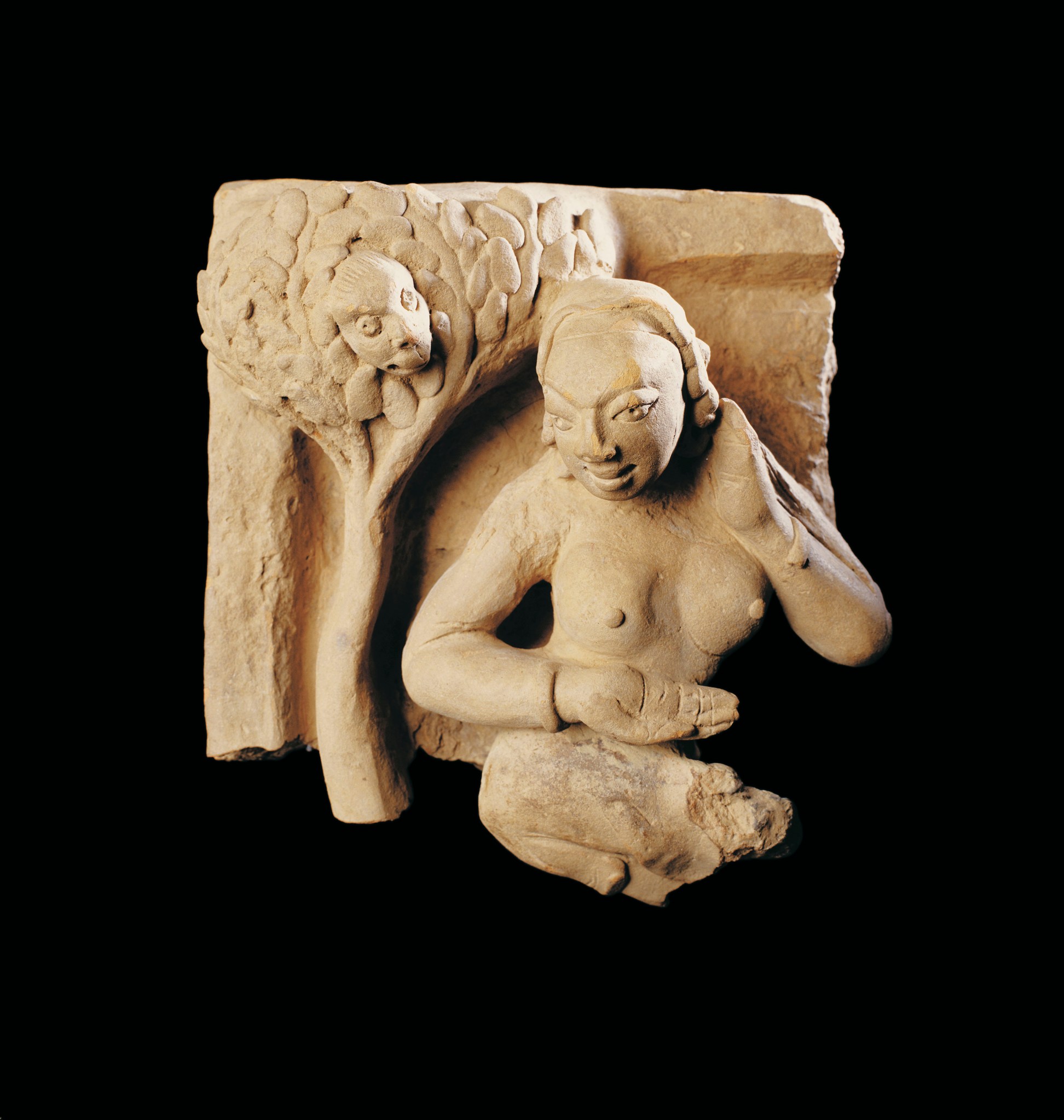
TheRāmāyaṇa images form part of a substantial collection of around forty panels (known to me), some of which depict scenes from theMahābhārata andHarivaṃśa, along with portrayals of celestial beings and mythical creatures. Importantly, a number of the panels are etched with short Brāhmī inscriptions, naming the characters depicted. The panels in the museum and private collections have each been described as hailing from the expansive North Indian state of Uttar Pradesh and their obscure provenance indicates that they were unearthed illegally.
In an illuminating essay on archaeological looting in India, the late Director-
General of the Archaeological Survey of India, Ajai Shankar, discloses that fifth-cen-
tury (Gupta period) ornamental bricks and inscribed terracotta panels depicting scenes
from the Rāmāyaṇa were illicitly unearthed by villagers at the bidding of antiquities
thieves, from twin mounds near the village of Katingara, beside the serpentine Kali River in District Etah, Uttar Pradesh. Since their removal, the whereabouts of the artefacts has been shrouded in mystery, Indeed, these pilfered panels were imagined irretrievably lost. The rarity of inscribed Gupta Rāmāyaṇa panels, however, led me to tentatively posit that the images I had collated might be the lost Katingara hoard. As it happened, a handful of plaque fragments recorded as originating from Katingara were purchased from a Delhi-based dealer, Mani Ram Godara, by the Gurukul Museum in Jhajjar, Haryana, in 1979. These images, which are kept in storage at the museum, remained under Shankar’s radar. The Gurukul Museum reliefs share the same charming, idiosyncratic style as the images I had already collated. It appears that the better-preserved pieces had been shipped internationally (along with some fragments) while the more eroded pieces remained in India.
In the summer of 2016 I visited Katingara. Here, the main temple mound is covered in alluvial deposits. Extensive digging has taken place on all sides of the mound, in the process removing virtually all evidence of the original structure. Baked brick fragments protrude from the disfigured earthen walls of the mound and are also scattered for some distance in the immediate vicinity. I was fortunate to discover a fragment of a carved brick close to the mound, which matches in motif, style, material and form, elements from several of the terracotta plaques already mentioned. This was the final piece of evidence (in the absence of scientific testing) needed to confidently affiliate the collated panels with Katingara.
The Katingara panels do not hold significance solely for their antiquity, or for their formative visual depictions of episodes from one of the world’s foremost epics, but also for their artistry and captivating effervescence. They display a singular aesthetic, especially noticeable in the masterful approach to composition, which might be described as bold, dynamic, acutely-theatrical, minimalistic and brimming with wide-ranging emotion.
These panels and the background history are explored at length in my recently published paper:
And the remaining panels will be analysed in a forthcoming paper on ‘The Līlās of Kṛṣṇa and Other Stories: Epic Myths on Terracotta Reliefs from Katingara, Etah District, Uttar Pradesh’.
Daśaratha sending his son Rāma into exile? Brooklyn Museum.
*The wonderfully named Joseph M. Dye III, erstwhile curator of South Asian Art at the Virginia Museum of Fine Arts (VMFA), did note the overwhelming similarity between two images which I have assigned to Katingara, one of them, pictured above, in the VFMA. See Dye III, Joseph m. 2001. The Arts of India: Virginia Museum of Fine Arts. Richmond, va: Philip Wilson. 113.
An important inscription of King Ādityasena, the eighth ruler of the Later Gupta dynasty of Magadha, was found in the vicinity of the temple on Mandar Hill. The inscription describes how the king built a temple to Viṣṇu, while his wife, Konadēvī, built a tank, and his mother Mahādēvī Srīmatī built a religious college (*see Fleet). Though the inscription is not dated, we know Ādityasena was ruling in the year 672 CE, so the temple would have been constructed not long before this date.
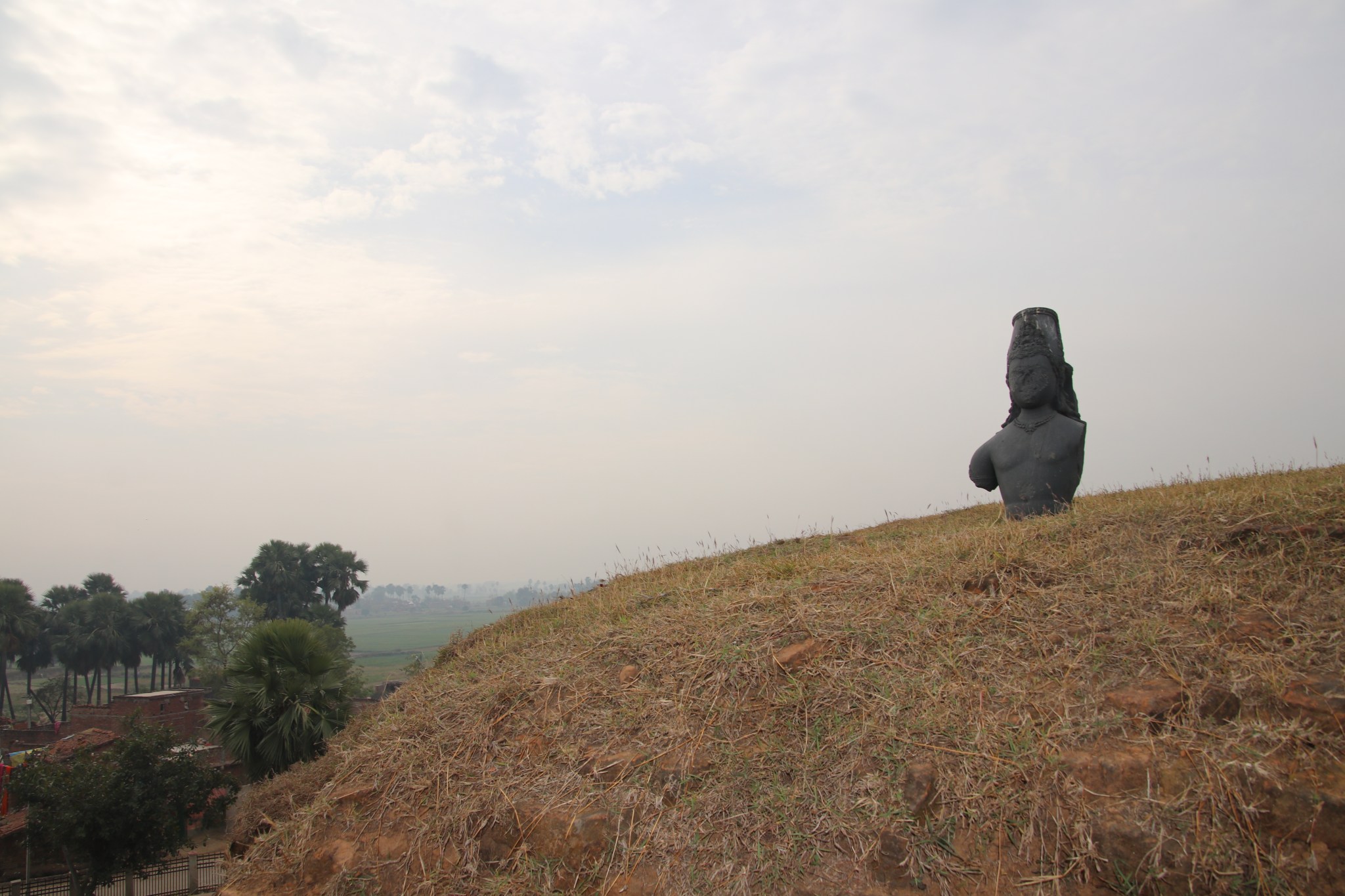
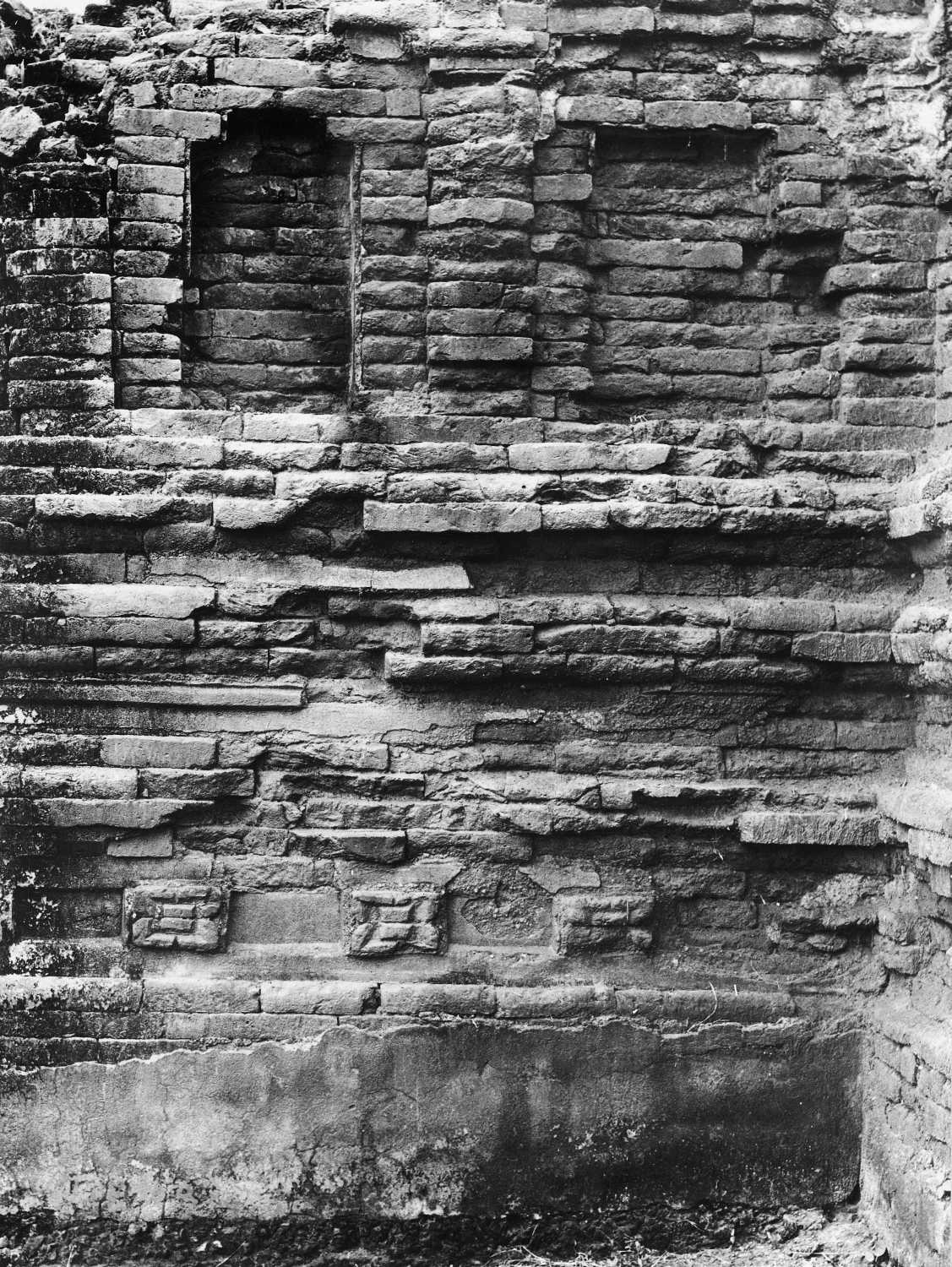
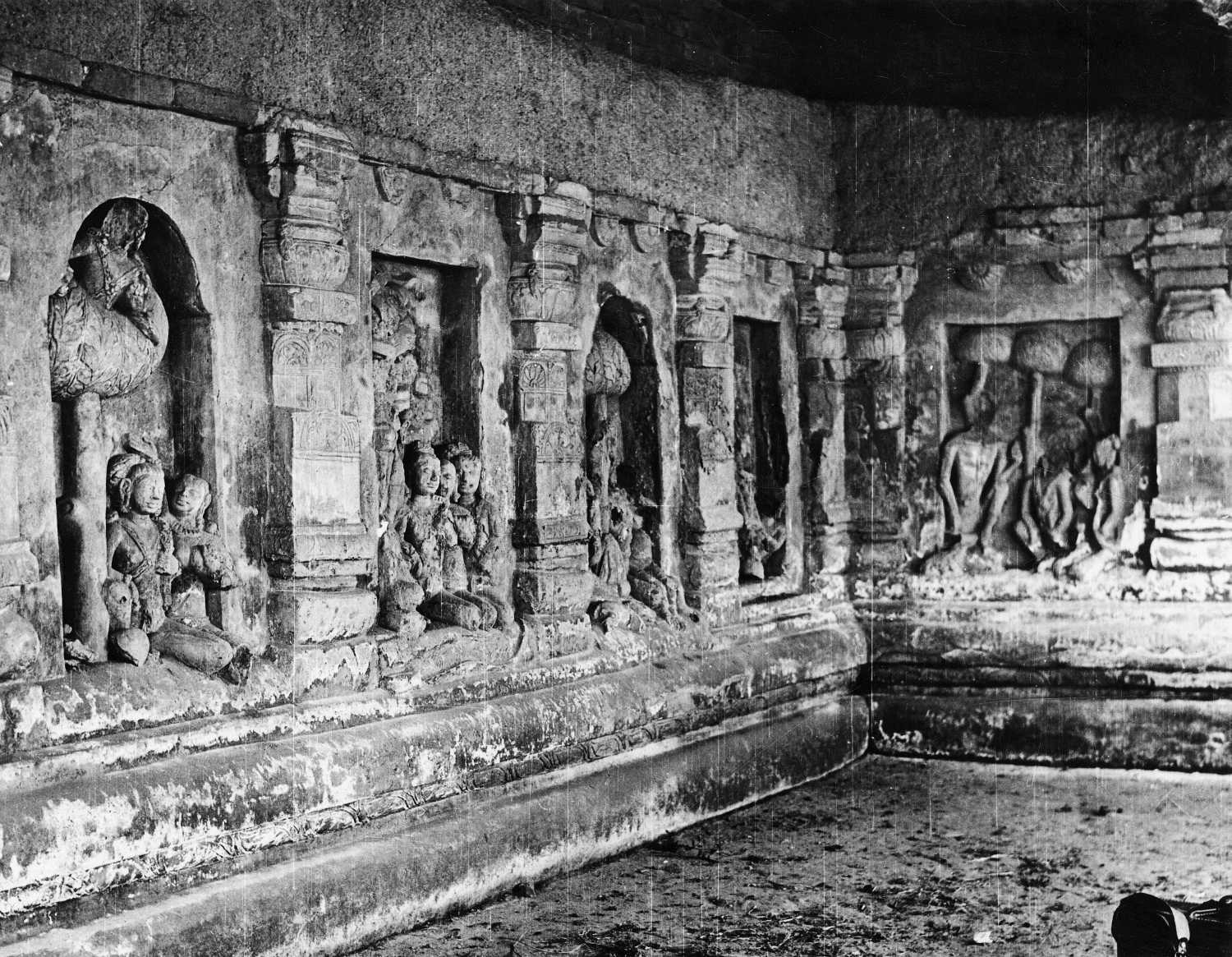
Ādityasena’s temple was excavated in a field next to the village of Aphṣāḍ in Nawadah District, Bihar, by the Archaeological Survey of India (ASI) between 1973 and 1983, under the direction of Sita Ram Roy. A fifteen metre high, five-story, rectangular pyramidal brick structure was unearthed, with remnants of a shrine on the uppermost terrace. The lower three platforms had niches which contained stucco plaques flanked by stucco pilasters. The majority of niches were found empty and alternated between rectangular and keyhole-shaped. The plaques extant at the time of excavation belonged to the lowest tier and depicted scenes from the Rāmāyaṇa positioned in chronological order. The monument and stucco panels were photographed by the American Institute for Indian Studies (AIIS) in 1978. Importantly, some of the panels constitute the earliest discovered scenes depicting Bharata’s arrival with his entourage at Chitrakut.
Photograph: American Institute of Indian StudiesPhotograph: American Institute of Indian StudiesPhotograph: American Institute of Indian Studies
This slideshow requires JavaScript.
Photographs: American Institute of Indian Studies.
Photograph: American Institute of Indian Studies
This slideshow requires JavaScript.
Photographs: American Institute of Indian Studies.
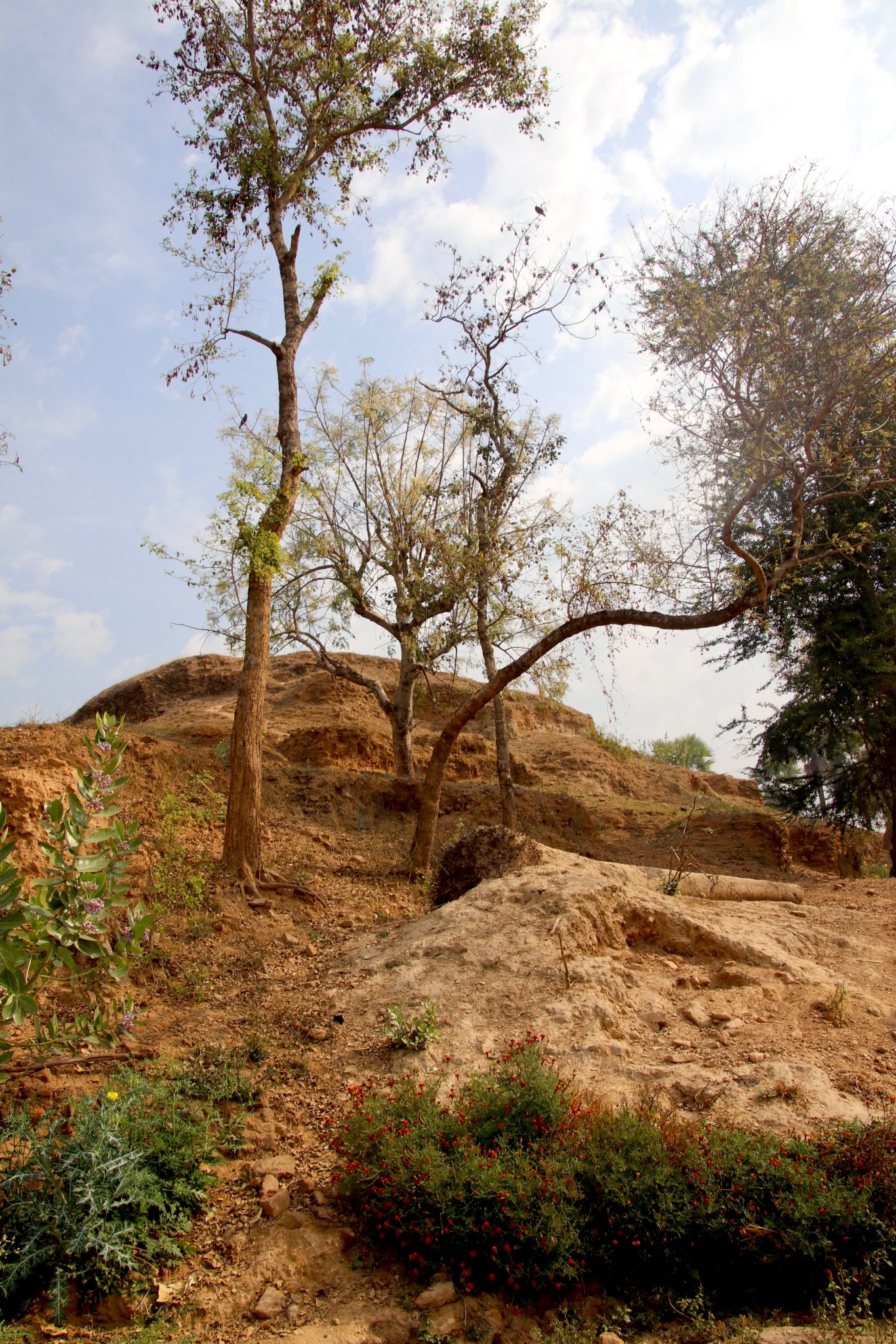
Fast forward forty-one years. In February 2019 I visited Aphṣāḍ with Ravi Anand of the Jayaswal Research Institute, Patna, in order to see the Rāmāyaṇa images for myself. Sadly we found virtually the entirety of the brick facing of the monument lost (possibly re-used for house building) and the Rāmāyaṇa panels nowhere to be found. The modern path encircling the monument is built on a steep incline and my faint hope is that the part of the base platform with the stucco images was reburied by the ASI (I will be making enquiries shortly).
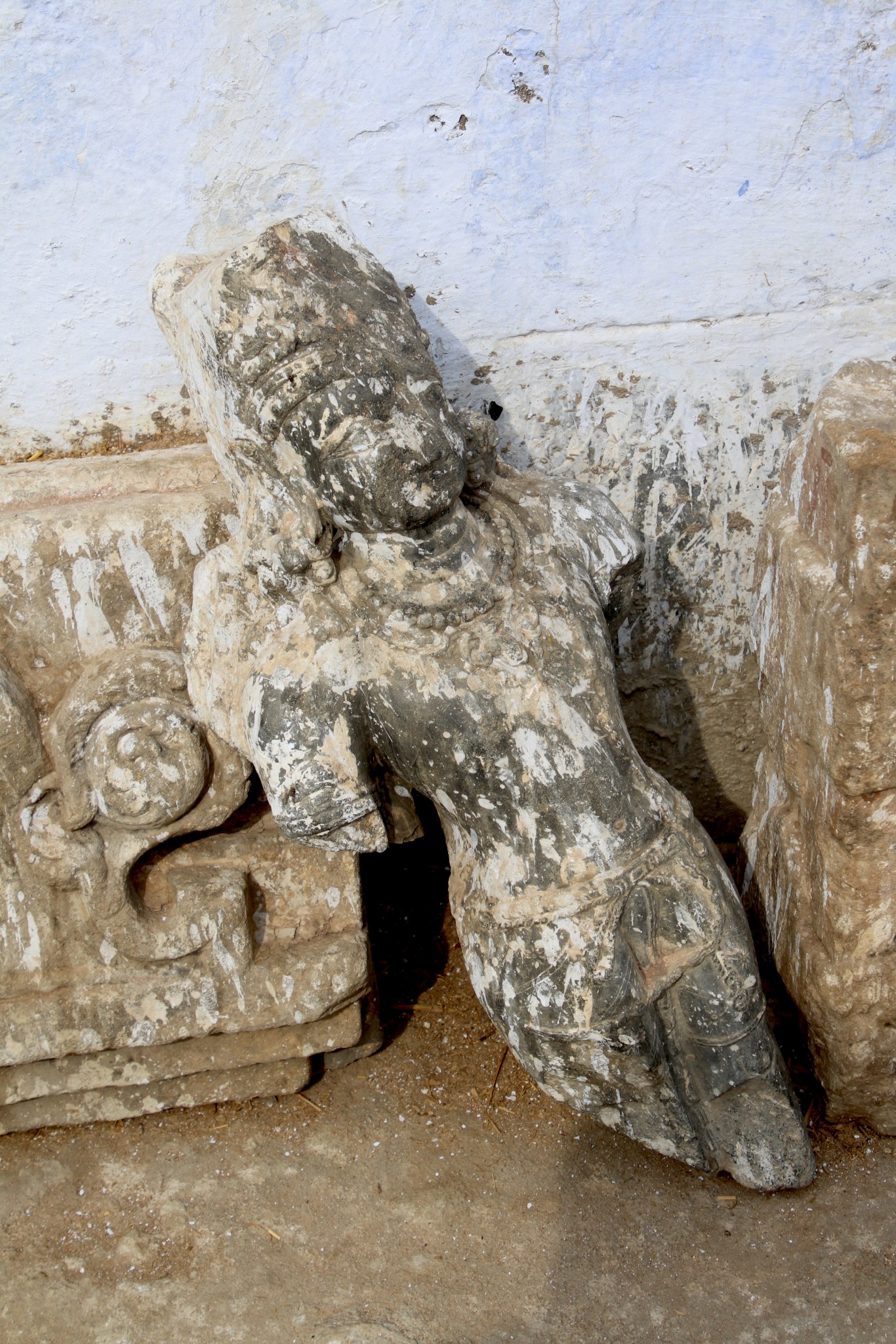
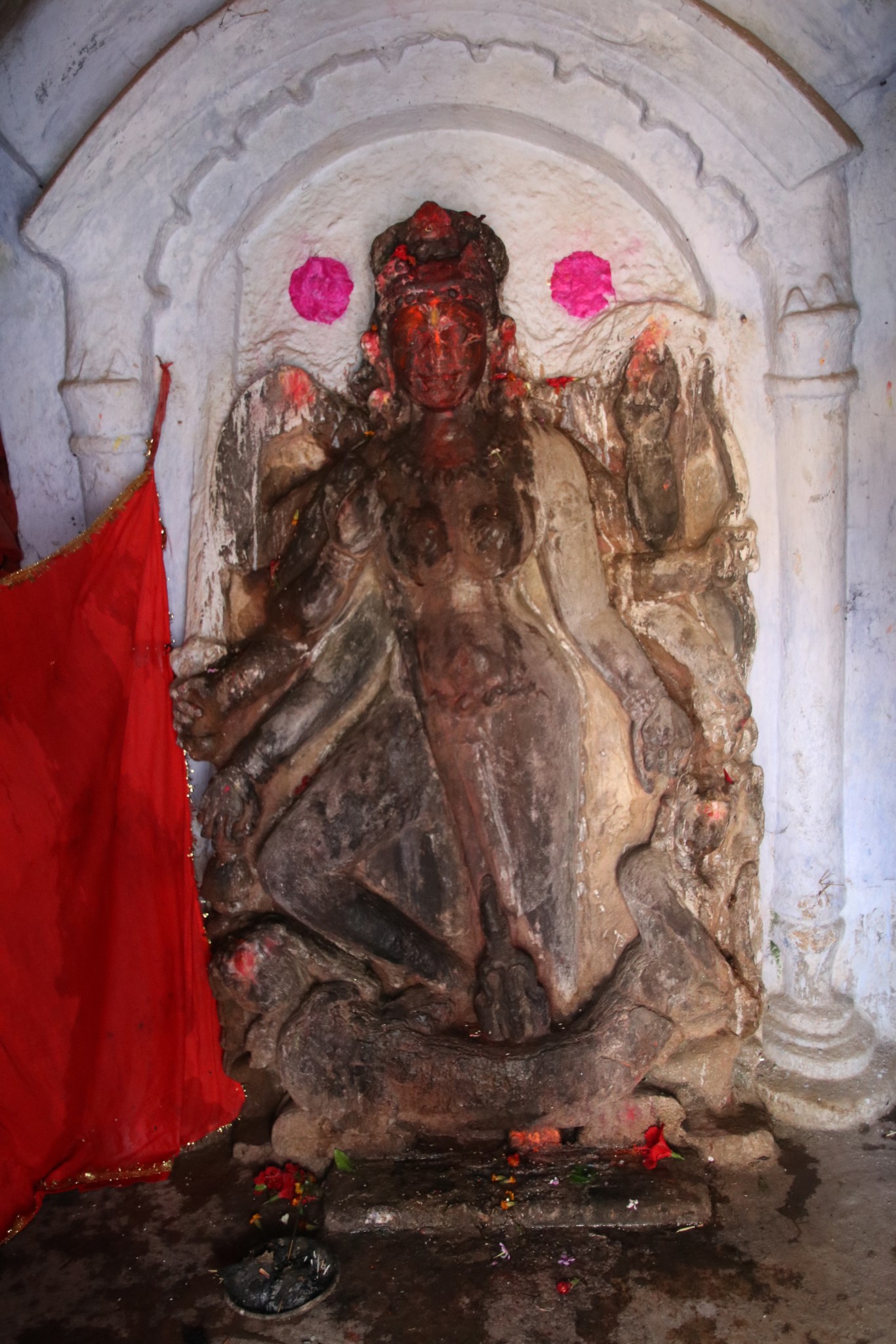
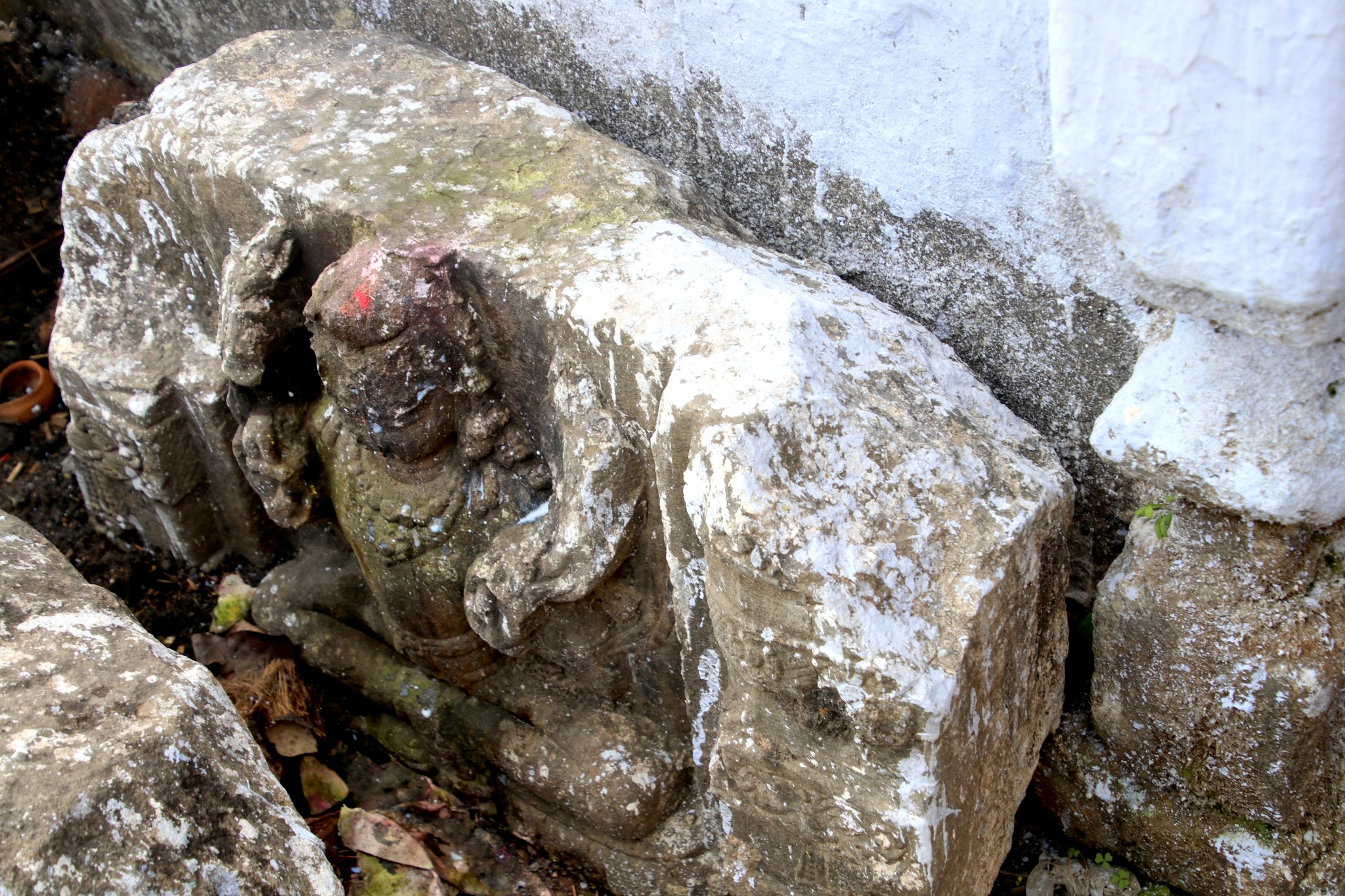
After giving me and Ravi a very warm welcome, several inhabitants of the picturesque village of Aphṣāḍ took us on a tour of the many small shrines where 7th-10th century black basalt and grey sandstone sculptures from the mound and surrounding fields, are kept – some under active worship.
*John F. Fleet, ‘Inscriptions of the Early Gupta Kings and their Successors’, inCorpus Inscriptionum Indicarum, Volume III, ed. by A.K. Narain (Varanasi: Indological Book House, 1970, 1st edn 1888), p. 207.
Addendum
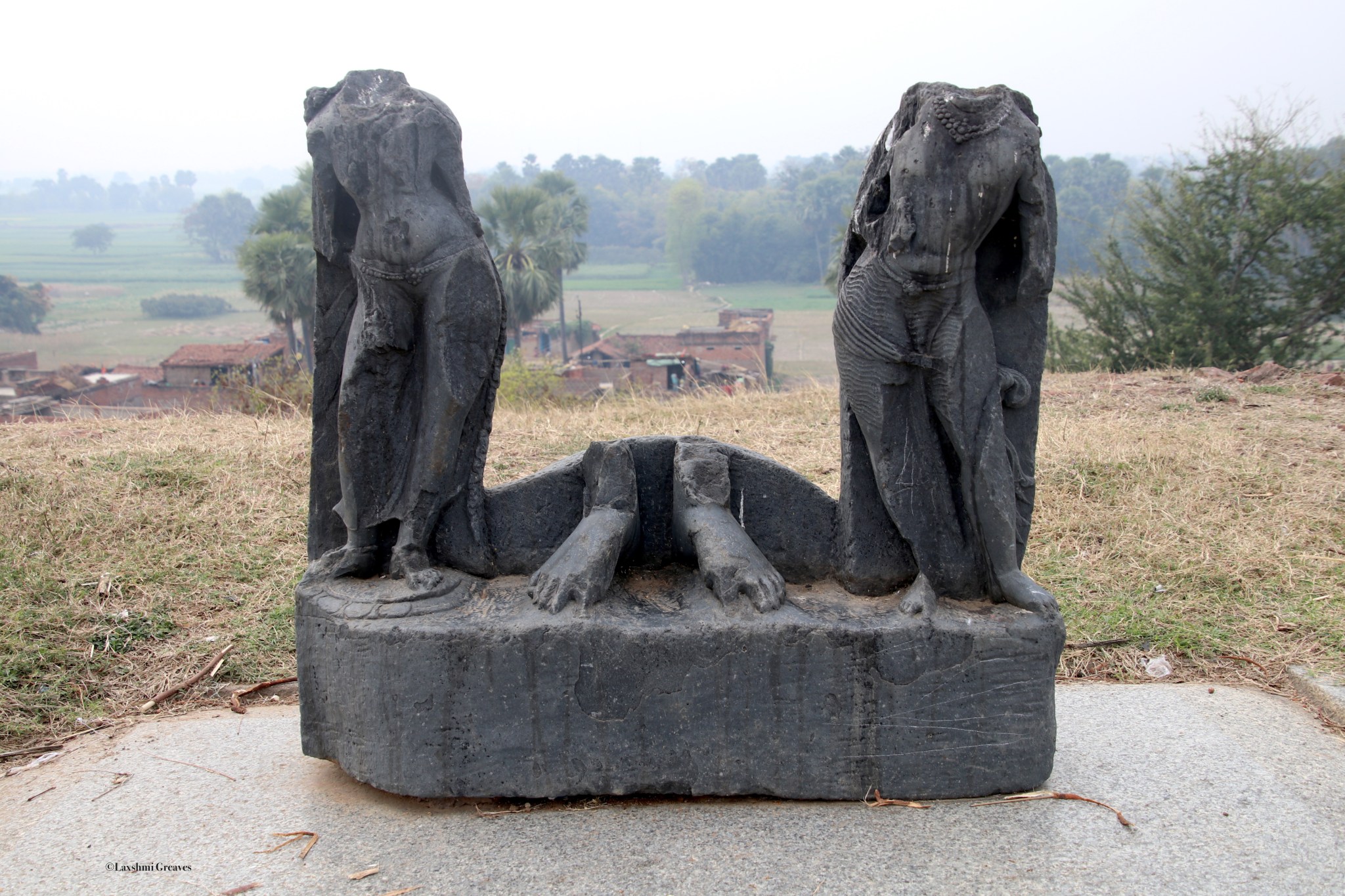
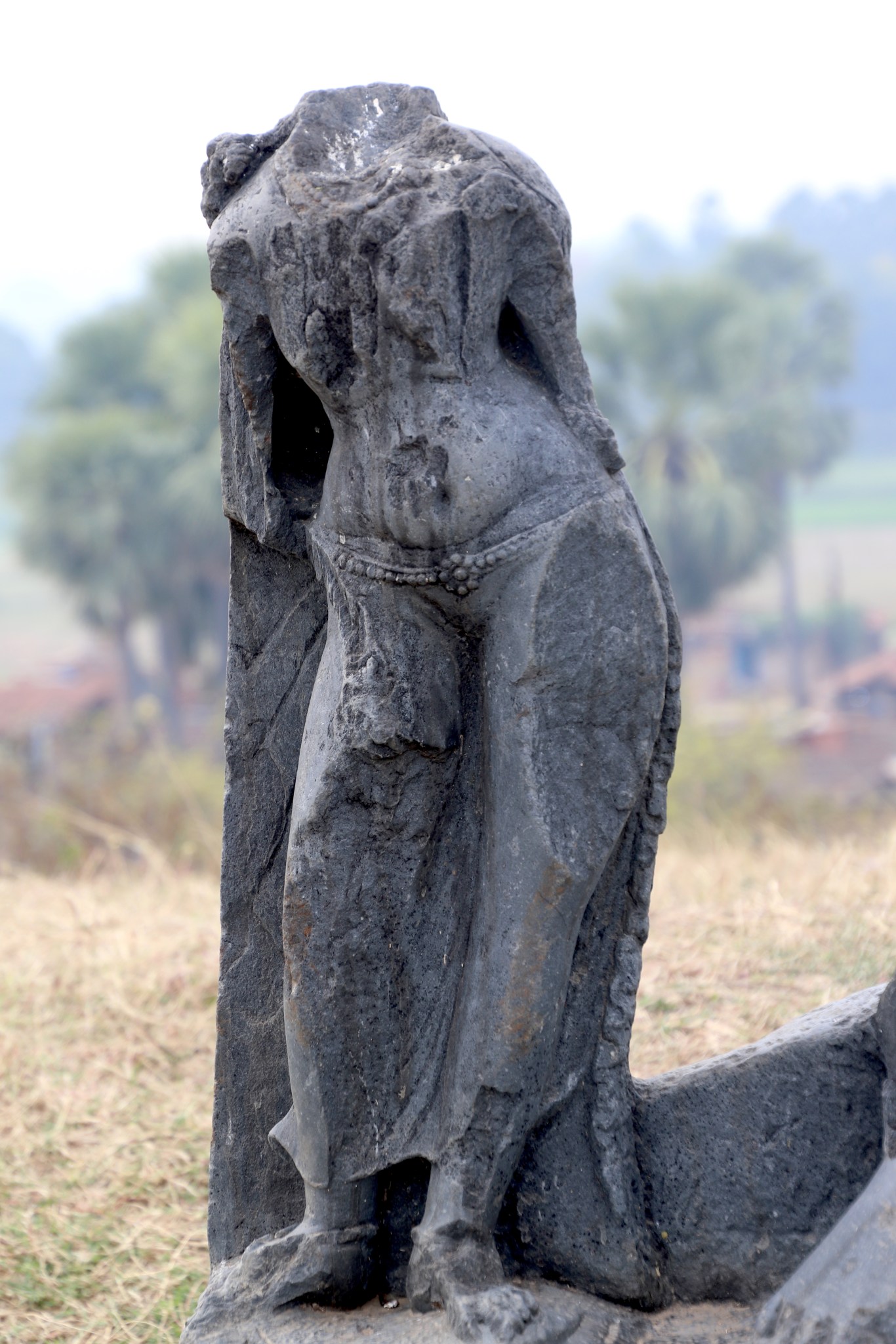
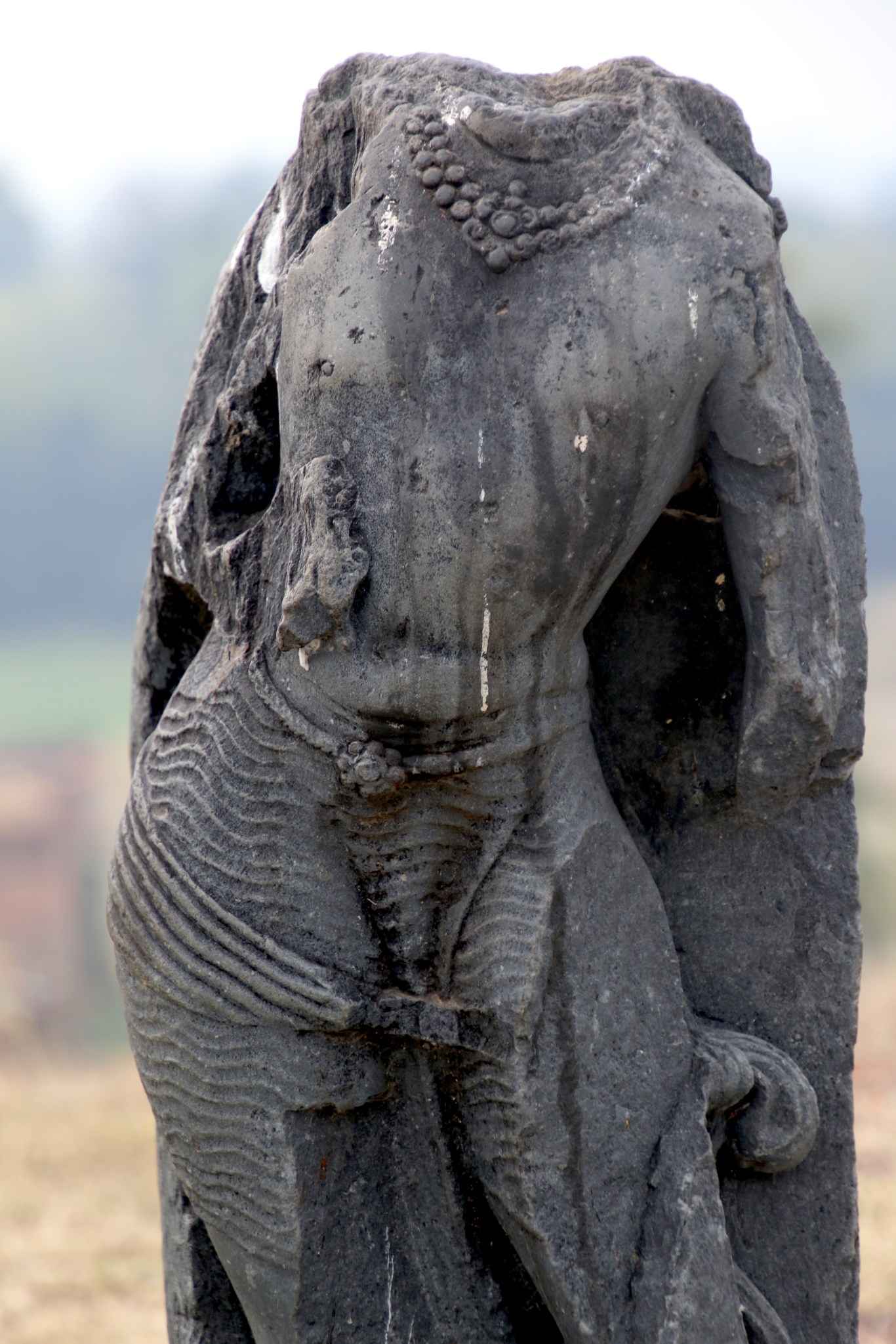
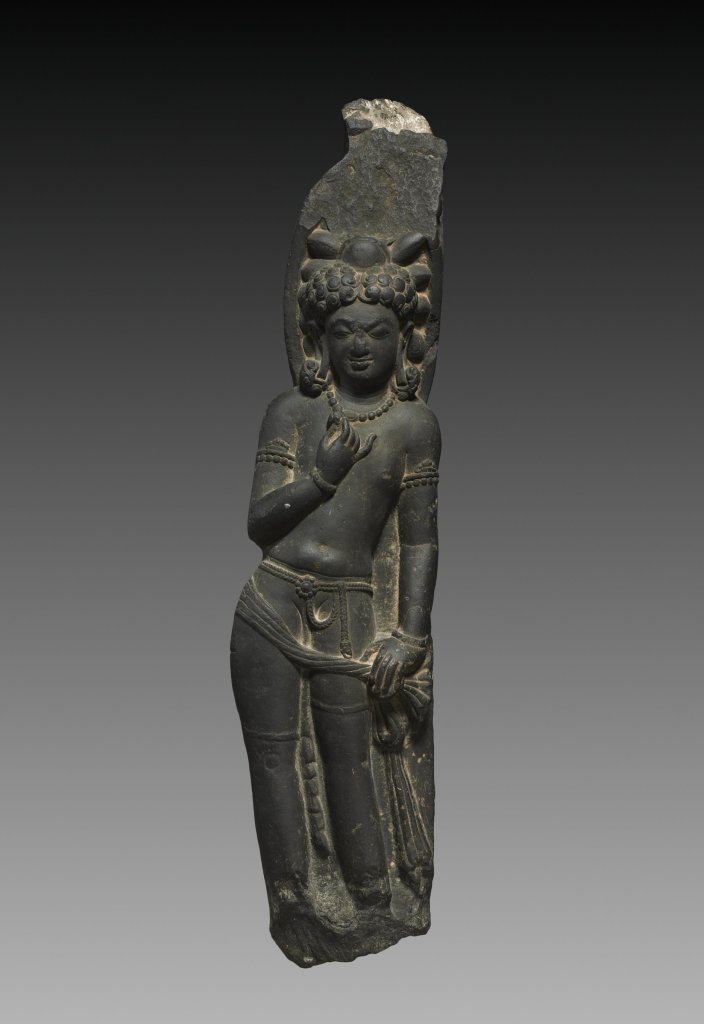
I recently came across this fragmented chlorite sculpture from Aphṣāḍ in the collections of the Cleveland Museum of Art. It depicts Cakrapurusa, the personification of Viṣṇu’s weapon, the cakra (discus). This figure would have stood to the left of a statue of a standing Viṣṇu, probably beneath the god’s lower hand. Since this Cakrapurusa is 81 cm in height, the statue of Viṣṇu was likely life-size and probably the main icon of a temple.

















 Art of South Asia