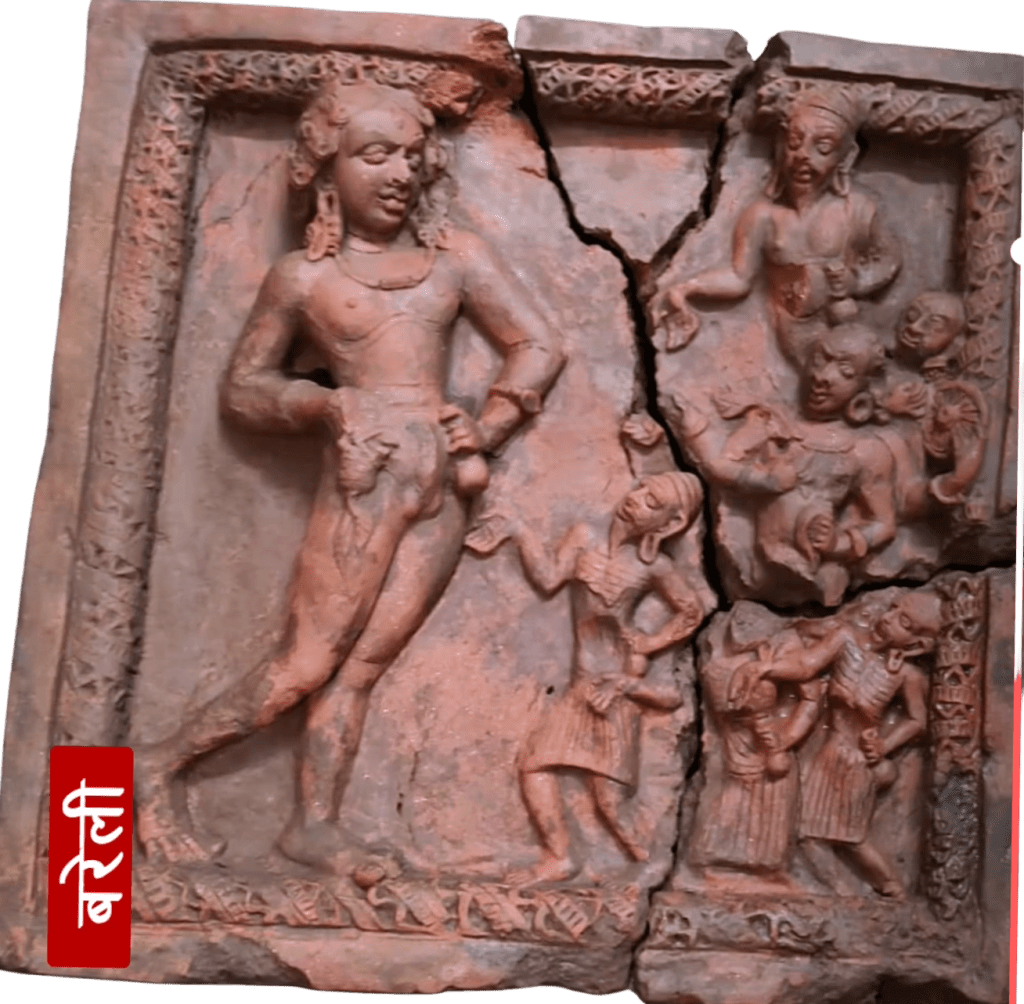
In October last year I wrote about this terracotta panel found in 2022 during a small-scale archaeological excavation on the southern side of the pyramidal brick monument at Ahichhatrā known as ACI or Bhimgaja. I identified the panel as representing Śiva as Bhiksāṭana being confronted by angry ṛṣīs who have a four-armedViṣṇu standing in their midst.
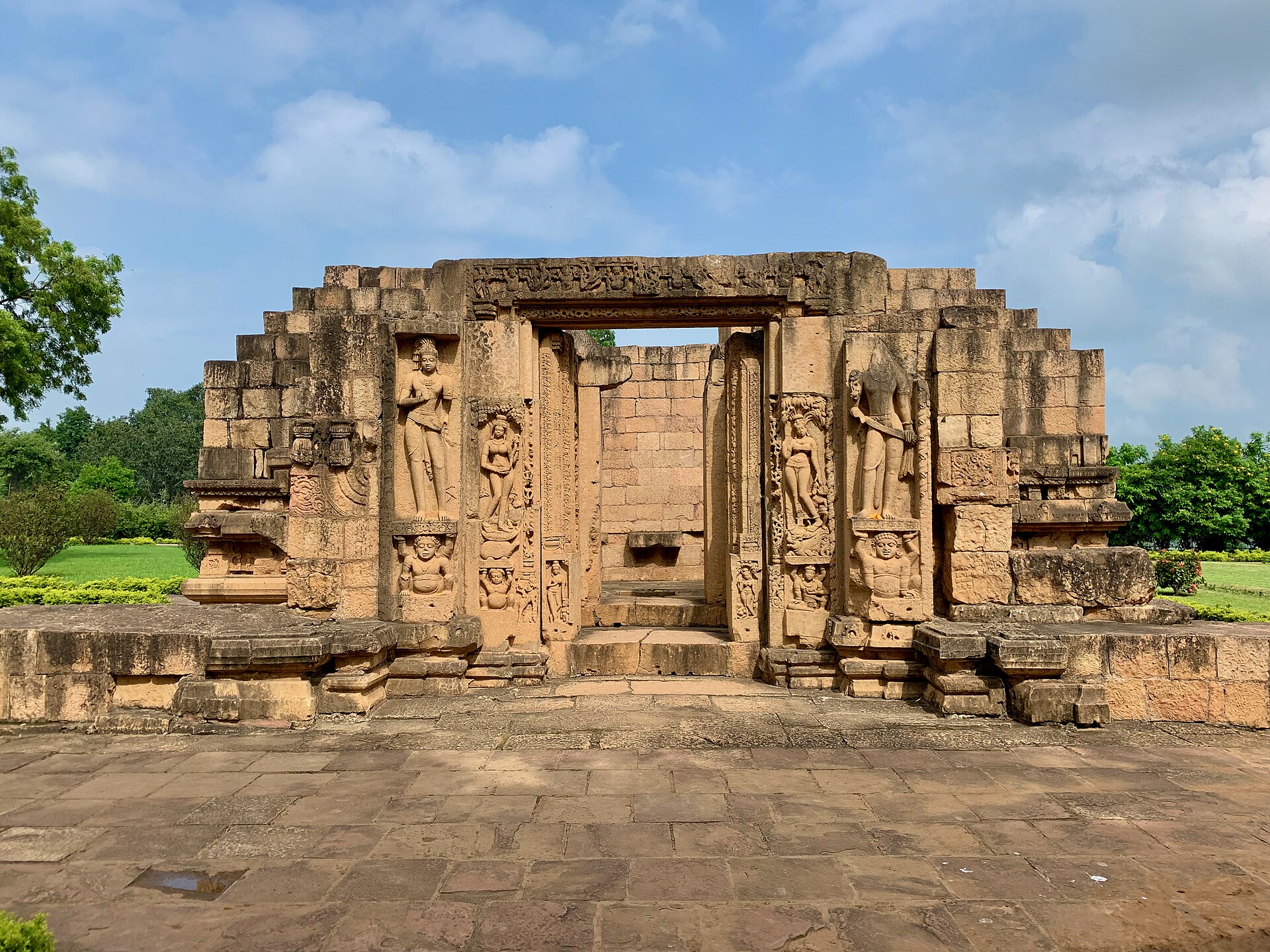
I wasn’t previously aware of other early narrative tellings of this myth (or a version of it) in temple sculpture until I came across a visual narration spanning five stone panels positioned in ascending order on the lateral left doorjamb of the late 6th or early 7th century ruined Deur temple at Malhār in Chhattisgarh. These relief panels are discussed by Natasja Bosma in her excellent book (2018): Dakṣina Kosālā: A Rich Centre of Early Śaivism. Groningen: Barkhuis, pp. 193–206.
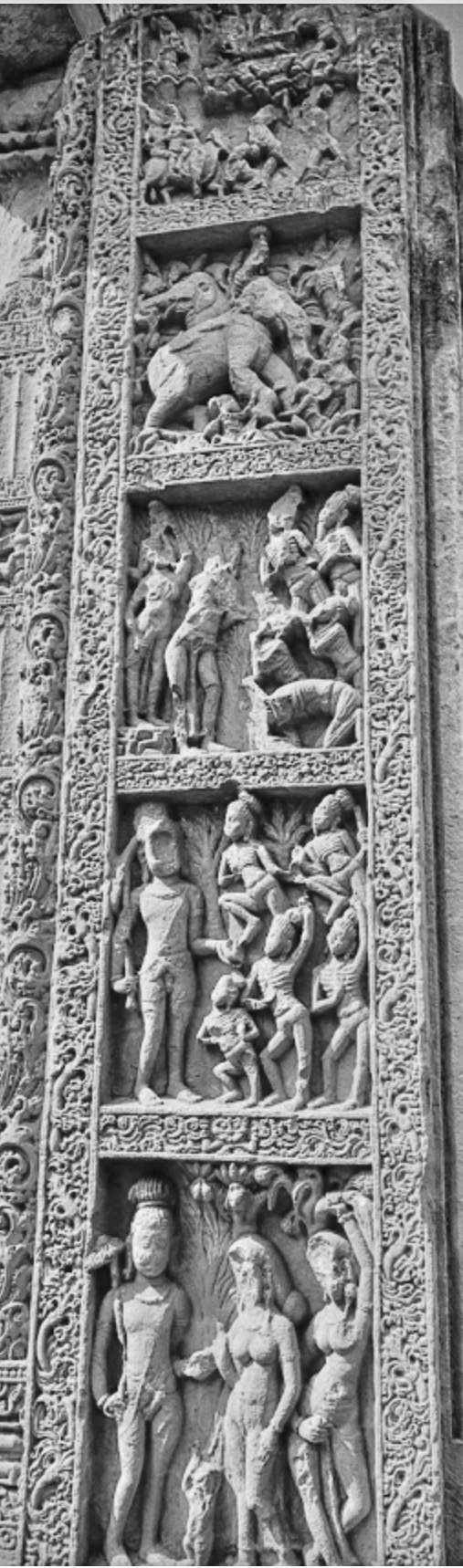
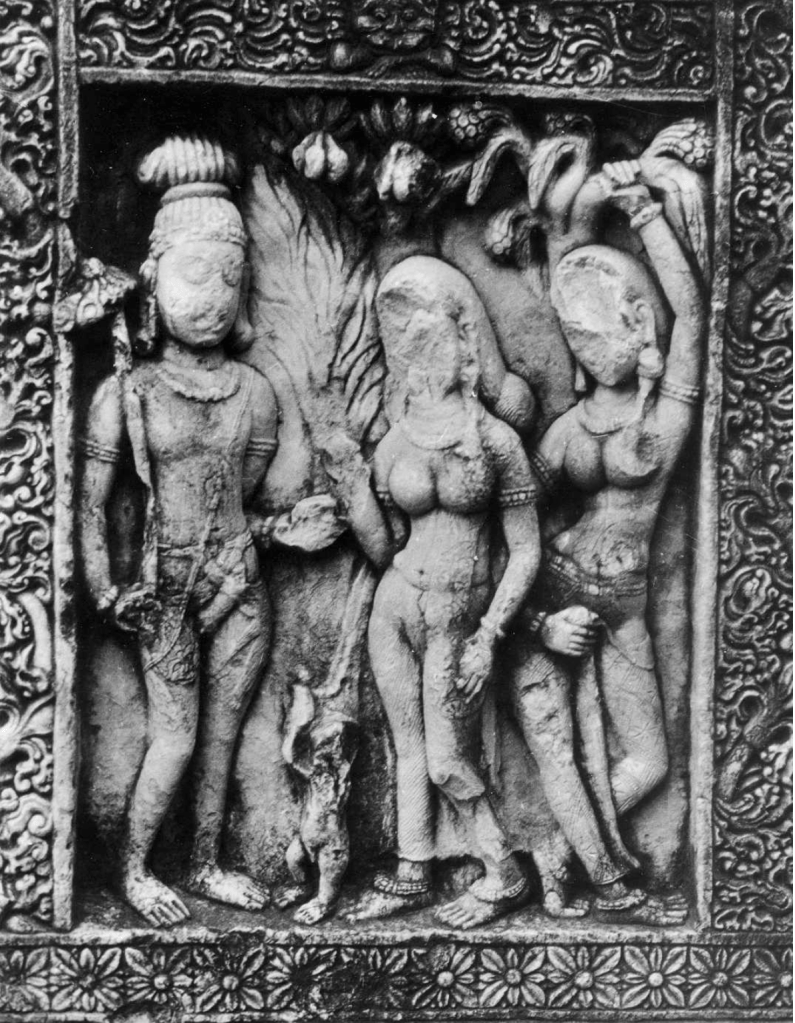
The opening scene depicts the divine mendicant, Śiva Bhiksāṭana, being greeted by the lovely wives of the sages (ṛṣīs) who are very much taken with his handsome form.
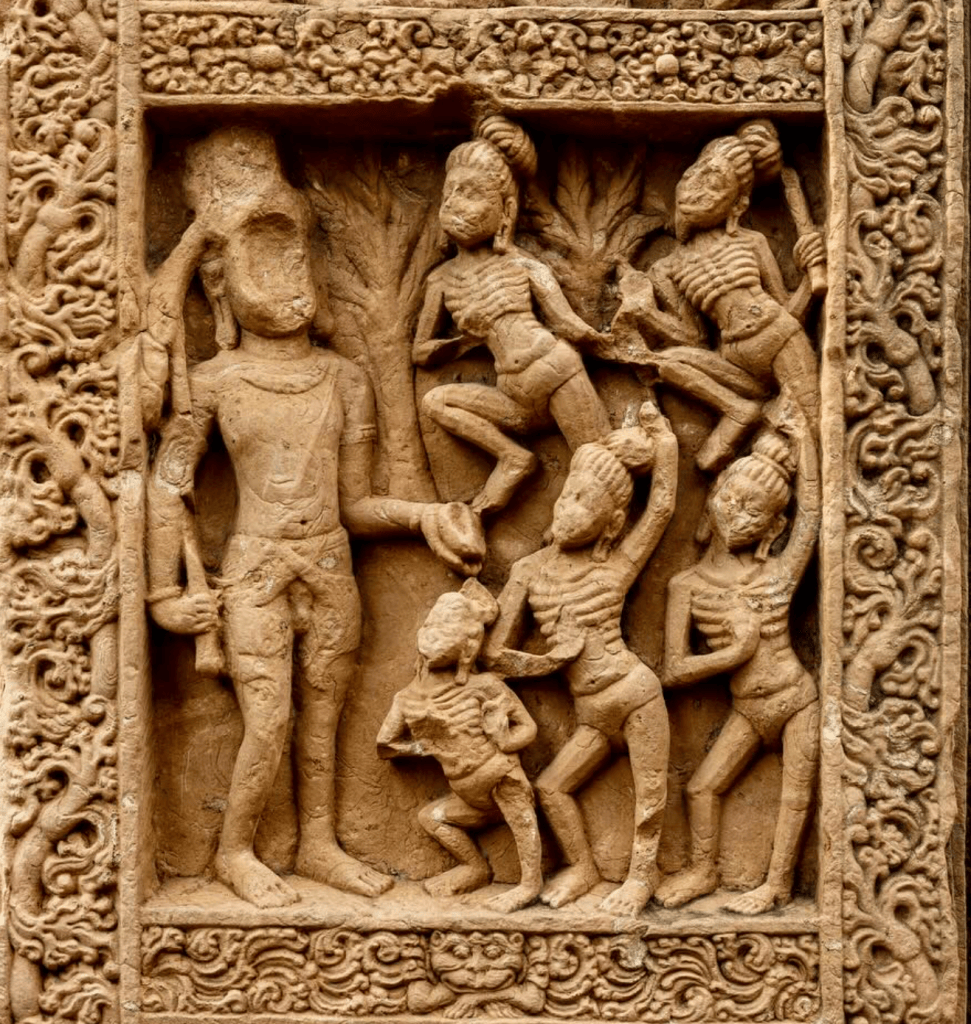
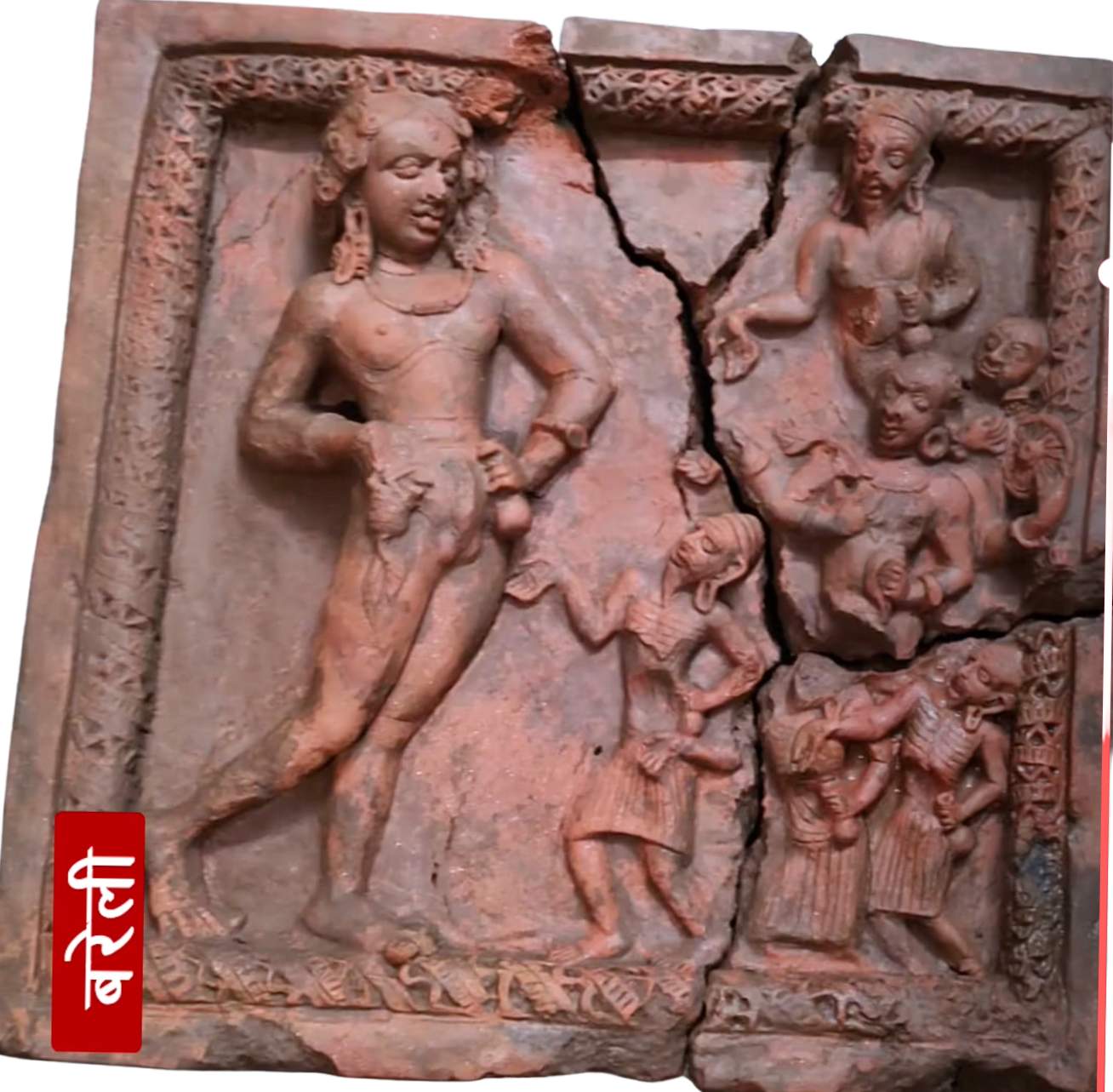
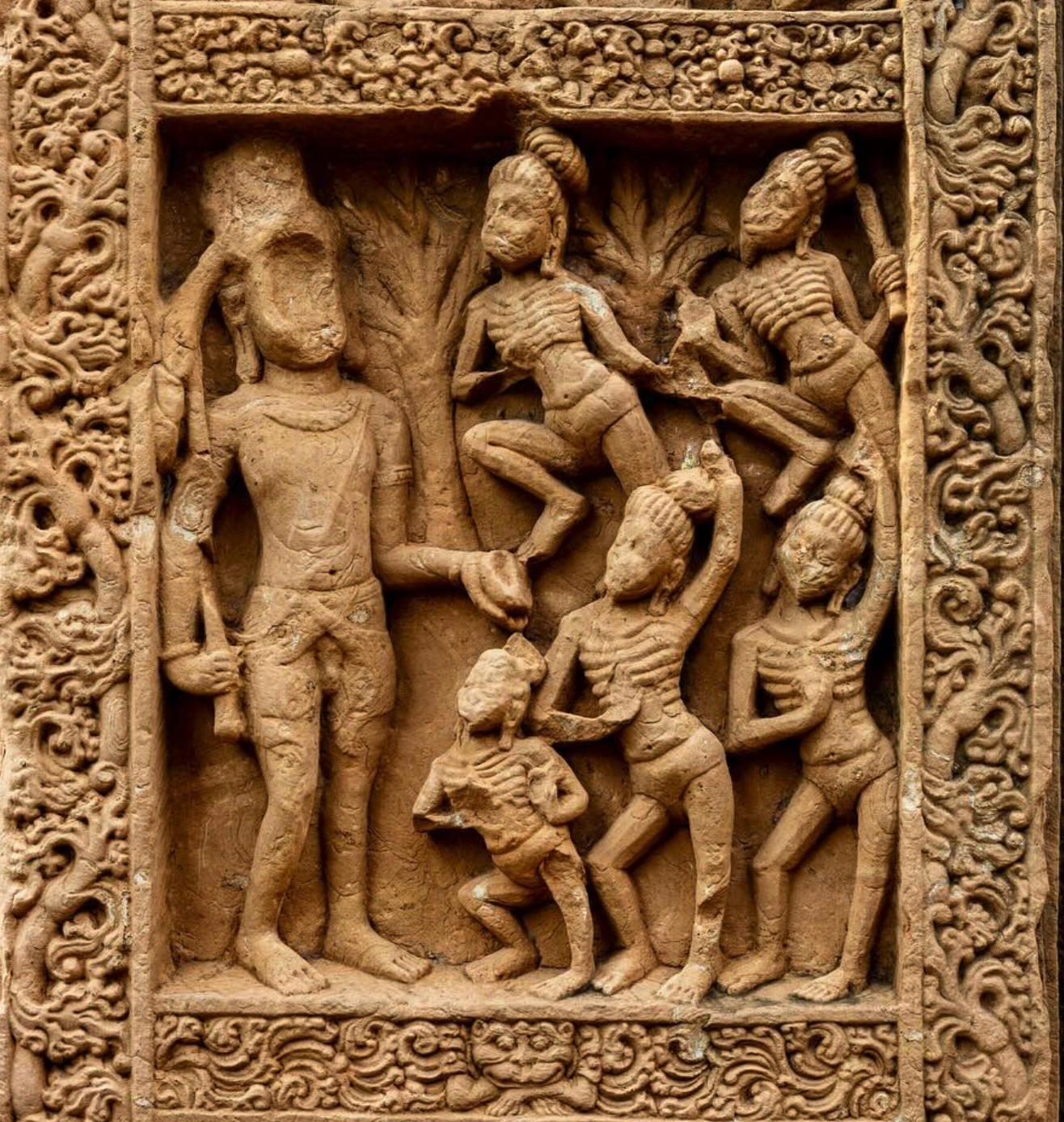
But it is the second panel in the sequence that is so reminiscent of our panel from Ahichhatrā albeit without the presence of Viṣṇu and the mysterious woman. The absence of these figures in the Malhār relief indicates that it tells a different version of the myth.
The next panel in the narrative sequence at Malhār represents the ṛṣīs now vehemently propitiating Śiva. The fourth panel shows two elephants in a lotus strewn lake surrounded by the ṛṣīs who touch the feet, trunk, and brow of the elephant standing to the fore. Natasja Bosma (pp. 203–204) identifies this as depicting a scene from the Bhiksāṭana myth as told in the Vāmanapurāṇa. The ṛṣīs have been tasked to move Śiva’s liṅga which, in their anger they had caused to be detached, and to establish it in Lake Sannihatya. Finding the liṅga immoveable, the ṛṣīs are advised by Śiva’s spouse, Pārvatī, to visit the lake where they will find Śiva in the form of an elephant. Śiva in this animal form then goes with the ṛṣīs to the forest to collect the liṅga and he carries it back to the lake himself. Presumably the second elephant in the panel represents Pārvatī.
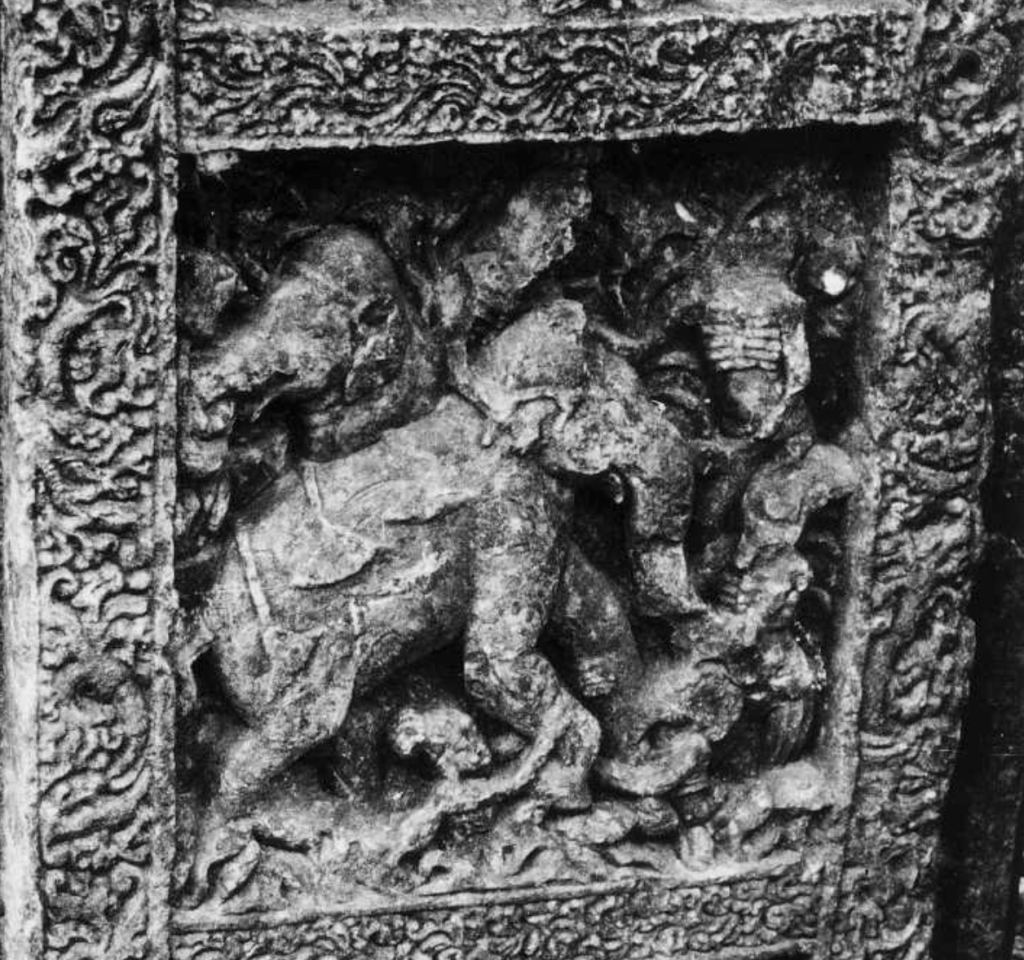
The final panel in the narrative sequence at Malhār is divided into two registers. In the lower register ṛṣīs form a send-off party for Śiva and Pārvatī who are seated on the former’s bull vehicle. And in the upper register, the ṛṣīs are shown honouring the liṅga in the lake (Bosma 2018: 204).
The panel from Ahichhatrā was likewise probably one of a series of panels narrating the story of Bhiksāṭana (two extant panels from this monument, for example, tell the story of the destruction of Dakṣa’s sacrifice). It shares some commonalities with the telling of the myth in the Kūrma Purāṇa (see blog post on Bhiksāṭana at Ahichhatrā). To the best of my knowledge this panel comprises the earliest surviving depiction of the Bhiksāṭana myth and happily is a particularly vivid image.

