The Bhikṣāṭana Panel from Ahichhatrā Revisited

For more information on the excavations see Garnayak, Dibishada Brajasundar, Vivek K. Singh, Mukesh Kumar and Rajesh K. Meena. 2024. ‘New Findings from Ahichchhatra Archaeological Site’, The South East Asian Review 49: 173–182.

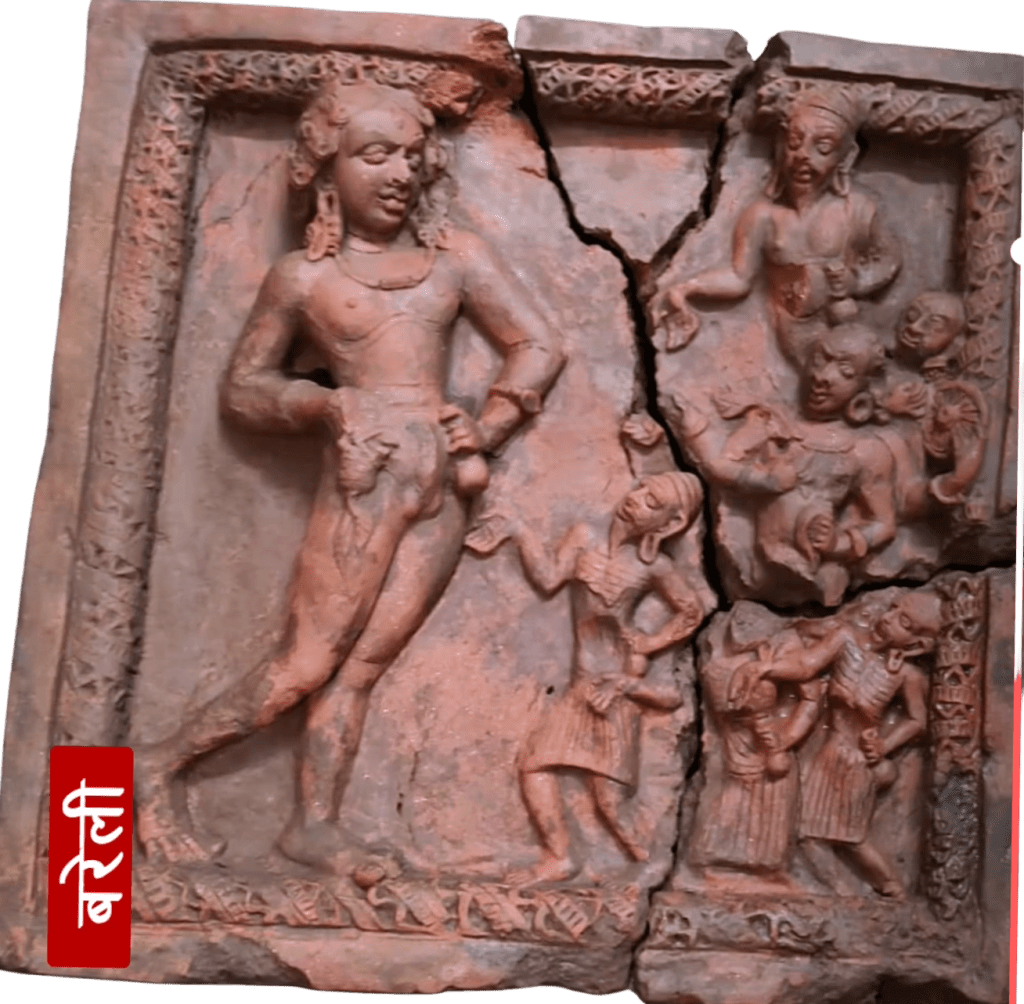
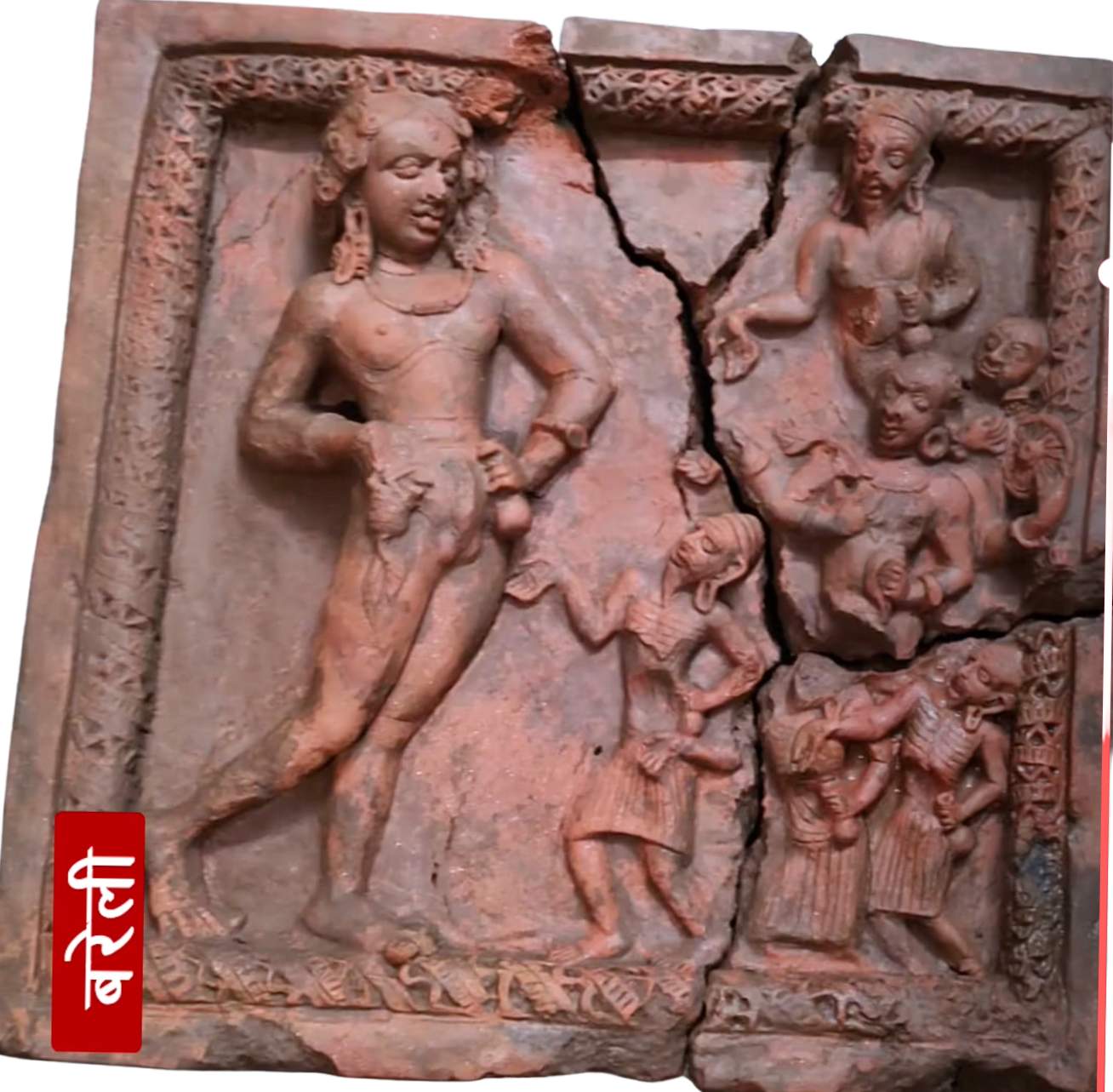
In October last year I wrote about this terracotta panel found in 2022 during a small-scale archaeological excavation on the southern side of the pyramidal brick monument at Ahichhatrā known as ACI or Bhimgaja. I identified the panel as representing Śiva as Bhiksāṭana being confronted by angry ṛṣīs who have a four-armedViṣṇu standing in their midst.

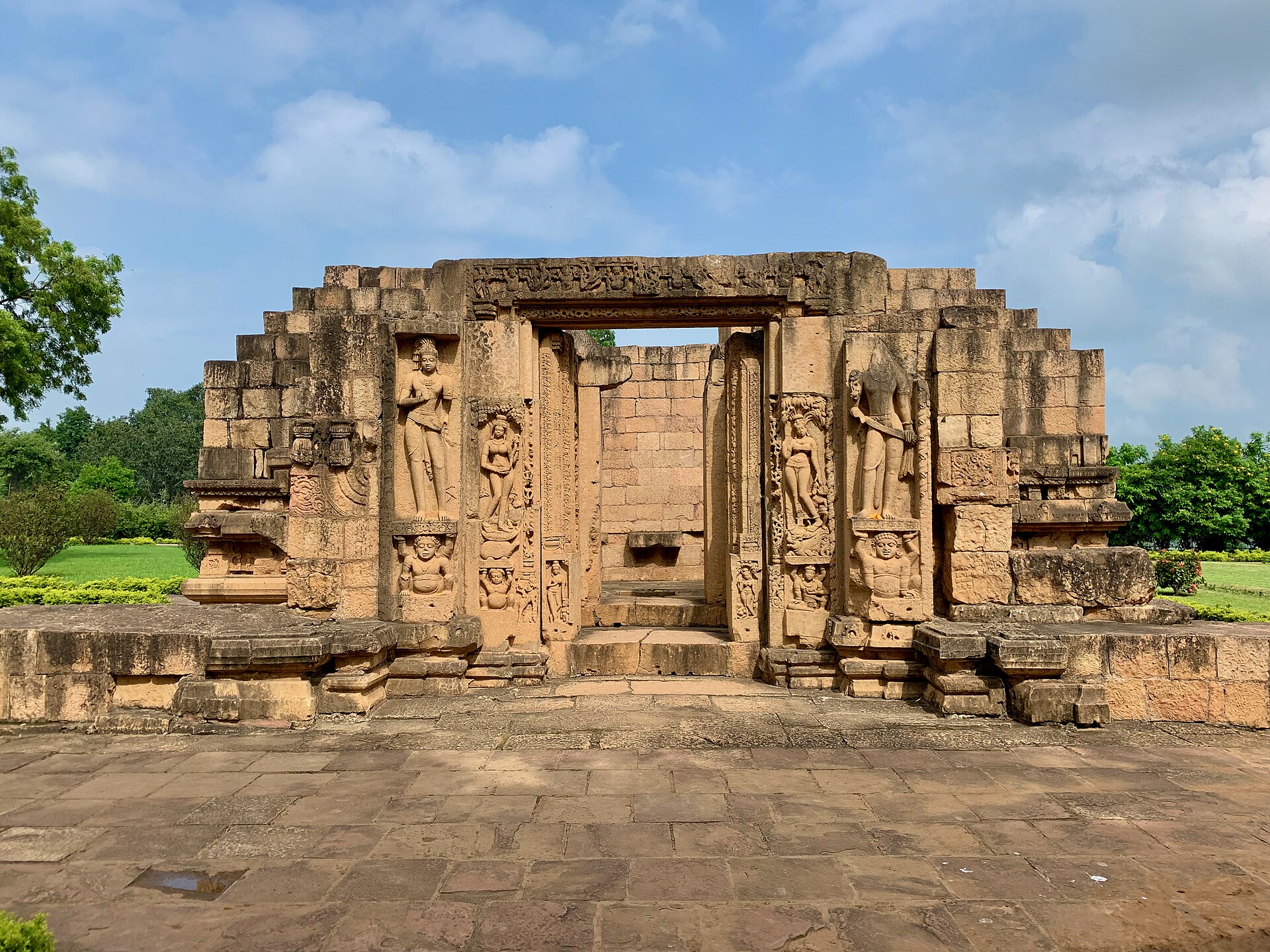
I wasn’t previously aware of other early narrative tellings of this myth (or a version of it) in temple sculpture until I came across a visual narration spanning five stone panels positioned in ascending order on the lateral left doorjamb of the late 6th or early 7th century ruined Deur temple at Malhār in Chhattisgarh. These relief panels are discussed by Natasja Bosma in her excellent book (2018): Dakṣina Kosālā: A Rich Centre of Early Śaivism. Groningen: Barkhuis, pp. 193–206.
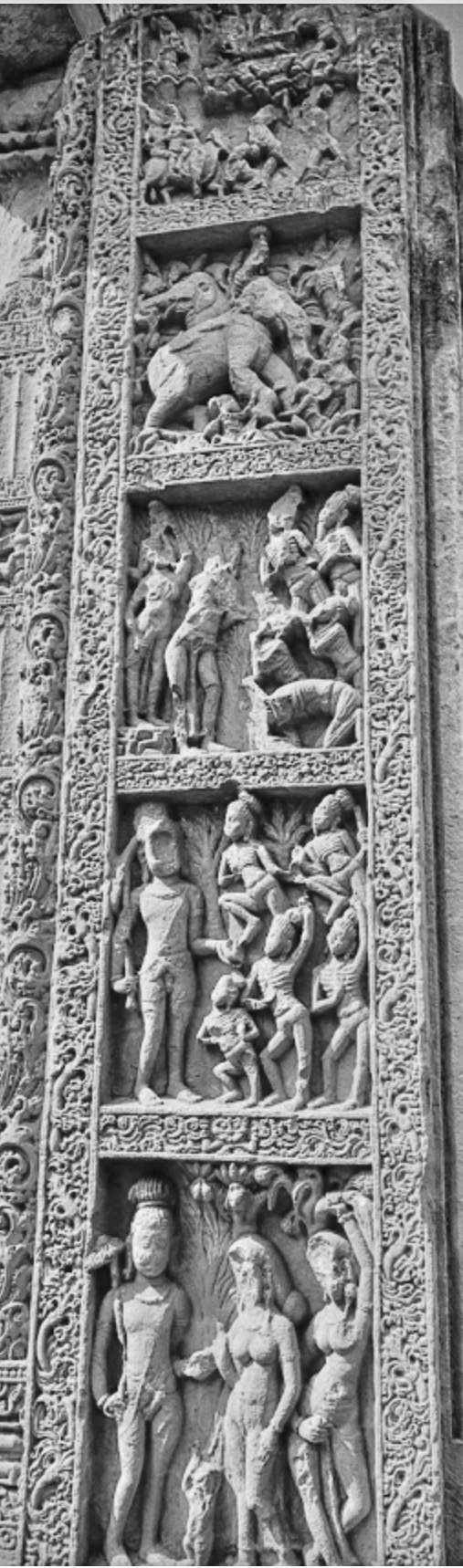
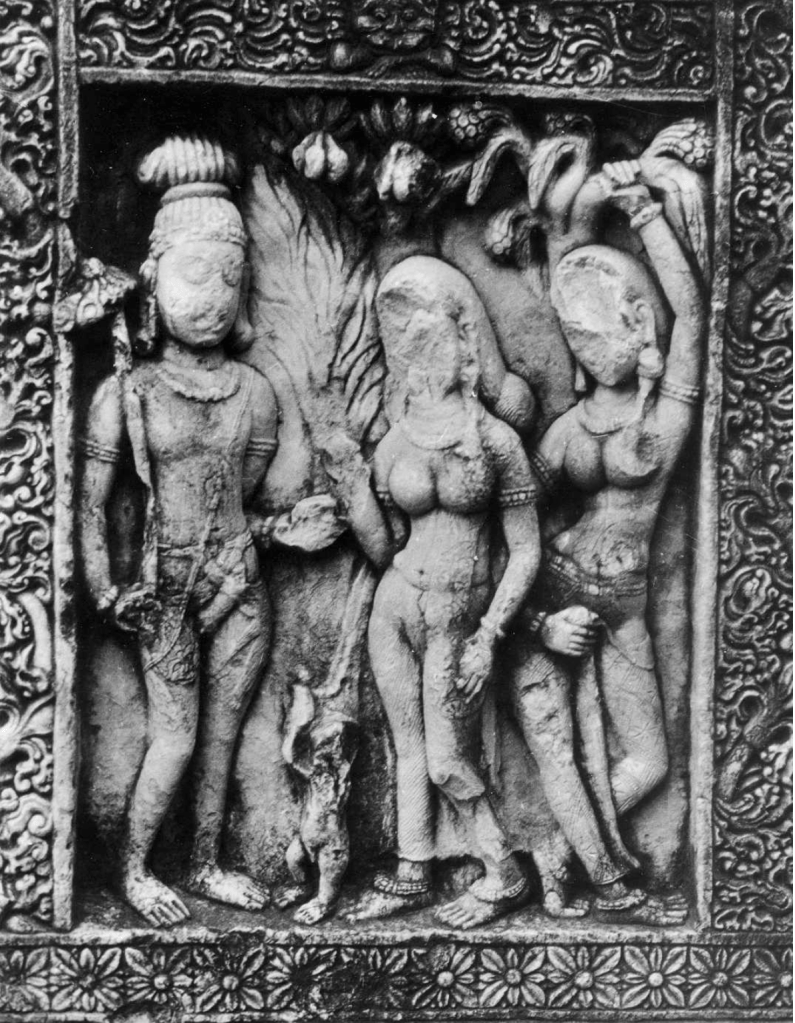
The lowermost panel depicts Bhiksāṭana encountering the enamoured wives of the ṛṣīs (sages). Photo: American Institute of Indian Studies.

The opening scene depicts the divine mendicant, Śiva Bhiksāṭana, being greeted by the lovely wives of the sages (ṛṣīs) who are very much taken with his handsome form.
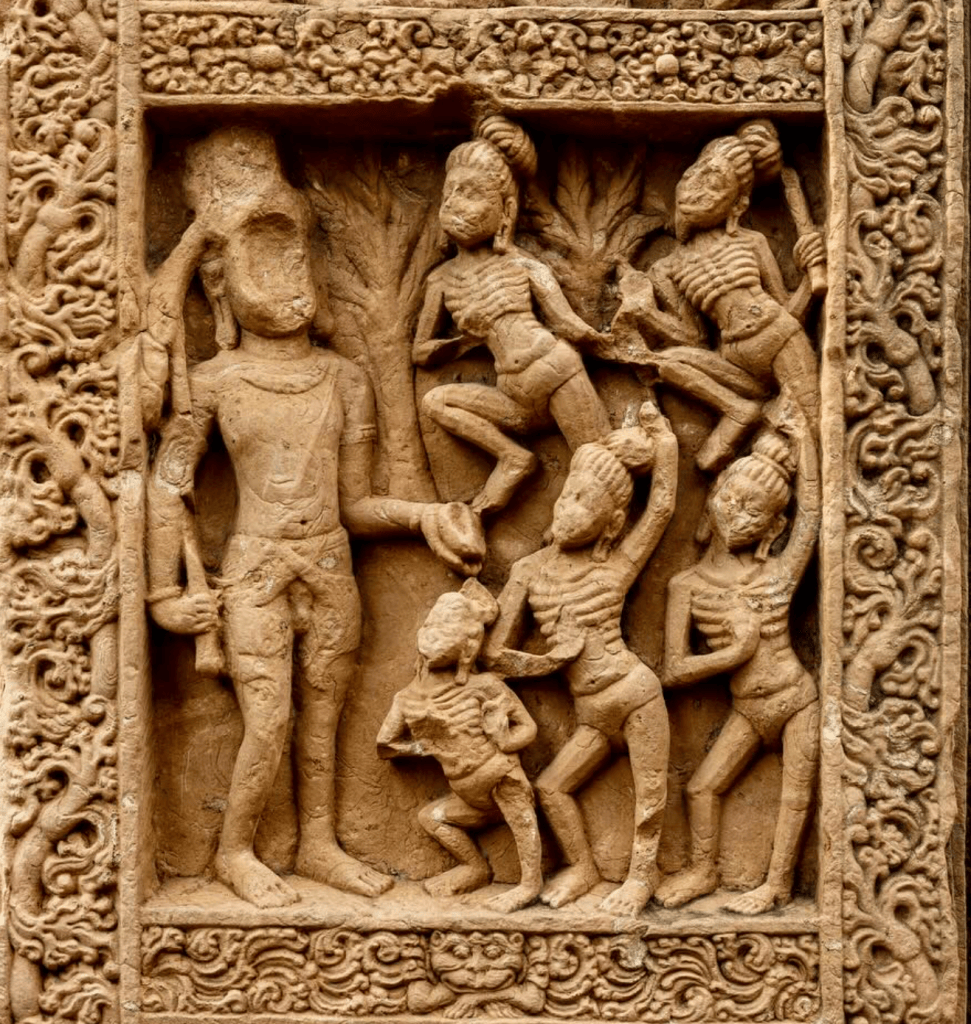
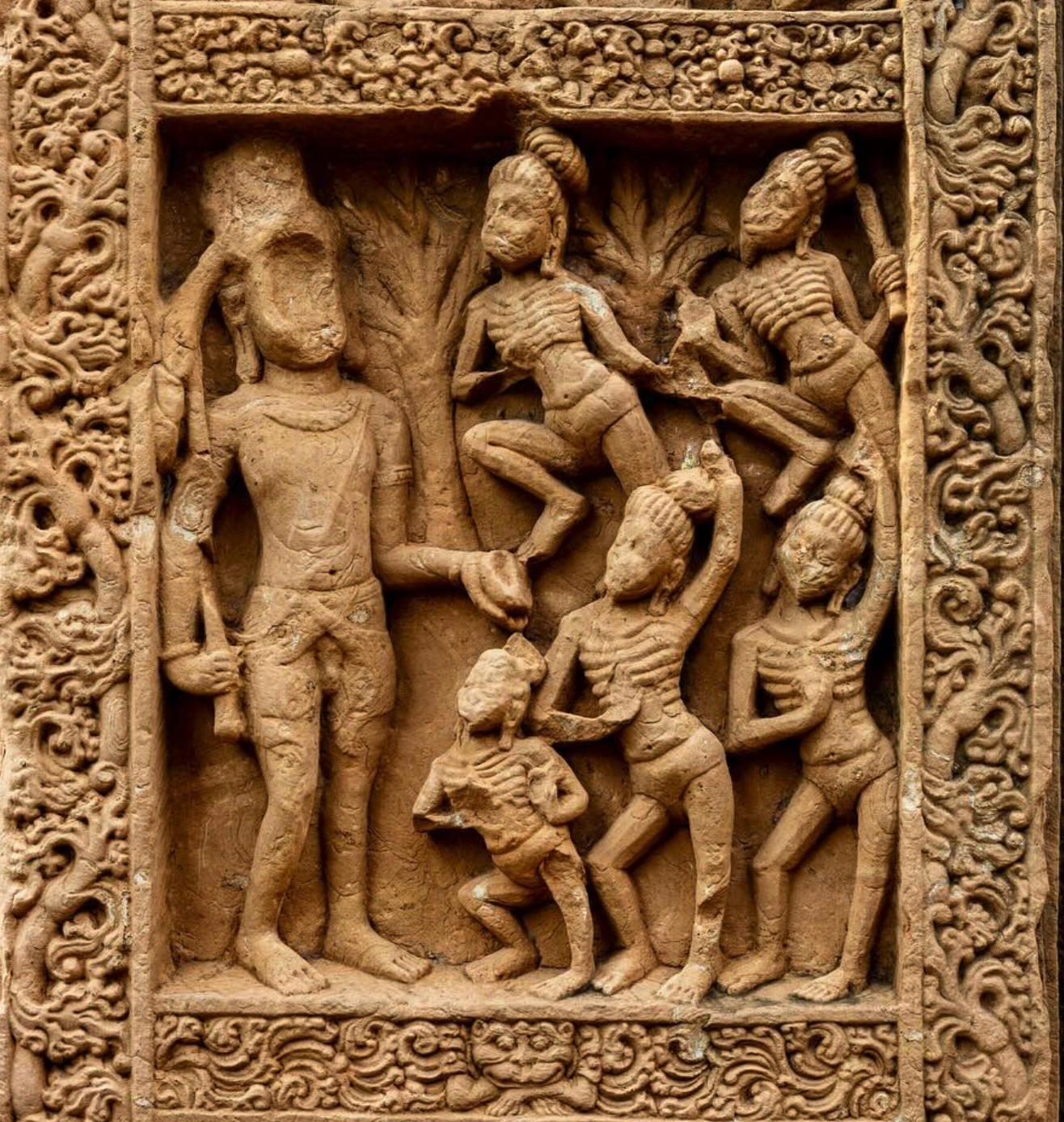
The second panel from the bottom depicts Bhiksāṭana being confronted by furious ṛṣīs.

But it is the second panel in the sequence that is so reminiscent of our panel from Ahichhatrā albeit without the presence of Viṣṇu and the mysterious woman. The absence of these figures in the Malhār relief indicates that it tells a different version of the myth.

The next panel in the narrative sequence at Malhār represents the ṛṣīs now vehemently propitiating Śiva. The fourth panel shows two elephants in a lotus strewn lake surrounded by the ṛṣīs who touch the feet, trunk, and brow of the elephant standing to the fore. Natasja Bosma (pp. 203–204) identifies this as depicting a scene from the Bhiksāṭana myth as told in the Vāmanapurāṇa. The ṛṣīs have been tasked to move Śiva’s liṅga which, in their anger they had caused to be detached, and to establish it in Lake Sannihatya. Finding the liṅga immoveable, the ṛṣīs are advised by Śiva’s spouse, Pārvatī, to visit the lake where they will find Śiva in the form of an elephant. Śiva in this animal form then goes with the ṛṣīs to the forest to collect the liṅga and he carries it back to the lake himself. Presumably the second elephant in the panel represents Pārvatī.
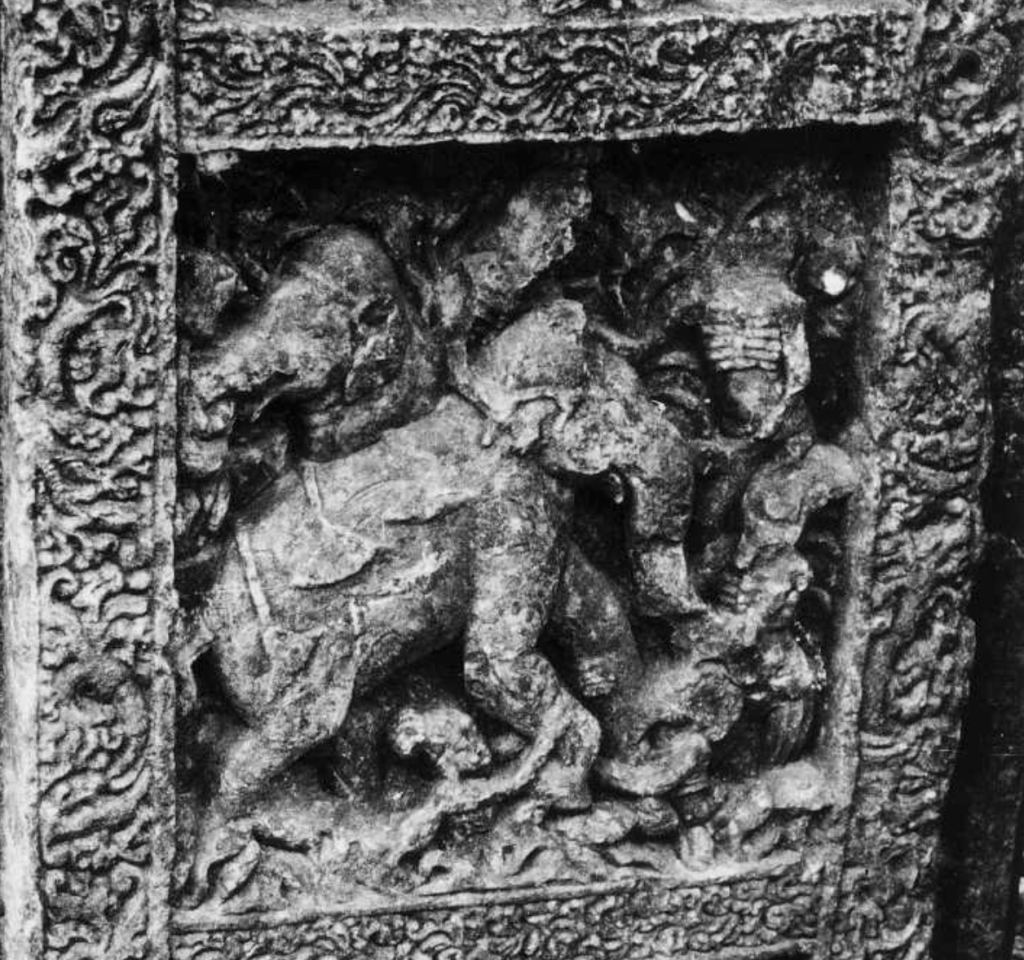
Śiva in the form of an elephant surrounded by sages in Lake Sannihatya? Photograph: American Institute of Indian Studies.

The final panel in the narrative sequence at Malhār is divided into two registers. In the lower register ṛṣīs form a send-off party for Śiva and Pārvatī who are seated on the former’s bull vehicle. And in the upper register, the ṛṣīs are shown honouring the liṅga in the lake (Bosma 2018: 204).

The panel from Ahichhatrā was likewise probably one of a series of panels narrating the story of Bhiksāṭana (two extant panels from this monument, for example, tell the story of the destruction of Dakṣa’s sacrifice). It shares some commonalities with the telling of the myth in the Kūrma Purāṇa (see blog post on Bhiksāṭana at Ahichhatrā). To the best of my knowledge this panel comprises the earliest surviving depiction of the Bhiksāṭana myth and happily is a particularly vivid image.

Bhikṣāṭana at Ahichhatrā

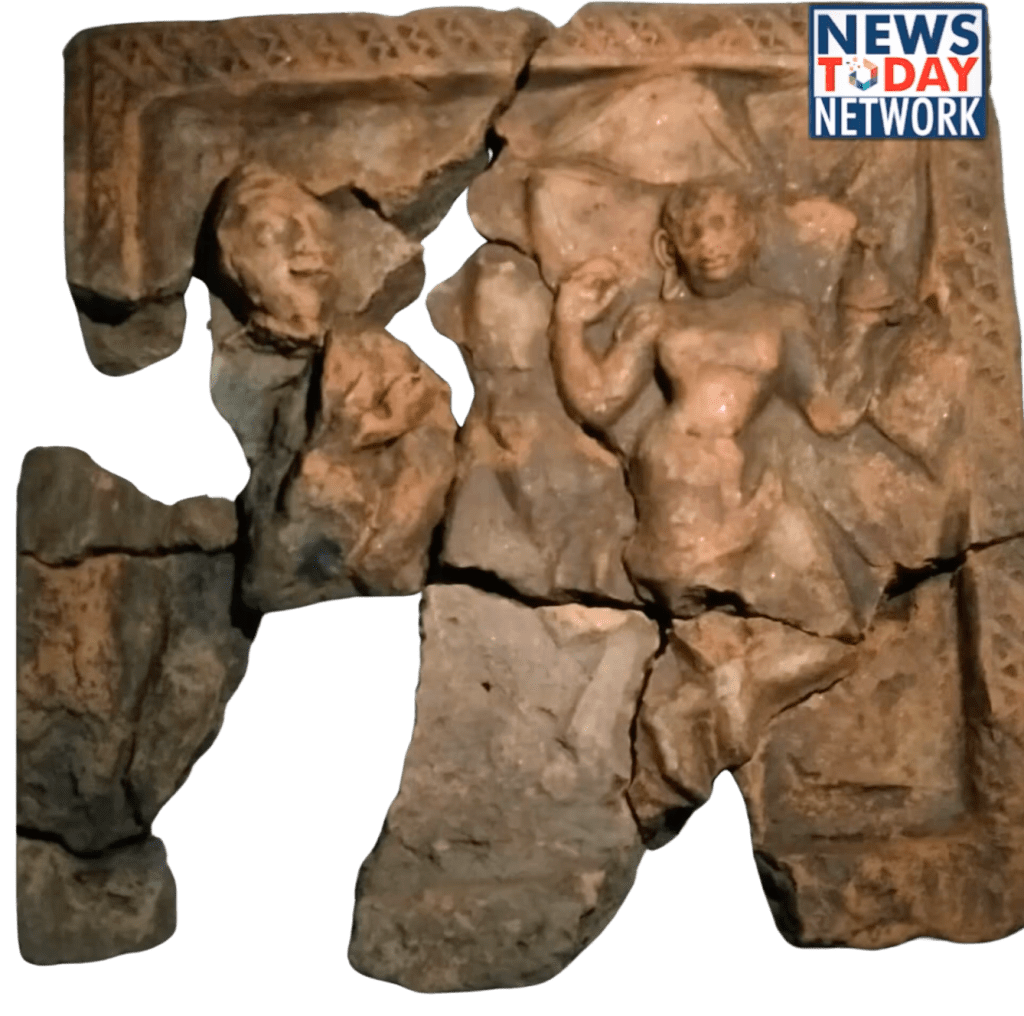
I recently came across an article dated 1st September 2022 in the newspaper, Live Hindustan, reporting the discovery of two terracotta panels on the south side of the pyramidal brick monument known as ACI or Bhimgaja situated at the heart of the ancient city of Ahichhatrā, Bareilly district, Uttar Pradesh. These panels, dating to circa the 5th/6th century CE, were unearthed during excavations in 2022 and were regrettably damaged in the process. The panels are exciting additions to the corpus of panels retrieved from ACI during the 1940–44 excavations, now divided between the National Museum, New Delhi, and the Lucknow State Museum. I am still trying to ascertain the whereabouts of the ‘new’ panels in order to study them in person, but meanwhile, I have to make do with the slightly blurred images from the newspaper article.

ACI/Bhimgaja following excavation in the early 1940s. Photograph courtesy of the Archaeological Survey of India.
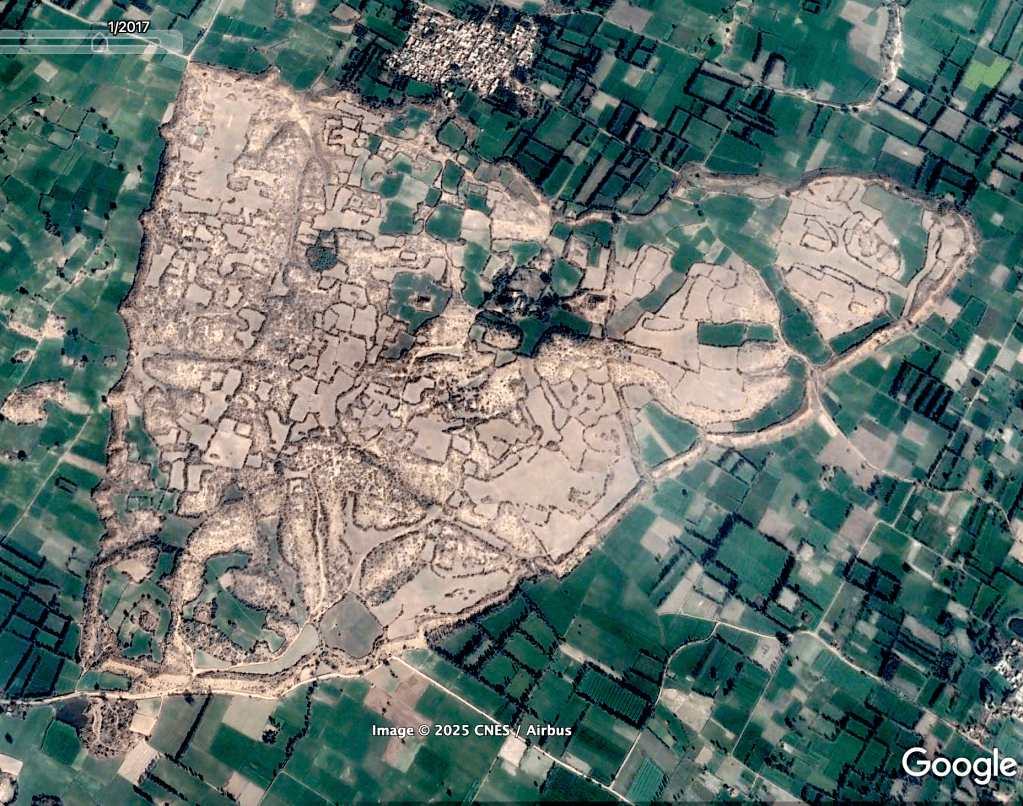
The ancient walled city of Ahichhatrā. Google Earth.

I suggest that the more damaged of the two panels might potentially represent the beautiful enchantress Mohinī – a female manifestation of Viṣṇu – standing in front of Mount Mandara and holding the vessel of amṛta (nectar of immortality) churned up from the ocean of milk. The figure on the left is too fragmented to identify.

The second panel represents Śiva as the devastatingly handsome naked mendicant, Bhikṣāṭana. This is a rare, if not unique, sculptural relief of the supreme beggar encountering Viṣṇu and a group of ṛṣis (sages), three of which are severely emaciated. Viṣṇu partly conceals a figure who looks remarkably similar to the woman in the previous panel. Interestingly, in this early image, Bhikṣāṭana is not furnished with several of the features and accoutrements that later come to distinguish him in temple sculpture, for example, having four arms, sandals, bells to announce his approach, and a pet dog or deer.

The Bhikṣāṭana myth features in various purāṇas, each telling distinct. More investigation is necessary to establish which version the imagery is most closely aligned with, if any. The presence of Viṣṇu, however, could point to it representing a segment of an episode in which there is an altercation in the Deodar forest (see below), or alternatively, an episode in which there is an altercation in Vaikuṇṭha, Viṣṇu’s abode, after Bhikṣāṭana has cut-off the head of the gate keeper of Vaikuṇṭha.

Regarding the Deodar myth, a version in the Kūrma Purāṇa tells how Bhikṣāṭana enters the forest accompanied by Viṣṇu disguised as Mohinī with the objective of teaching a lesson to some arrogant ṛṣis who, obsessed with austerities and rituals, have lost sight of supreme knowledge. Upon meeting the pair, the sages’ wives are immediately enamoured with the dashing Bhikṣāṭana and likewise, some of the sages find themselves attracted to Mohinī. Angry at this state of affairs, the sages insult Bhikṣāṭana, and curse his liṇga to fall off, which it does, albeit transforming into a radiating shaft of light. Anusūyā, the wife of Sage Atri, then recognises the pair as Śiva and Viṣṇu.

One tentative identification for the woman standing behind Viṣṇu in the Ahichhatrā panel is Mohinī, Viṣṇu having just ‘stepped out’ of her. Another possible identification is Anusūyā, with the healthy looking sage in the upper register being Atri.

That Viṣṇu looks angry in the panel somewhat jars with the Deodar forest story and would suit the Vaikuṇṭha episode better. On the other hand, ṛṣis do not play a role in the latter episode.

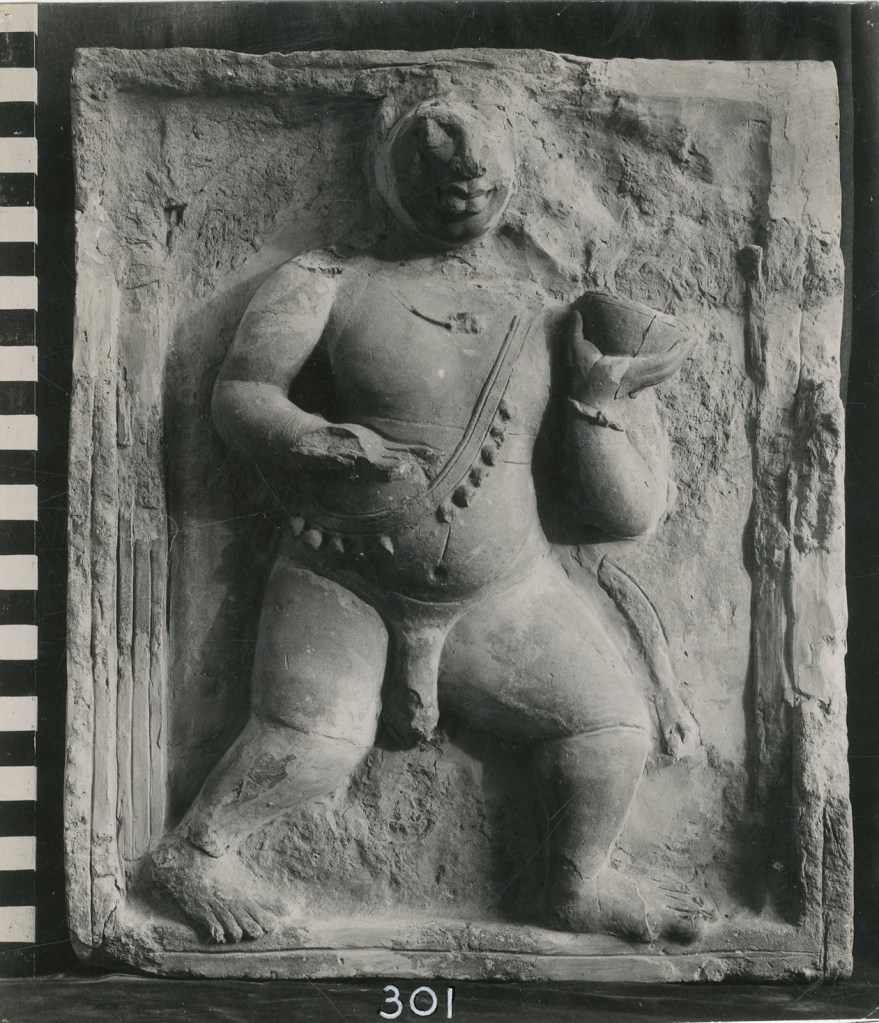
Significantly, there is another panel of Bhikṣāṭana from ACI (now in storage at the Lucknow State Museum), very different in character and clearly produced by a different pair of hands.

A terracotta panel of Bhikṣāṭana from ACI. Photograph courtesy of the Archaeological Survey of India.

I plan to spend more time studying this panel, especially if I have the opportunity to view it in person, and my hope is that both panels will one day be reunited with the other finds from ACI – perhaps in a gallery of their own.

UPDATE 2nd September 2026:

I have since found that the recently unearthed Ahichhatra panels have been published in the following article: Garnayak, Dibishada Brajasundar, Vivek K. Singh, Mukesh Kumar and Rajesh K. Meena. 2024. ‘New Findings from Ahichchhatra Archaeological Site’, The South East Asian Review 49: 173–182. Dibishada Brajasundar Garnayak is Superintendent Archaeologist of the Puri Circle in Odisha. They have described the panel that I tentatively identified as representing Bhikṣāṭana as depicting Tri-deva (the three great gods, Śiva, Viṣṇu and Brahmā) with risigana (p. 177). Four-headed Brahmā, however, is nowhere to be seen in this image.

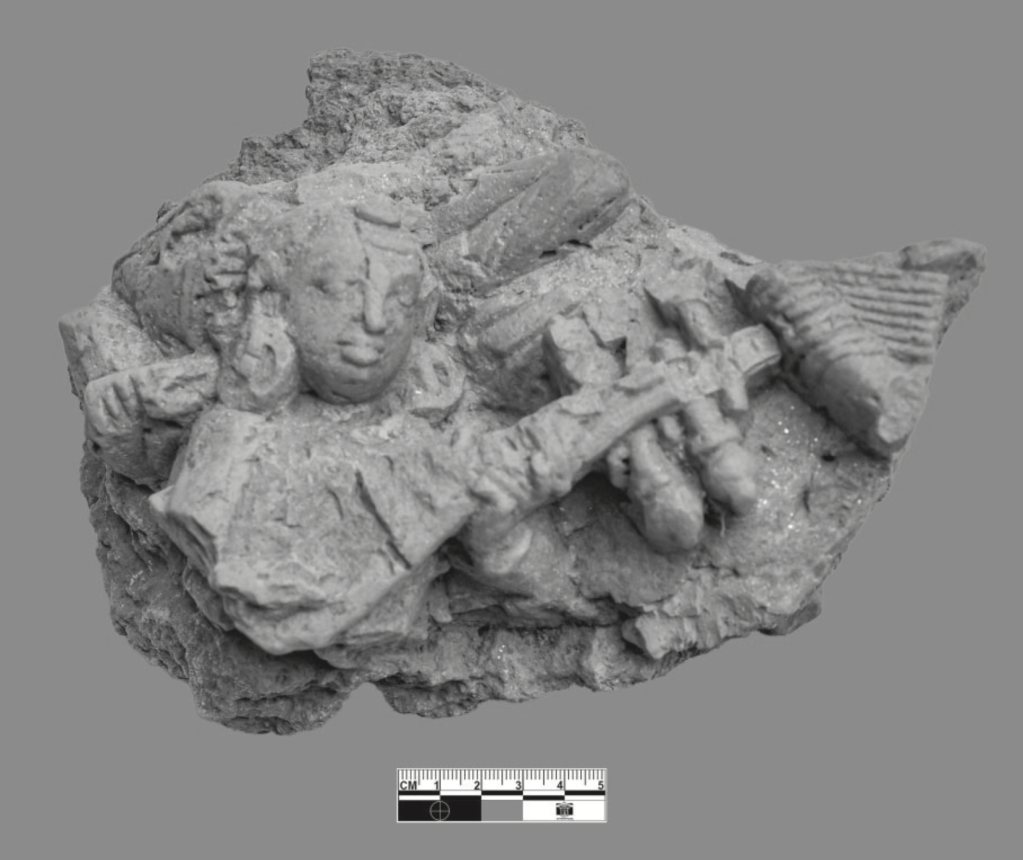
Other fragments that the archaeologists found include the beautiful image below of a vīṇā-player. Crossed-legs can be observed behind her head and there is another limb on the right of the fragment together suggesting that this was part of a scene representing a group of musicians possibly accompanied by dancers.

Fig. 8 in Garnayak, Dibishada Brajasundar, Vivek K. Singh, Mukesh Kumar and Rajesh K. Meena. 2024. ‘New Findings from Ahichchhatra Archaeological Site’, The South East Asian Review 49: 173–182 (179).