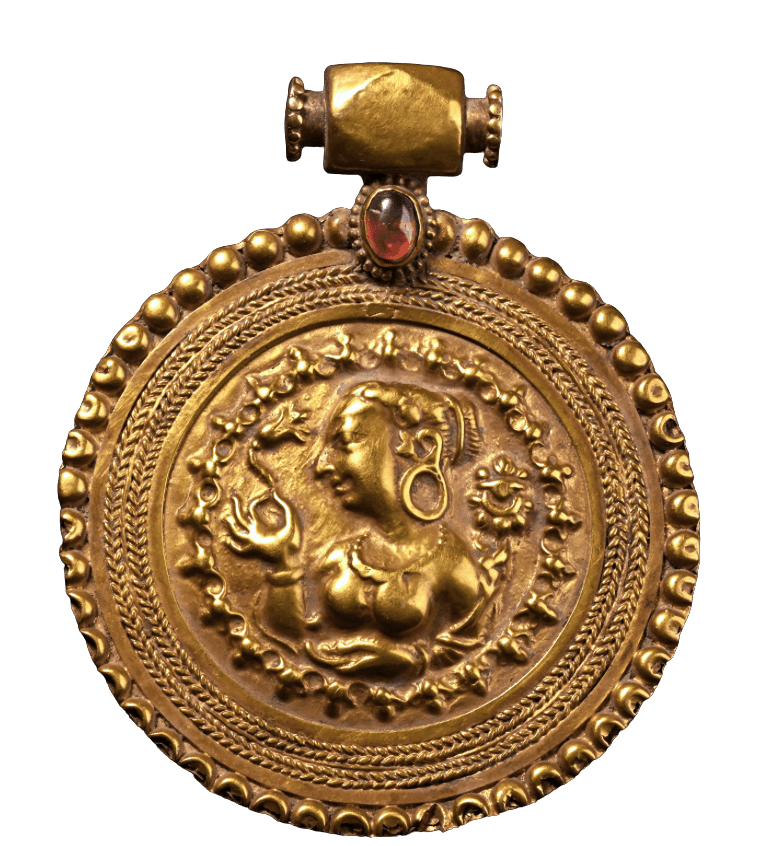
Somewhat unwisely, given research commitments, I’ve journeyed down a glittering rabbit hole after encountering this gold medallion pendant currently up for auction. It measures 6.9 cm in diameter and weighs 22.11 grams. It is described as 4th century in date which I agree with based on the quintessentially Gupta period appearance of the woman (or goddess) depicted here. The pendant has been produced using the repoussé technique whereby the image has been hammered out from the reverse.
At the centre of the medallion is the bust of a beautiful woman in profile. Her facial features are refined and yet expressive. She has large, long eye(s), high arched eyebrow(s), a convex nose (a common feature of portraits on Gupta era coinage), lips bearing a slight smile, and hair worn in a bun (or chignon) with some curls at the forehead. She wears very large hoop earrings that touch the shoulder. In her right hand (viewer’s left) she holds a flower elegantly by its stem between her thumb and index finger with the other fingers splayed out (in much the same way that the British used to hold their tea cups). The flower might be a wild mountain tulip or a lotus bud. Cradled in her right arm is a full blown lotus on a long stem. She wears a beaded necklace that rests above her breasts. This portrait is enclosed within concentric decorative bands including a double plaited motif. A cabochon garnet is set at the top of the medallion beneath the fixture through which a chain would be threaded.
This is a very rare object. It probably hails from the Sakra region of Gandhāra based on comparable pendants discovered here. Waleed Ziad has published two of them and mentions the existence of a third. The two below share a similar iconography with our medallion. In fact, they could well have been produced by the same atelier.
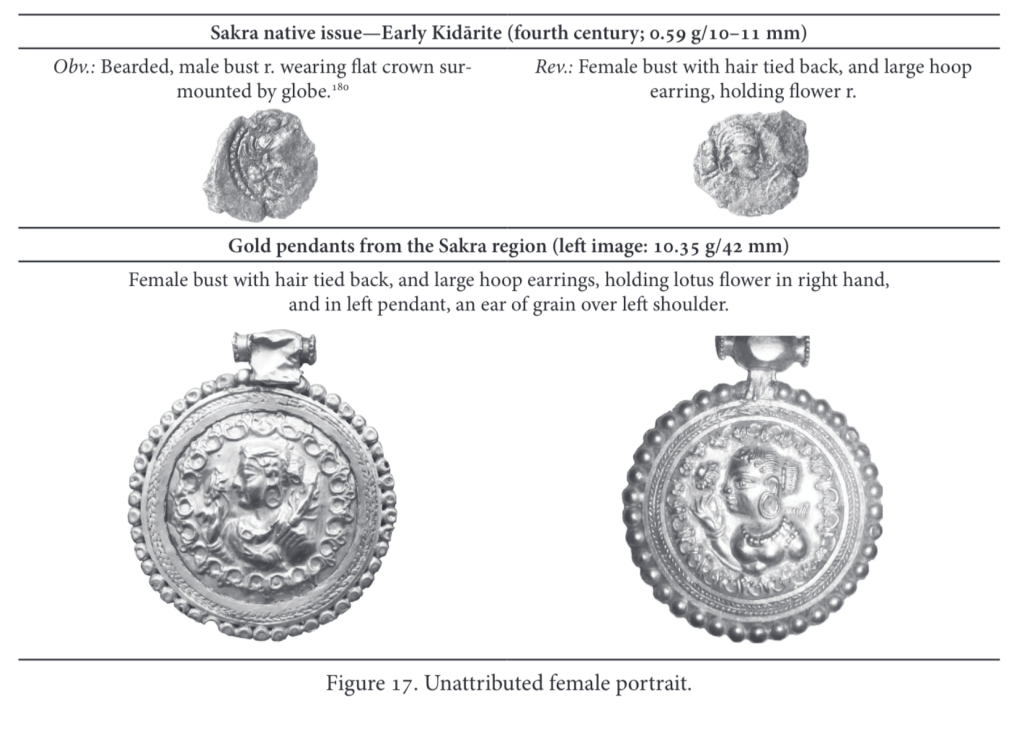
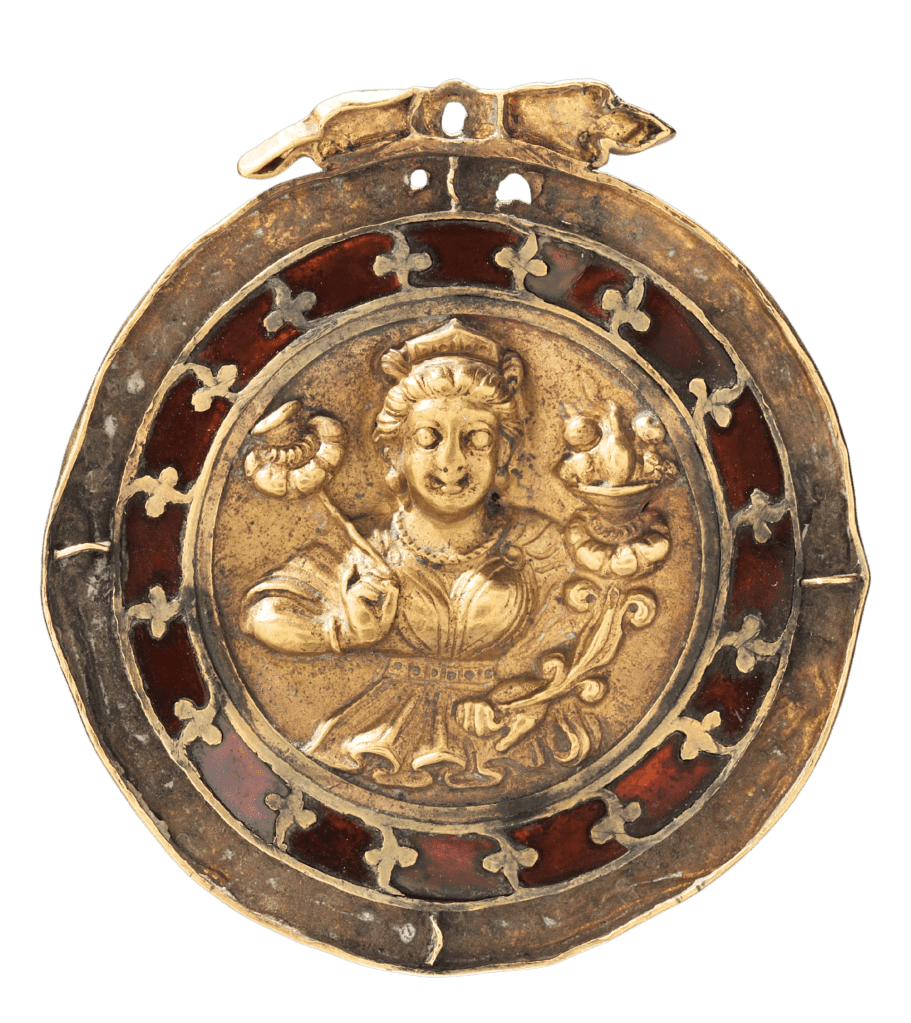
The identity of the women is unknown. Ziad suggests that this might be a representation of a local deity who shares some (but not all) features of Ardoksho-Lakṣmī images. Below is a Kushan-era pendant from Gandhāra believed to represent Ardoksho/Lakṣmī. The presence of a crown, the frontal pose, and the bowl of fruit (?) comprise the most significant differences with the women portrayed in the later medallions.
I will not be attempting to shed any light on the identity of these women, rather I have simply compiled a small number of images of women from this period depicted with a bun and hoops (the two seem to go in tandem). It must be said that this is one of the more achievable female looks from early India!
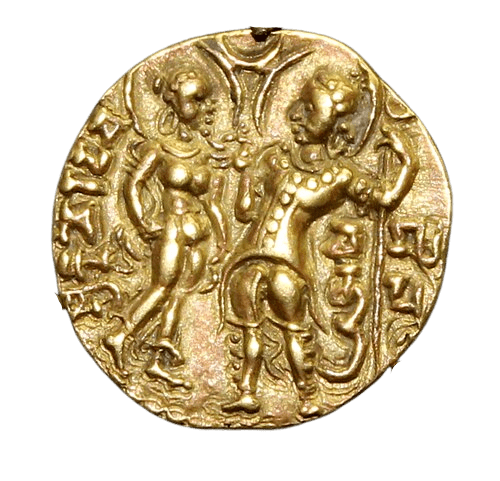
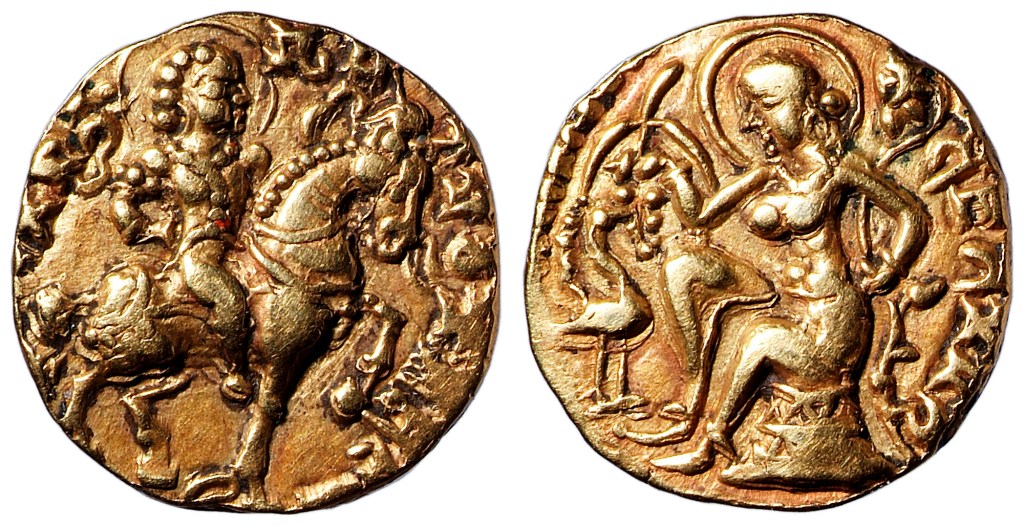
First up is the commemorative king and queen type gold coin of Chandragupta I and his wife, the Licchavi princess Kumaradevi, issued by their son Samudragupta (r.c. 335–375). Kumaradevi has been represented with a chignon and curls above the forehead and large hoop earrings exactly like the mysterious lady (or ladies) of the Sakra medallions. The goddess often depicted on the reverse of Kumaragupta I’s coins also wears her hair like this and hoop earrings.
Next up is the sandstone gateway lintel from Pawaya in Madhya Pradesh, where we can observe this fashion replicated several times.
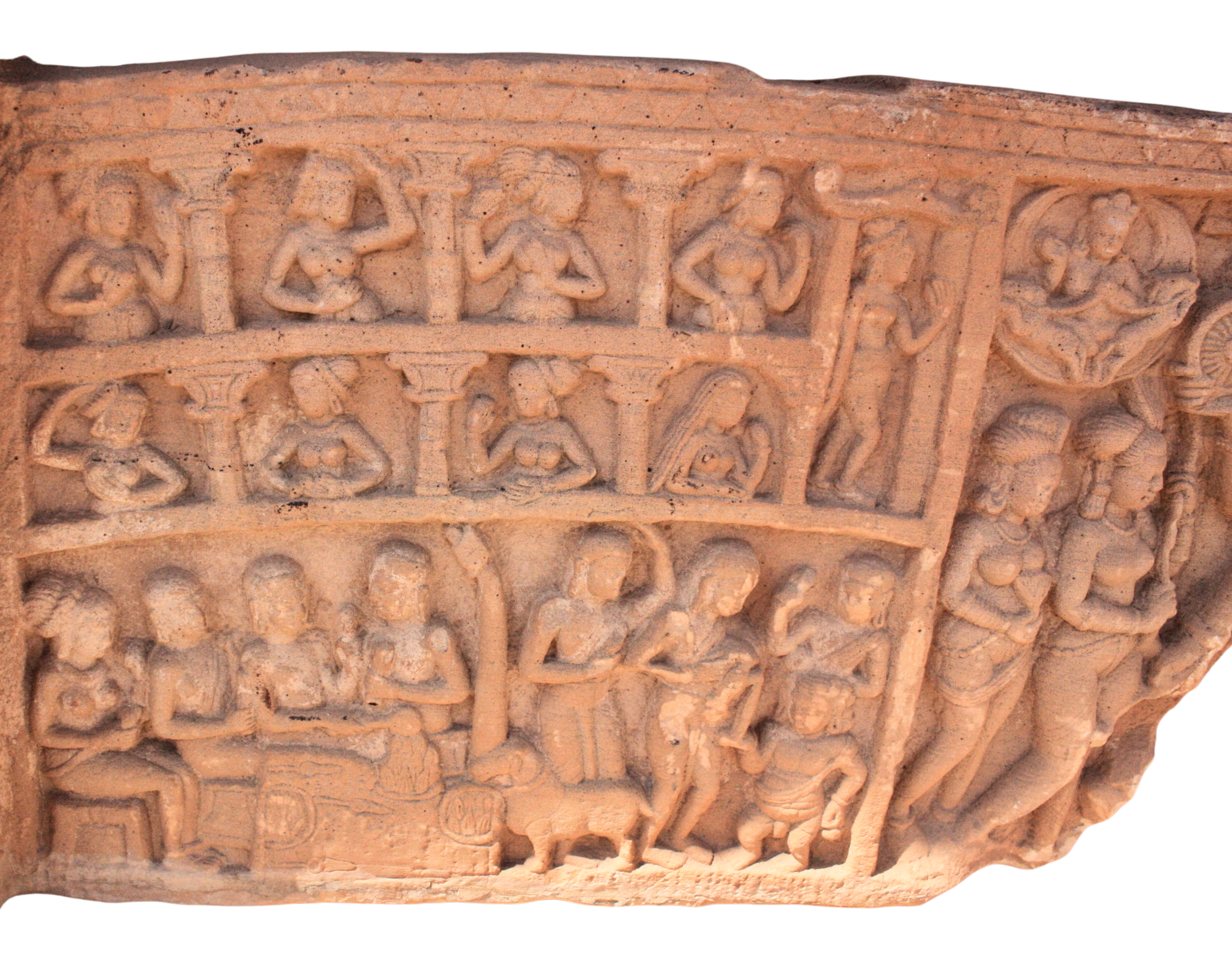
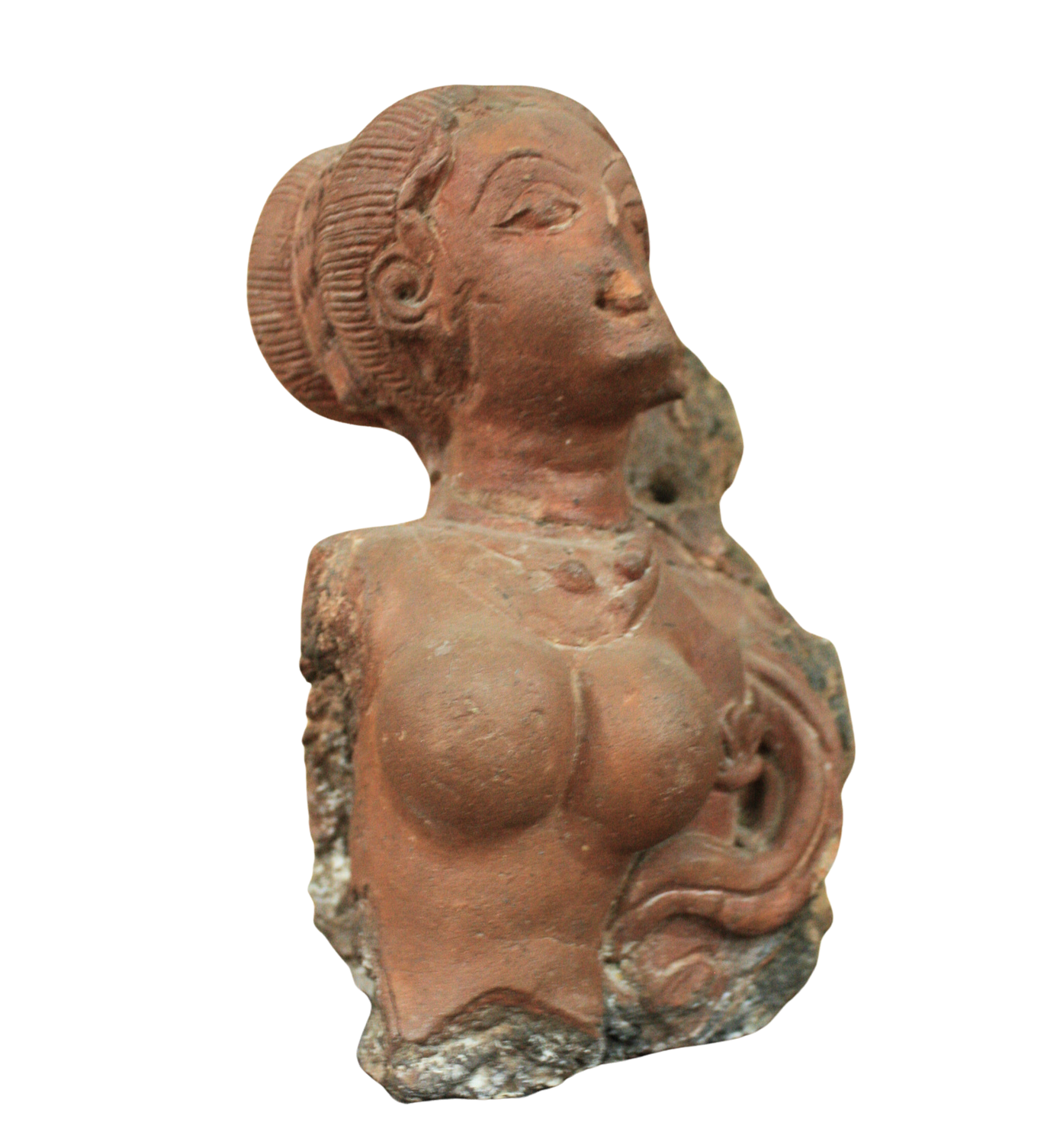
Moreover, a terracotta fragment of an unidentified woman from the same Viṣṇu temple at Pawaya wears her hair in an identical style, although regrettably her earring has chipped off.
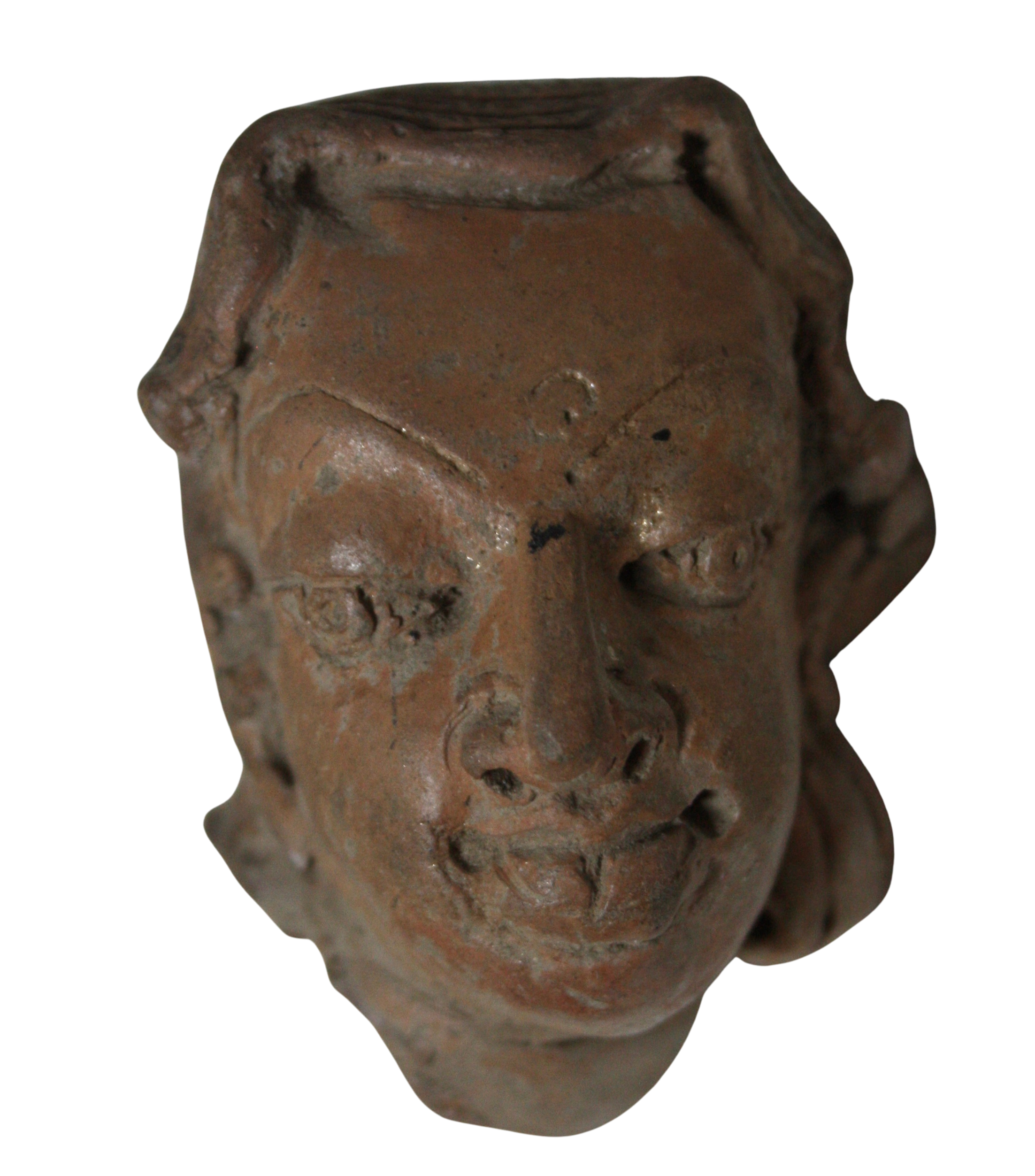
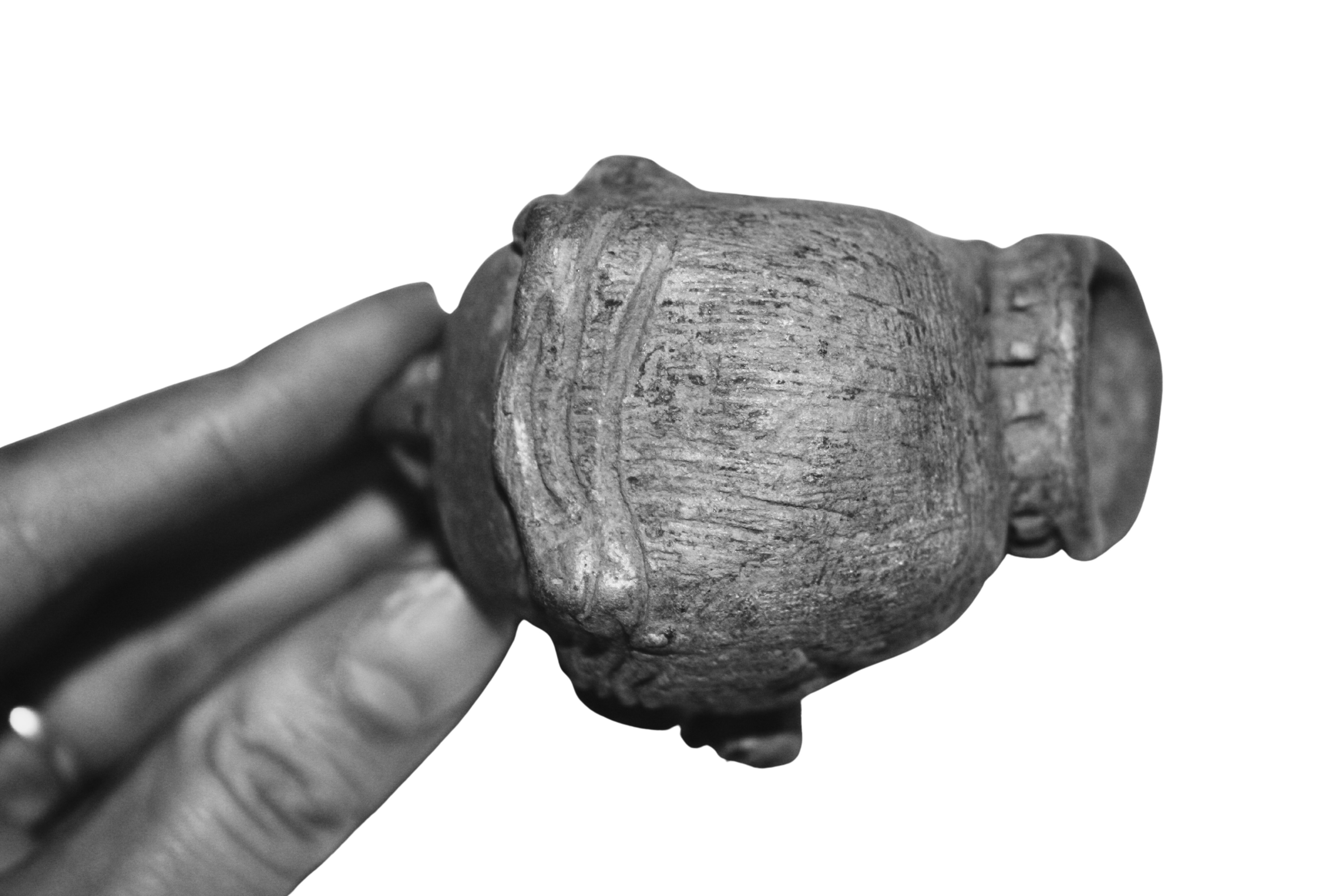
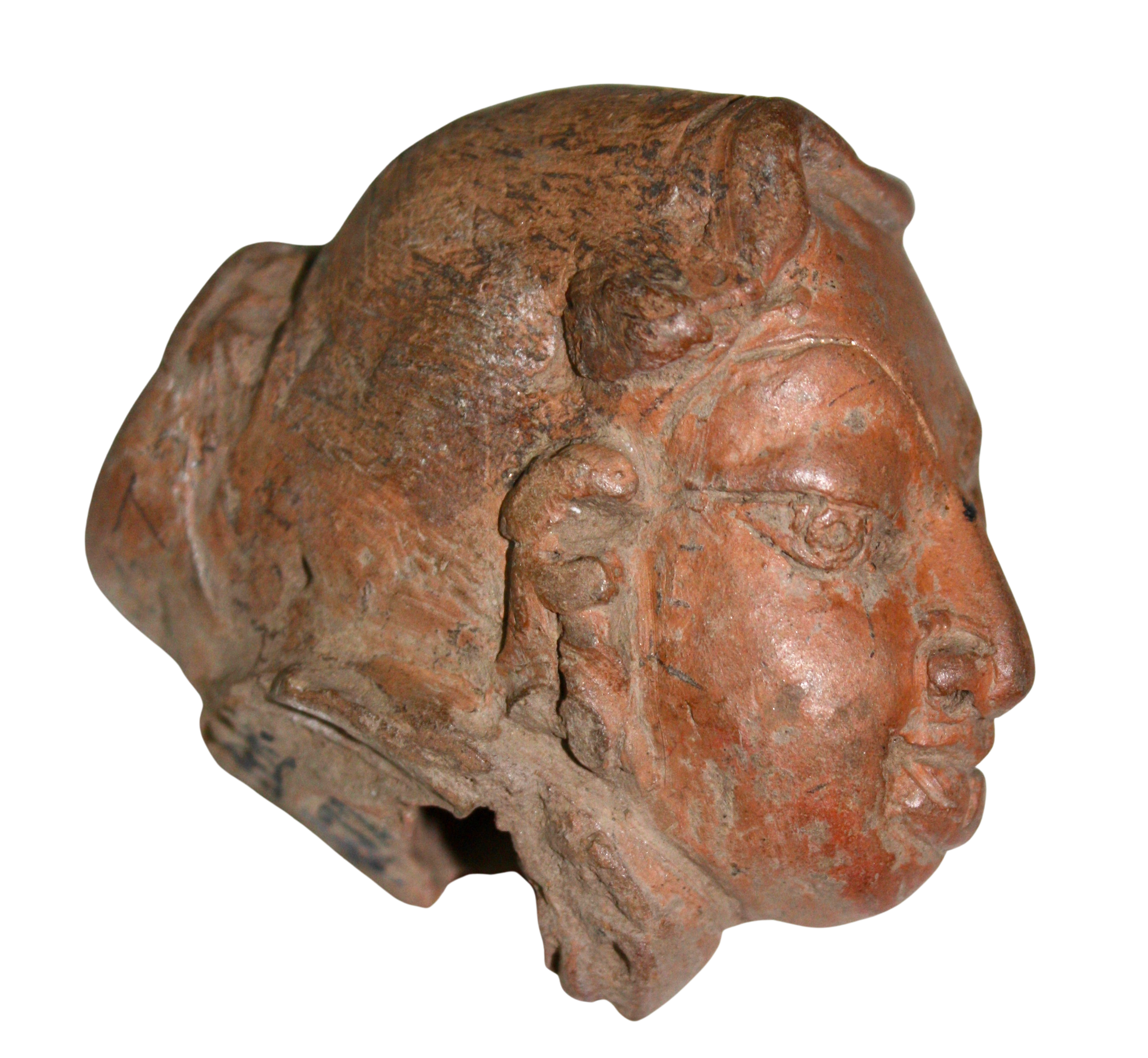
Another example is this miniature terracotta head of a woman from Ahichhatra displayed in the State Museum Allahabad. Only the hoop earring on the left side of her head (viewer’s right) survives. Her facial features are also similar to those of the female on the gold medallion, presumably exemplifying the beauty standards of the day in Gandhāra and northern India or at least along the northerly reaches of the Uttarapatha trade route.

Then we have a recently excavated fragmented terracotta panel from Chausa (Buxar district, Bihar), possibly depicting Rāma and Sītā. Here the woman’s bun is worn lower, at the nape of her neck, but otherwise the look is similar.
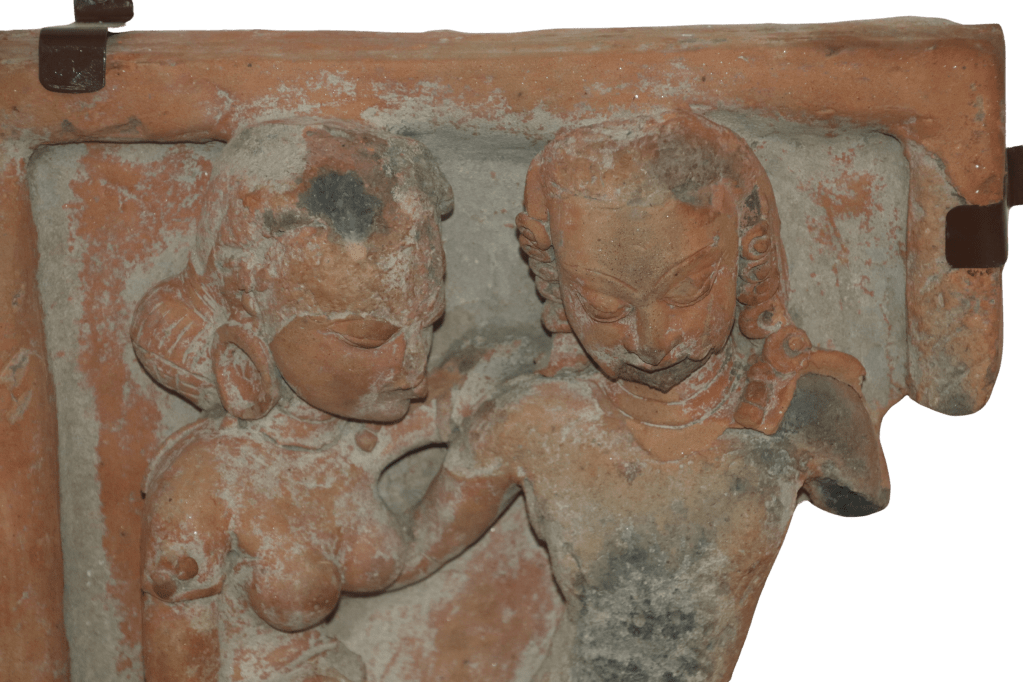
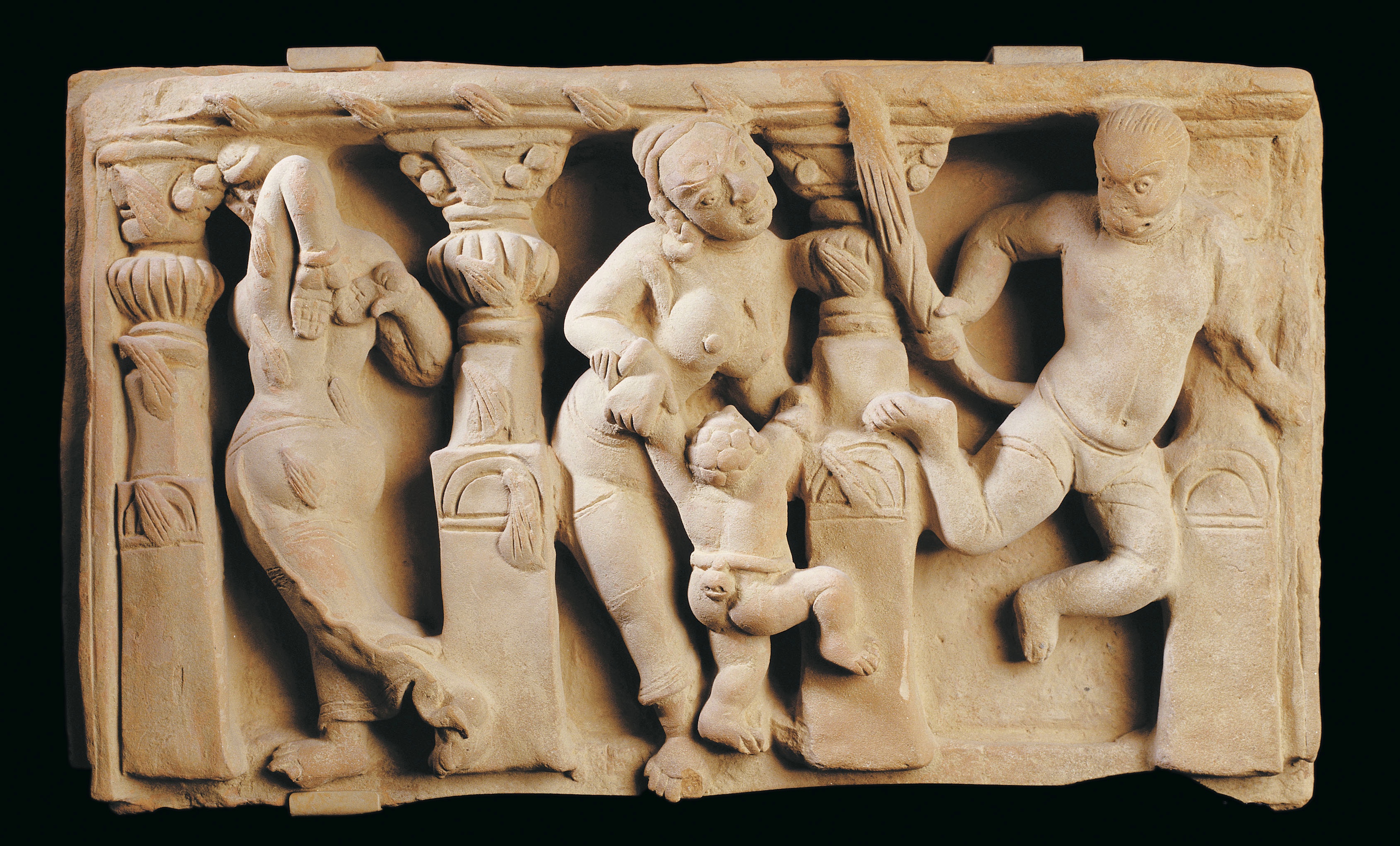
Several of the terracotta panels from Katingara in Etah district, Uttar Pradesh, (two of which are pictured below) likewise feature women with their hair in buns with curls or ringlets around the forehead. Their earrings, though, appear to be disk-like rather than hoops, but nevertheless the outer shape is the same.
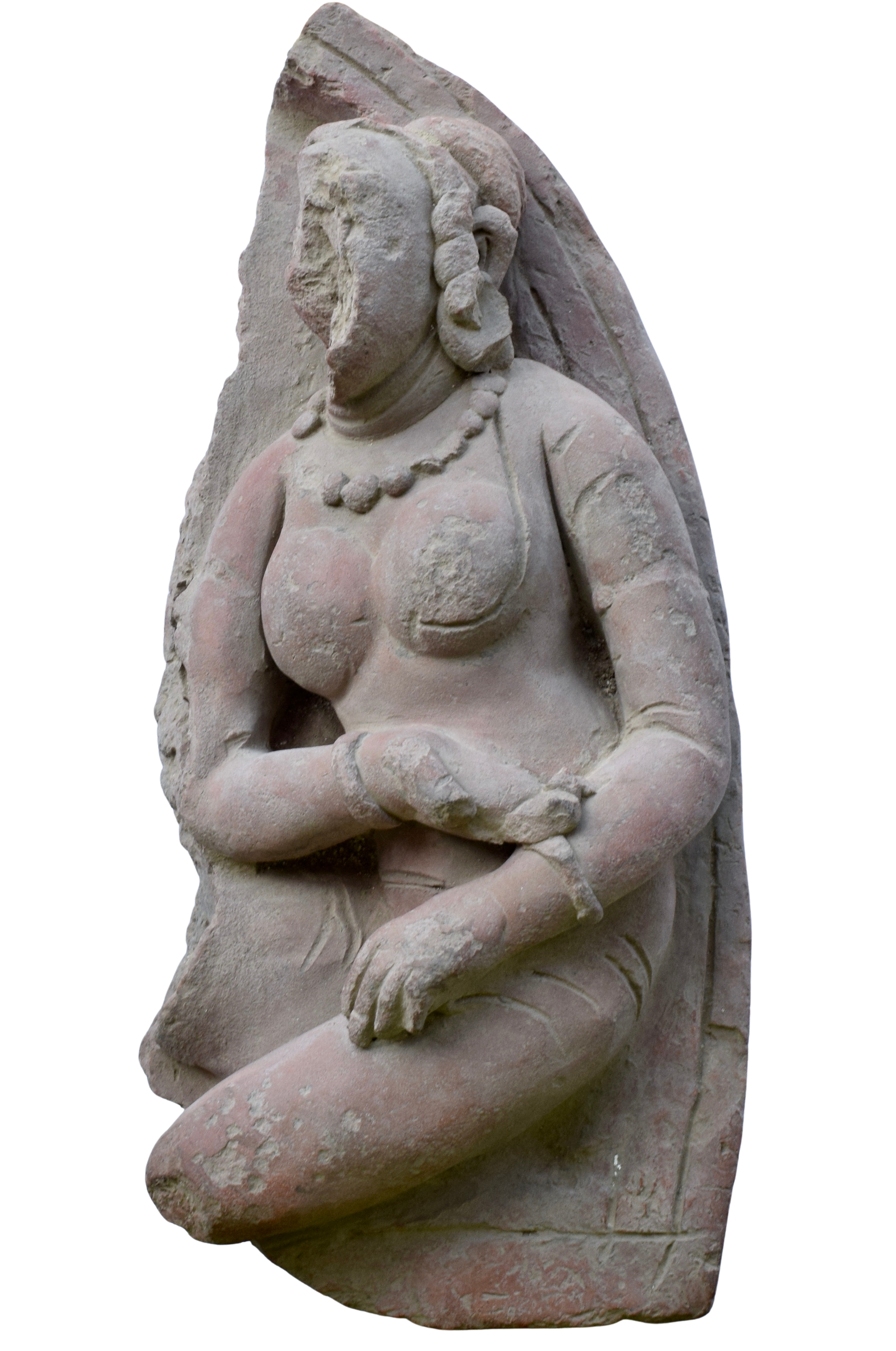
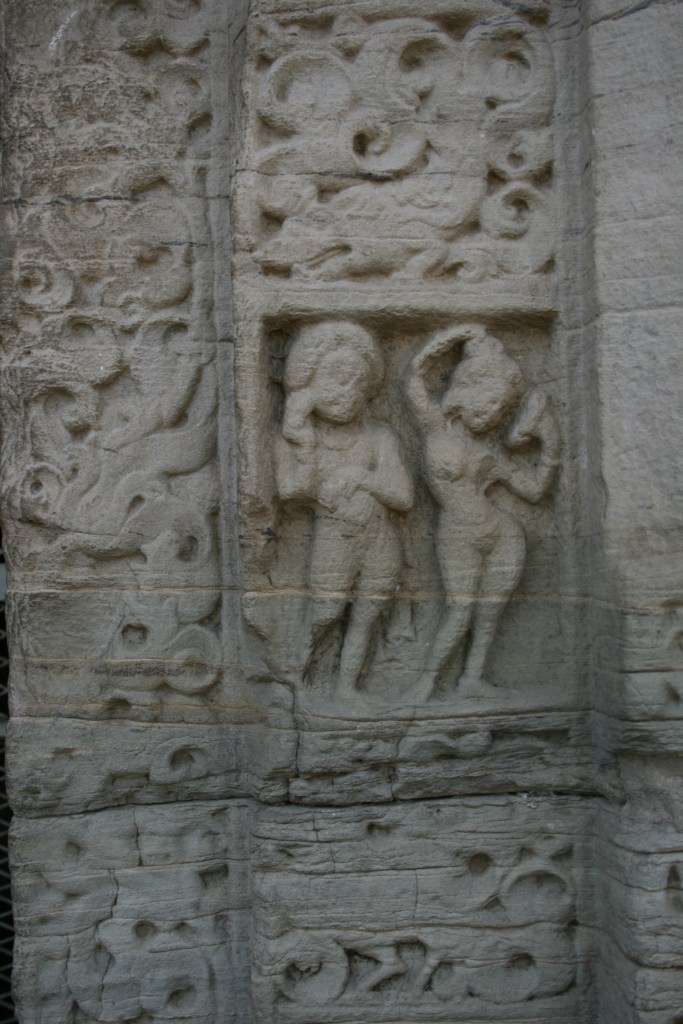
Below is a detail of a door lintel on a Gupta temple at Udayagiri in Madhya Pradesh. I hesitated over whether to include this image as it is rather worn and thus not entirely reliable. In the end I found it just too delightful to leave out since the woman, who holds a graceful contrapposto pose, is actually in the process of doing her hair while looking in a mirror. We can just about discern a hoop earring too.
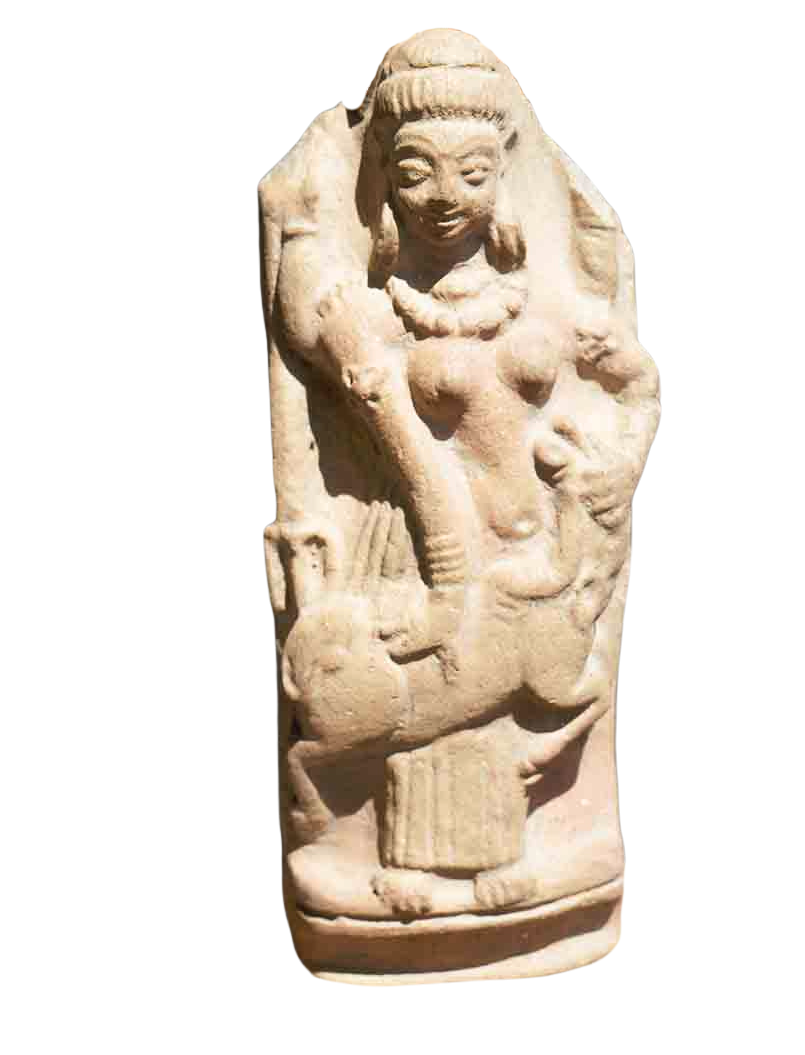
Below is quite an archaic looking four-armed Durgā Mahiṣāsuramardinī plaque from Ahichhatra. It is possible that she is wearing matted locks in a top-knot, rather than a regal chignon as worn by the women in the gold medallions.
All of the images included here can tentatively be dated between circa the mid-4th century and early 5th century CE. After this buns continue to be worn by women or goddesses, but they tend to be embellished with jewellery and are usually more complex in form.
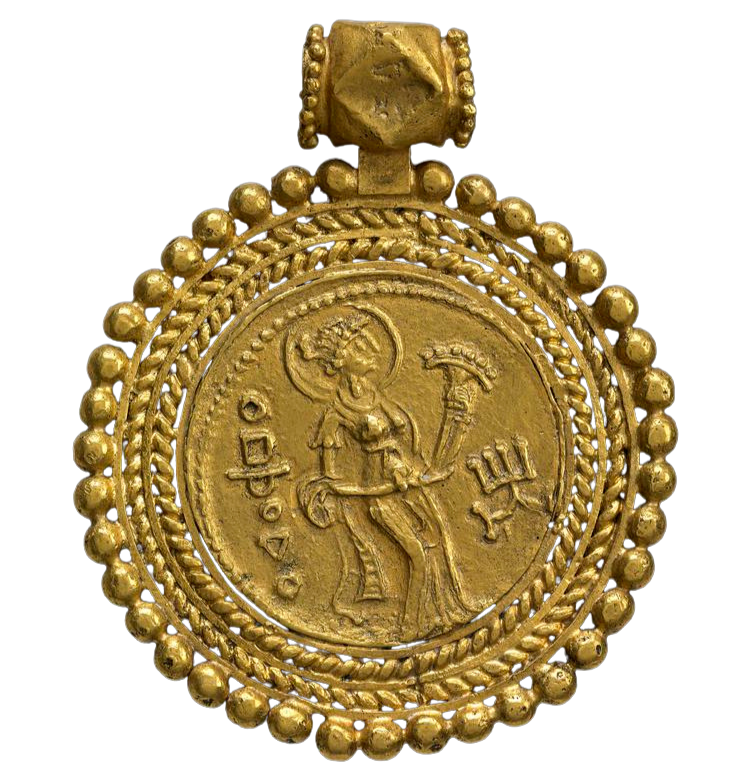
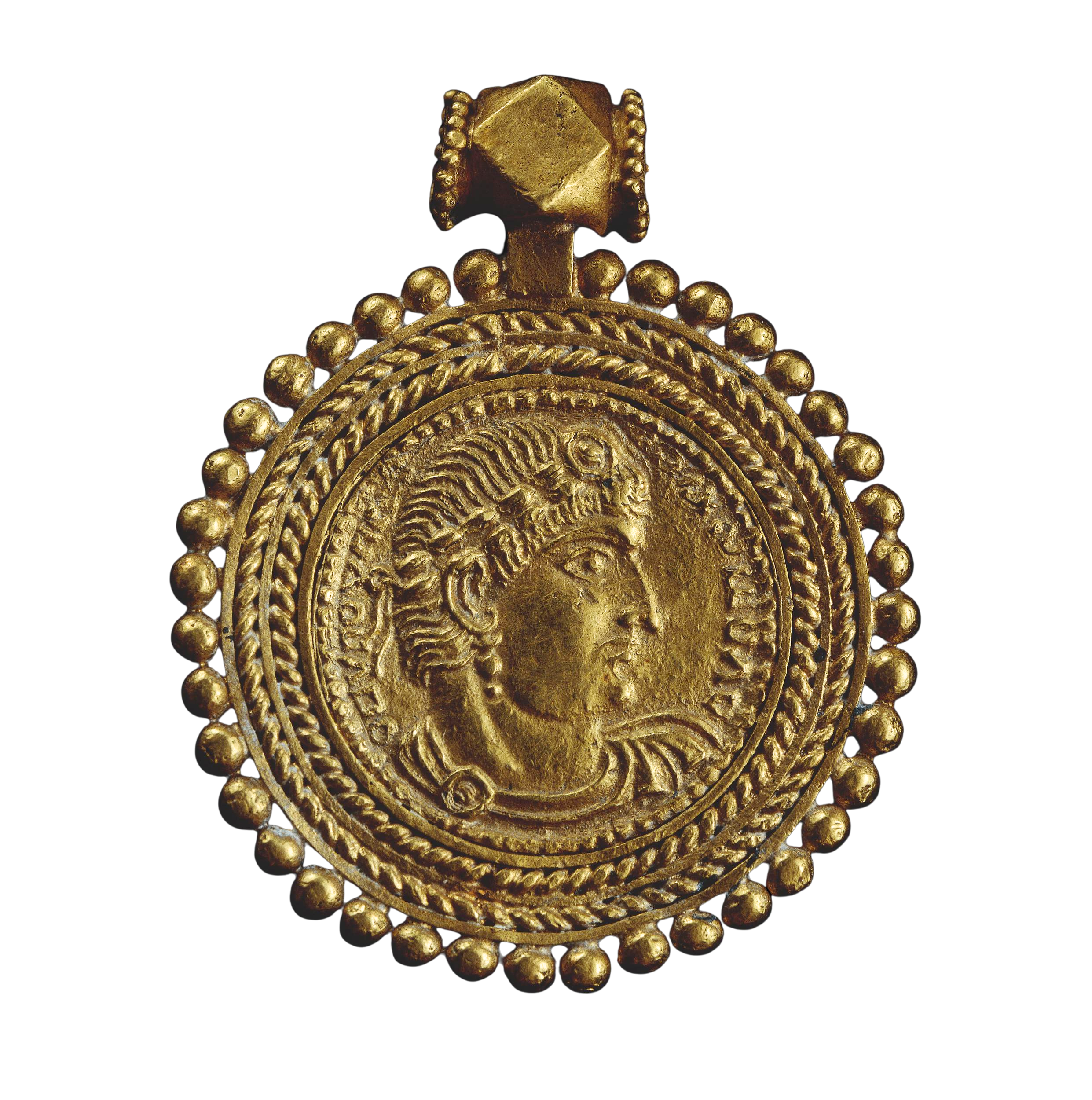
I will finish up this post with a double-faced medallion pendant in the collections of the British Museum, believed to originate from Gandhāra (Bactrian?) and date to the 4th century CE. On one face of the pendant is a portrait of Emperor Constantine with a legend in Latin and on the other face is the goddess Ardoksho holding a cornucopia, with a legend in Bactrian Greek. The design of the medallion is remarkably similar to ours.